

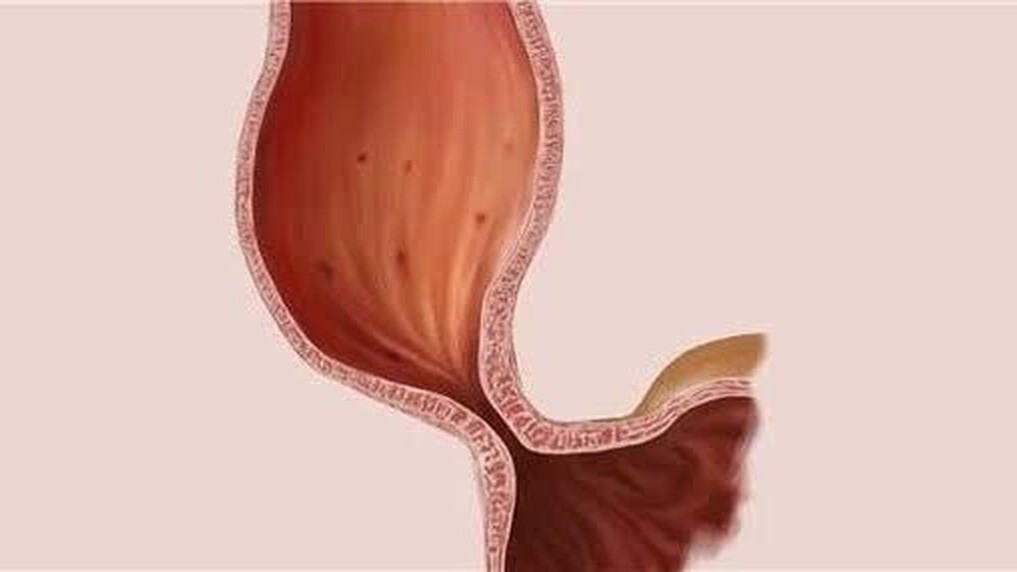
A feeling of food being stuck in the chest, nighttime regurgitation, or increasing difficulty swallowing, even water: these symptoms may indicate esophageal achalasia. This rare digestive disorder disrupts the muscle contractions that allow food to reach the stomach. Often confused with gastroesophageal reflux disease (GERD), it can lead to significant weight loss and respiratory complications if not properly managed.
The esophagus is not simply a tube connecting the mouth to the stomach. Its muscles contract in a coordinated manner to propel food forward, while a sphincter at its lower end opens during swallowing. In people with achalasia, some of the neurons that control these mechanisms gradually disappear. Esophageal contractions become ineffective, and the lower sphincter no longer relaxes sufficiently, preventing the normal passage of food. The exact causes of this nerve degeneration remain poorly understood, although immune mechanisms are suspected. The disease can appear at any age, but it is primarily diagnosed in adults.
Difficulties swallowing also affect liquids
Unlike some diseases that cause mechanical narrowing of the esophagus, achalasia can lead to difficulty swallowing both solid foods and liquids. Patients sometimes experience pressure behind the breastbone or the sensation that their food is stuck in their chest. Some have to eat very slowly or change their position to help food pass through. Regurgitation can also occur several hours after meals, particularly during the night. This is not necessarily acid reflux from the stomach, but sometimes food that has remained in the esophagus. When this food enters the airways, it can cause a chronic cough or lung infections.
Diagnosis relies primarily on high-resolution esophageal manometry, a test that measures muscle contractions and the function of the lower esophageal sphincter. An upper gastrointestinal endoscopy is also necessary to rule out obstruction due to another condition, such as a tumor. An X-ray examination performed after ingestion of a contrast agent may reveal esophageal dilation and slowed emptying. In some advanced forms, the esophagus becomes significantly dilated and gradually loses its ability to efficiently transport food.
Interventions to restore the passage of food
Available treatments cannot restore damaged neurons, but they can reduce resistance in the lower sphincter and facilitate the passage of food into the stomach. Pneumatic dilation involves using a balloon to distend the muscle fibers responsible for the obstruction. A surgical procedure called Heller myotomy also allows for the severing of certain muscle fibers. More recently, peroral endoscopic myotomy, known as POEM, has expanded treatment options by allowing this procedure to be performed endoscopically, without a skin incision.
These various techniques can significantly improve swallowing and patients' quality of life. However, they do carry certain risks, notably the risk of developing gastroesophageal reflux after treatment. Medical monitoring therefore remains necessary, particularly when symptoms persist or recur. In individuals too frail to benefit from certain procedures, botulinum toxin injections may sometimes be offered to temporarily relax the sphincter. The choice of treatment depends primarily on age, general health, and the type of achalasia identified during examinations.
Repeated difficulty swallowing should never be dismissed as a simple digestive inconvenience. When it affects both solids and liquids, is accompanied by frequent regurgitation, or leads to unintentional weight loss, a specialist consultation is necessary. A sudden inability to swallow, including one's own saliva, constitutes a medical emergency. Although achalasia remains a chronic condition, current treatments allow many patients to regain a much more comfortable eating pattern.






Respond to the article
Be the first to comment on this article.