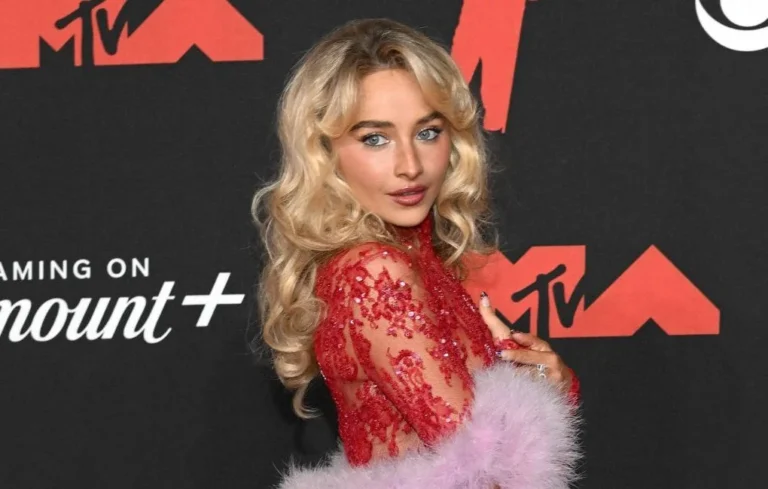
American singer Sabrina Carpenter reacted strongly on Tuesday to the release of an official White House video featuring one of her songs. She claims her song "Juno" was used without her permission in a video promoting Donald Trump 's immigration policies , which she considers unacceptable.
A repurposed song to illustrate an arrest operation
The video, published on official social media accounts, shows federal agents making arrests as part of the stricter immigration laws championed by Donald Trump. To accompany the footage, the administration chose "Juno," a song by Sabrina Carpenter from her album *Short n' Sweet*. The singer denounced the association of her music with this content, calling it "repulsive" in a message posted on her social media accounts, urging people never to link her music to a policy she considers "inhumane."
The White House immediately responded, through its spokesperson Abigail Jackson, in a message sent to The Independent. She justified the use of this type of soundtrack by stating that the government would "not apologize for sending criminals out of the country," while simultaneously mocking the artist and the lyrics of his own album.
Growing tension between the White House and artists
Sabrina Carpenter has joined the long list of musicians who have asked Donald Trump and his team to stop using their work for political purposes. Since his first presidential campaign in 2016, numerous artists, including Beyoncé, ABBA, Céline Dion, and the Foo Fighters, have categorically refused to have their music associated with the Republican president or his actions. More recently, Olivia Rodrigo also protested the use of her song "All-American Bitch" in a government video aimed at deterring undocumented immigrants.
In some cases, artists manage to have this content removed thanks to the Digital Millennium Copyright Act, which regulates the use of works on digital platforms. This is what the band MGMT did, for example, after one of their songs was used in a previous Department of Homeland Security campaign.
Yet, despite these repeated protests, the Trump administration seems determined to continue these practices. The proliferation of government videos incorporating popular songs—such as those by Charli XCX, Taylor Swift, and ABBA—suggests that the White House intends neither to back down nor to comply with the wishes of the artists involved. This is a deliberate communication strategy, even at the risk of attracting criticism and legal action.