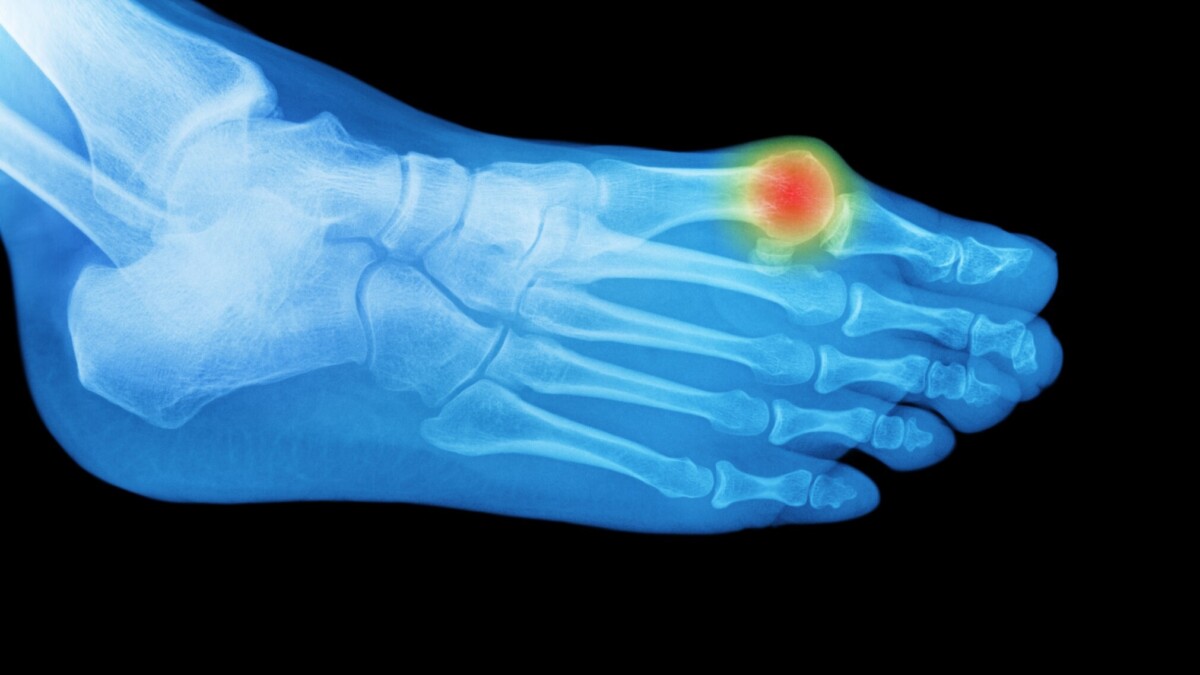
A big toe that suddenly turns red, swollen, and is so painful that even the touch of a sheet becomes unbearable: this is a telltale sign of a gout attack. This inflammatory disease results from the accumulation of urate crystals in the joints. Long associated with overindulgence in food, it actually stems from complex metabolic mechanisms and can lead to lasting joint damage if left untreated.
Gout is linked to an excessive concentration of uric acid in the blood, a condition known as hyperuricemia. This substance is produced primarily from the breakdown of purines, molecules naturally present in the body and in certain foods. It is mainly eliminated by the kidneys. When this elimination becomes insufficient or its production is excessive, monosodium urate crystals can form and accumulate in the joints. Their presence sometimes triggers a particularly intense inflammatory reaction. Genetic predisposition, kidney failure, being overweight, certain medications, and excessive alcohol consumption are among the factors that can contribute to the development of the disease.
Sudden attacks that often occur during the night
A gout attack usually appears suddenly, often at night. The affected joint becomes extremely painful, hot, red, and swollen. The big toe is the most common location, but the ankles, knees, wrists, or fingers can also be affected. The pain often reaches its peak intensity within a few hours and can make walking or moving nearly impossible. Without treatment, an attack can last for several days before gradually subsiding. Periods without any symptoms can then pass for several months or even years, without the crystal deposits necessarily having disappeared.
Diagnosis is based on clinical examination and can be confirmed by joint aspiration, which allows for microscopic identification of urate crystals. Blood uric acid levels also provide useful information, but these may be temporarily normal during an attack. Joint ultrasound or dual-energy CT scans can sometimes help visualize the deposits. When the disease progresses without appropriate disease-modifying treatment, the crystals can form clusters called tophi, which are often visible around the fingers, elbows, or ears. Chronic joint damage and certain kidney stones may also develop.
Treatments to prevent recurrence, beyond pain relief
Managing an acute attack relies on medications designed to rapidly reduce inflammation, including colchicine, certain nonsteroidal anti-inflammatory drugs (NSAIDs), or corticosteroids. The choice depends on the patient's overall health, particularly their kidney function and any history of cardiovascular disease. However, relieving the attack is not enough to treat the disease in the long term. When long-term treatment is indicated, medications such as allopurinol or febuxostat help lower the concentration of uric acid in the blood. The goal is to maintain this concentration low enough to promote the gradual dissolution of the crystals and prevent future attacks.
Lifestyle habits also play a complementary role. Reducing alcohol consumption, particularly beer and spirits, as well as fructose-rich beverages, can help limit certain risk factors. A balanced diet, adequate hydration, and gradual weight loss if overweight are generally recommended. However, dietary measures are not always sufficient to normalize uric acid levels, especially when the disease has a strong genetic or renal component. Gout is also frequently associated with other health problems, such as high blood pressure, diabetes, or cardiovascular disease, which require comprehensive management.
A joint that suddenly becomes red, hot, and painful is not always a sign of a gout attack. A joint infection can cause similar symptoms and constitutes a medical emergency, especially if accompanied by fever or a general decline in health. A first attack therefore requires prompt medical evaluation. Unlike some chronic joint diseases, gout can generally be very well controlled with appropriate and regularly followed treatment. The key is to address the underlying cause before the attacks become frequent.