

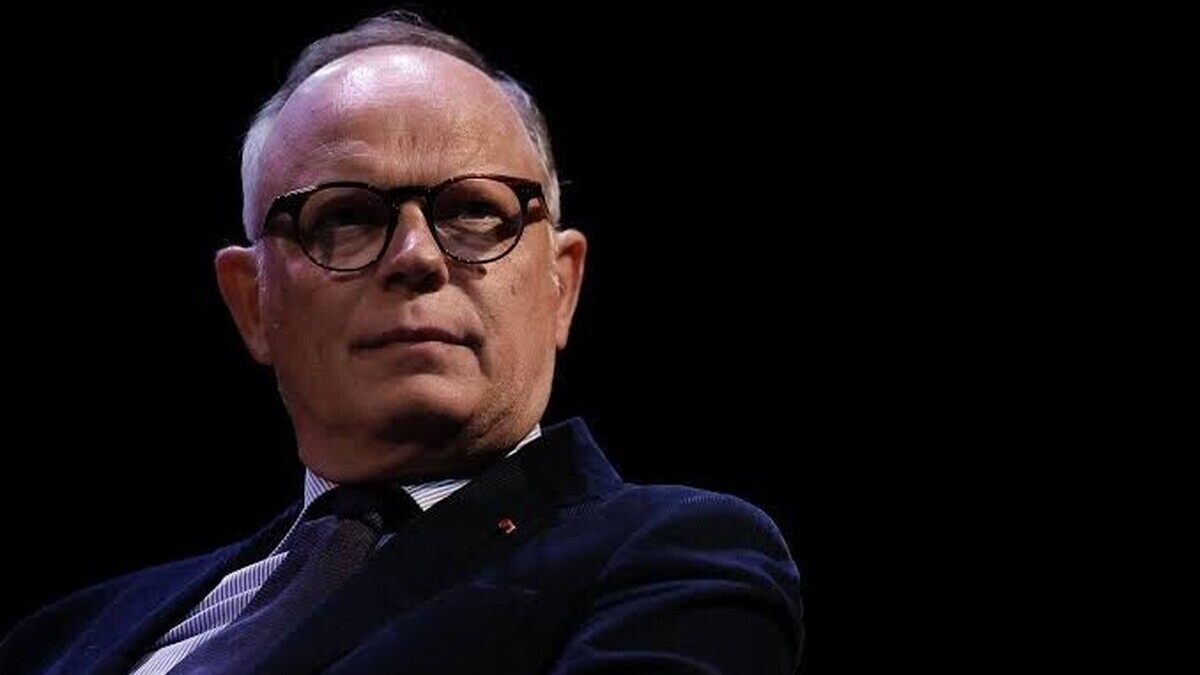
Édouard Philippe does not intend to participate in a primary election to select the right-wing and centrist candidates for the 2027 presidential election. His entourage has reaffirmed this position, denouncing a process likely to foster "disunity and confusion." The mayor of Le Havre and president of Horizons thus intends to preserve his own presidential strategy, while discussions about a joint candidacy continue to roil his political camp.
The prospect of a primary election uniting the various factions of the right and center still fails to convince Édouard Philippe. The former Prime Minister 's entourage has reaffirmed his refusal to participate in such a consultation to select a candidate for the 2027 presidential election. "He will not participate," his camp asserts, believing that internal competition risks multiplying tensions rather than fostering unity. This stance comes amid discussions among several political leaders on the best strategy to adopt in the face of the fragmentation of the right-wing and center electorate.
Already engaged in preparations for the presidential election, Édouard Philippe advocates an approach based on his own political project and on building a majority around his candidacy. The president of Horizons believes that a primary is not necessarily the best way to bring forth a candidate capable of uniting people beyond party lines. His associates fear, in particular, that a confrontation between candidates from similar political families could leave lasting divisions just months before the first round.
A primary that divides right-wing and center-right leaders
The question of a joint nomination process regularly resurfaces in political debates as the 2027 elections approach. Its proponents see it as a way to limit the proliferation of candidacies and to give democratic legitimacy to a single candidate. Other officials, on the contrary, believe that such a procedure could exacerbate personal and policy rivalries. Édouard Philippe's refusal illustrates these differences, while the details of a potential primary, its participants, and its rules remain to be defined.
For the former head of government, the challenge also lies in maintaining his independence from other political parties. His Horizons movement is the main instrument of his presidential preparation, but a national candidacy also requires seeking support beyond his own party. By refusing to participate in a primary, Édouard Philippe is therefore favoring a strategy of building unity around his candidacy rather than a preliminary selection among several contenders.
The battle for nominations remains open for 2027.
This decision does not end discussions on the organization of the right and center camp. Several political groups still need to decide whether they wish to support a joint candidate, present their own representatives, or seek agreements at a later stage. The disagreements concern both the method of selection and the economic, institutional, and social policies that could form the basis of a shared platform.
As the presidential election approaches, the number of candidates could become a central issue for these parties. However, Édouard Philippe's continued stance complicates the possibility of a primary that would bring together all the main contenders. His entourage favors another approach: convincing voters and political partners directly, without resorting to internal competition. It remains to be seen whether this strategy will allow them to forge the desired alliances before the 2027 election.




Respond to the article
Be the first to comment on this article.