

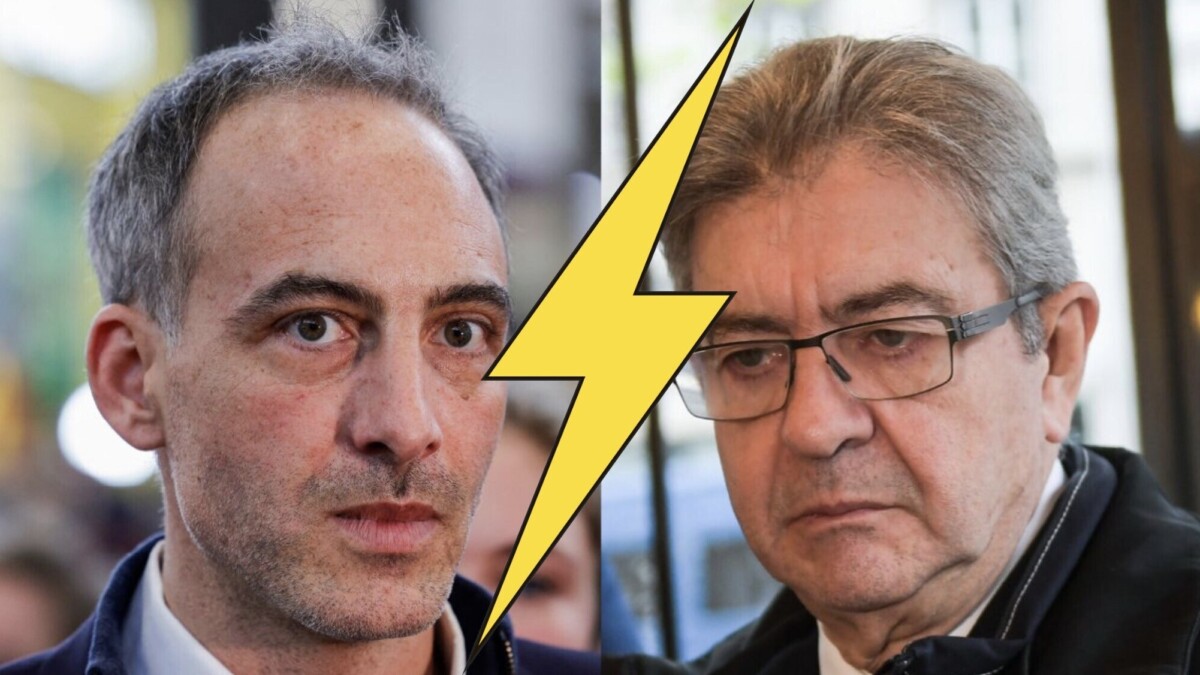
Raphaël Glucksmann is continuing his offensive against Jean-Luc Mélenchon regarding the war in Ukraine. Invited this Thursday, November 12th, to the presidential televised debate organized by franceinfo at the Maison de la Radio, the candidate for Place Publique and the Socialist Party denounced the attitude of a segment of the French political class towards Moscow. "With Russia, there is a form of denial, there is also a form of submission, of temptation," he declared, when questioned about Russian attempts to destabilize Europe. His target is particularly Jean-Luc Mélenchon, whom he accuses of echoing "Russian rhetoric" when discussing the possibility of holding a referendum in the Donbas, a Ukrainian region largely occupied by Russian forces.
This new attack comes five days after Jean-Luc Mélenchon's rally in Le Bourget, during which the leader of La France Insoumise defended the idea of consulting the affected populations as part of a potential territorial settlement to the conflict. His statements provoked an immediate reaction from Foreign Minister Jean-Noël Barrot, who accused him of acting as a "spokesperson for the Kremlin." Raphaël Glucksmann also denounced the proposal, deeming it incompatible with respect for Ukrainian sovereignty. On Wednesday, while visiting the Creuse region, Jean-Luc Mélenchon responded to his critics by accusing them of misrepresenting his words, while reaffirming his opposition to the Russian invasion and his commitment to the principle of consulting the populations.
Glucksmann makes resistance to Russia a presidential issue
During his appearance on franceinfo, Raphaël Glucksmann placed this controversy within the context of the 2027 presidential election. According to him, the French will have to choose between a France that plays a leading role in European resistance to Russian imperialism and an approach he likens to "Trumpism." He believes that European security requires strengthening the military and diplomatic capabilities of European states, while maintaining firm support for Ukraine. The Social Democratic candidate also criticizes Jean-Luc Mélenchon for wanting to withdraw from NATO while opposing certain forms of common European defense. For him, these two positions raise a question about the resources France would have to ensure its own security and that of its partners.
The confrontation now extends beyond the Donbas issue alone and highlights the differences between the main left-wing candidates on international relations. Jean-Luc Mélenchon believes that a peace settlement must be based on negotiation and democratic consultation, while Raphaël Glucksmann insists on the need to avoid legitimizing territorial annexations obtained by force. Both men condemn the Russian invasion but disagree on the terms of any potential agreement and on the European security architecture.


Respond to the article
Be the first to comment on this article.