

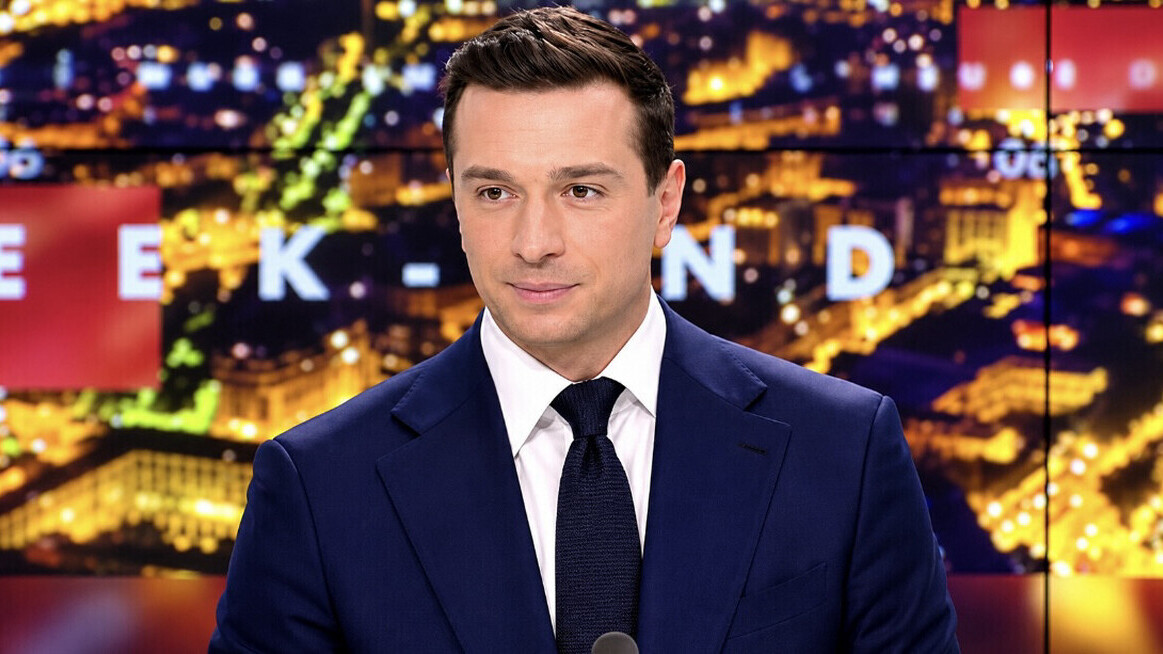
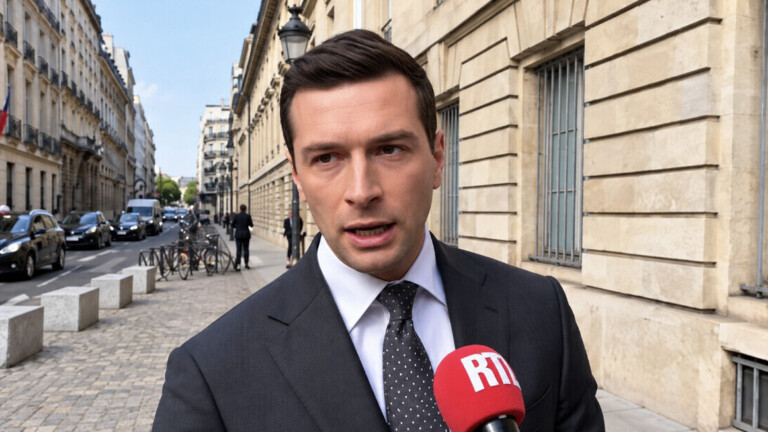
The president of the National Rally, Jordan Bardella, has officially filed a complaint against persons unknown for "forgery and use of forged documents" following the publication of antisemitic messages attributed to him. The Paris prosecutor's office confirmed the filing of this complaint on Thursday. This legal action follows revelations by Mediapart concerning private conversations dating back to 2013, when Jordan Bardella was 17 years old and a member of the National Front.
A complaint officially confirmed by the Paris prosecutor's office
Jordan Bardella announced at the beginning of October his intention to take legal action to contest the authenticity of the messages published by Mediapart. This action has now been confirmed by the Paris prosecutor's office, which indicates that it has received a complaint against persons unknown for forgery and use of forged documents.
The leader of the National Rally categorically denies being the author of the antisemitic remarks attributed to him. He had already announced a defamation lawsuit following the initial revelations on September 28. The new complaint directly challenges the authenticity of the documents used to attribute these statements to him.
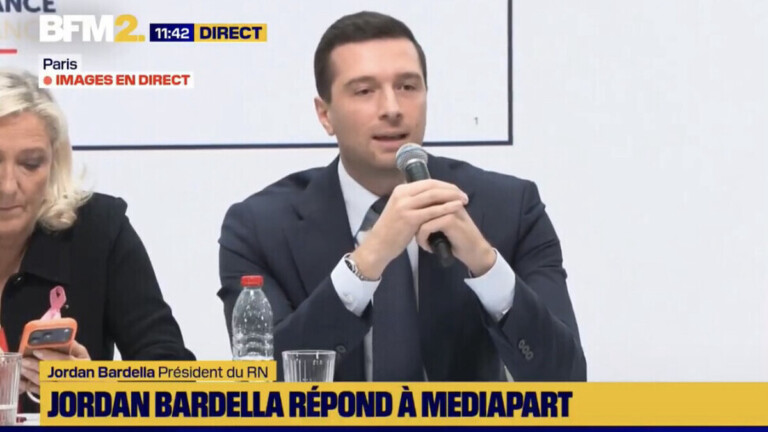
In his initial reaction to Mediapart's accusations , Jordan Bardella denounced "crude fabrications" and announced his intention to take legal action.
Anti-Semitic messages attributed to Jordan Bardella when he was 17 years old
The scandal dates back to September 28, when Mediapart published an investigation devoted to private conversations dating from the summer of 2013. At that time, Jordan Bardella, aged 17, was a young activist of the National Front, a party which would become the National Rally in 2018.
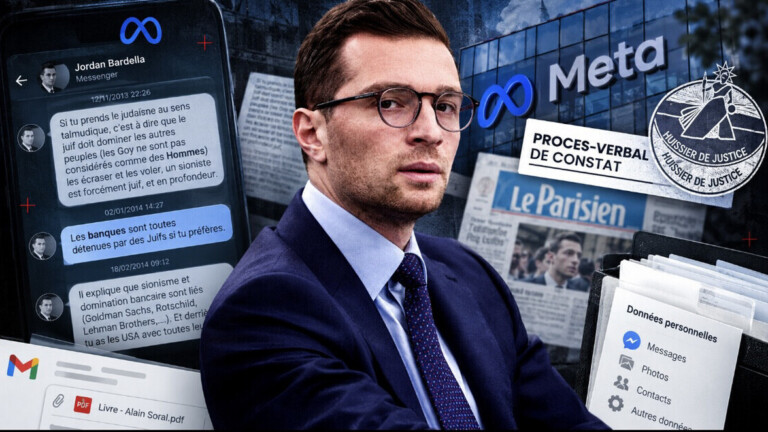
The exchanges, presented as originating from his Facebook Messenger account, reportedly contain several antisemitic and conspiratorial statements. Some messages allegedly repeat theories about a supposed Jewish domination of banks, as well as antisemitic stereotypes.
Jordan Bardella categorically denies having written these messages. The dispute therefore concerns not only their content, but also their authenticity and the identity of their author.
Messenger conversations whose authenticity Mediapart claims to have verified
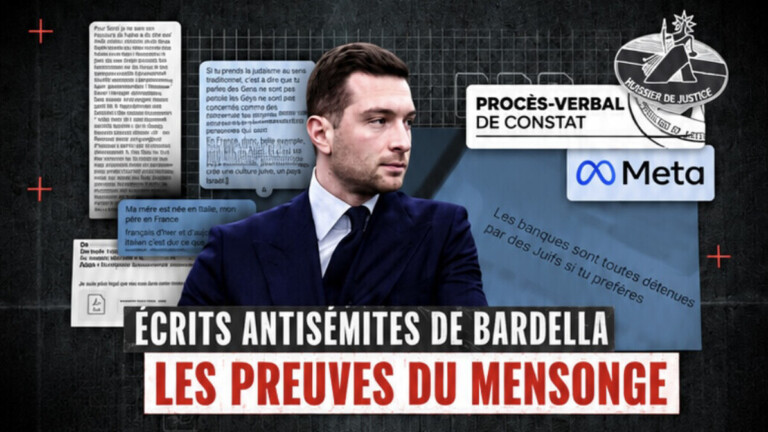
On October 1st, Mediapart published new evidence intended to establish the authenticity of the conversations. The newspaper explains, in particular, that one of Jordan Bardella's contacts allegedly asked Meta, Facebook's parent company, to download their Messenger exchange history.
According to published reports, the data was extracted from information stored by the platform and then verified by a court officer. The newspaper believes this procedure establishes that the conversations were not altered after being recorded.
Mediapart also relies on several biographical details mentioned in the exchanges to identify their author. These include the birth of Jordan Bardella's mother in Italy, an interview he gave to Le Parisien in 2013, and his failure to pass the Sciences Po entrance exam.
These elements are presented as corroborating evidence. Jordan Bardella, however, disputes that they prove he personally wrote the messages.
"Disgusting remarks that I obviously never made."
In response to the publication of these documents, Jordan Bardella immediately reaffirmed his denial. On the social network X, he accused Mediapart of having disseminated "crude montages, obscure and easily manipulated screenshots, reproducing vile remarks that I obviously never made . "
The president of the National Rally also denounced a "smear campaign ," accusing his opponents of seeking to harm him politically. From the outset, he stated: "I formally contest the accusations levelled against me by Mediapart, attributing to me delusional and anti-Semitic remarks that I allegedly made when I was a minor."
Appearing on LCI, Jordan Bardella also refused to plead youthful indiscretion , maintaining that he was not the author of the antisemitic messages. According to his statements, this position precludes any acknowledgment of the offending remarks, even within the context of his political activism during his adolescence.
This case is also provoking political reactions.
The accusations against Jordan Bardella have also fueled tensions between the various right-wing and far-right parties. His political opponents seized upon the revelations, while the leader of the National Rally maintained his line of defense based on a complete denial of the documents.
Éric Zemmour had notably attacked the political prospects of the National Rally president. The leader of Reconquête had asserted that Jordan Bardella would never become Prime Minister , considering that the accusations against him jeopardized his political future.
Jordan Bardella, however, has not changed his position since the initial conversations were published. He maintains that he never made the statements attributed to him and now intends to have his claim reviewed by the courts.
Forgery and use of forged documents: what the justice system will have to determine
The offenses of forgery and use of forged documents refer to crimes defined by Article 441-1 of the French Penal Code. Forgery consists, in particular, of fraudulently altering the truth in a document in a way that could have legal consequences. Use of forged documents refers to the knowing use of a falsified document.
In this case, possible investigations may focus in particular on the origin of the conversations, the conditions of their extraction, their integrity and the elements that allow identification of the person who actually wrote the messages.
Confirmation of the complaint does not, however, mean that the documents are falsified. Nor does it constitute a judicial decision regarding the identity of the person who filed them. At this stage, no definitive legal conclusion has been reached on these matters.
The complaint for forgery and use of forged documents is in addition to the defamation lawsuit announced by Jordan Bardella. Both proceedings concern the same publications, but are based on distinct criminal charges.
More than a month after the initial revelations on September 28, the Paris prosecutor's office has confirmed that it has received a complaint against persons unknown for forgery and use of forged documents. Jordan Bardella maintains his categorical denial regarding the antisemitic messages attributed to him.


Respond to the article
Be the first to comment on this article.