

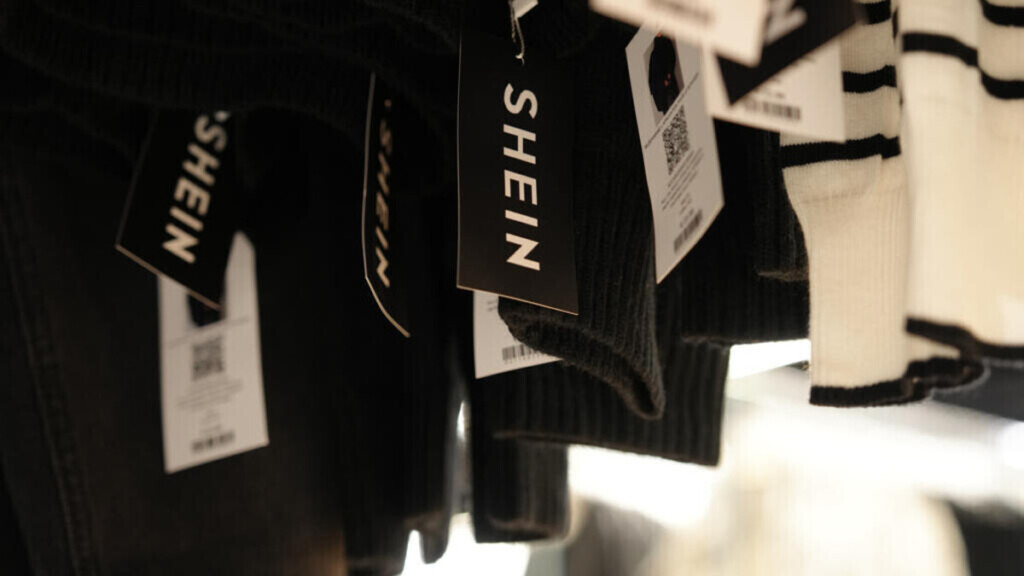
On Friday, August 28, the government published in the Official Journal the details of the financial penalty for ultra-fast fashion companies. Applicable from September 1, the measure primarily targets Asian platforms such as Shein, Temu, and AliExpress, whose business model relies on the mass and rapid sale of low-priced clothing.
The penalty amount will depend on each product's environmental score and will remain capped at 50% of its pre-tax price. From 2026, the companies concerned will have to pay 50 cents for certain underwear or pairs of socks with insufficient scores, 2 euros for a T-shirt, 9 euros for jeans, and 12 euros for a jacket. The scheme will also cover shirts, dresses, skirts, trousers, sweaters, polo shirts, swimwear, and coats.
A scale that will be progressively strengthened until 2030
The penalties will increase annually, reaching up to €2 for socks or underwear and €19,50 for a jacket by 2030. The funds collected will finance bonuses awarded to textile companies deemed more environmentally responsible. Adopted in early July, the law defines ultra-fast fashion based on the volume of clothing placed on the market and a coefficient that takes into account the price of the product relative to the cost of its repair.
The government maintains that it designed the mechanism to protect companies employing staff in France. Tests conducted on Kiabi, Decathlon, Jules, Petit Bateau, E.Leclerc, and Carrefour indicate that they will not be affected. Traditional fast-fashion retailers such as Zara, H&M, Primark, and Uniqlo are also expected to be exempt from the scheme, as the government considers their sales volumes to be significantly lower than those of the major ultra-fast-fashion platforms.








Community
Comments
Write a comment
Be the first to comment on this article.