

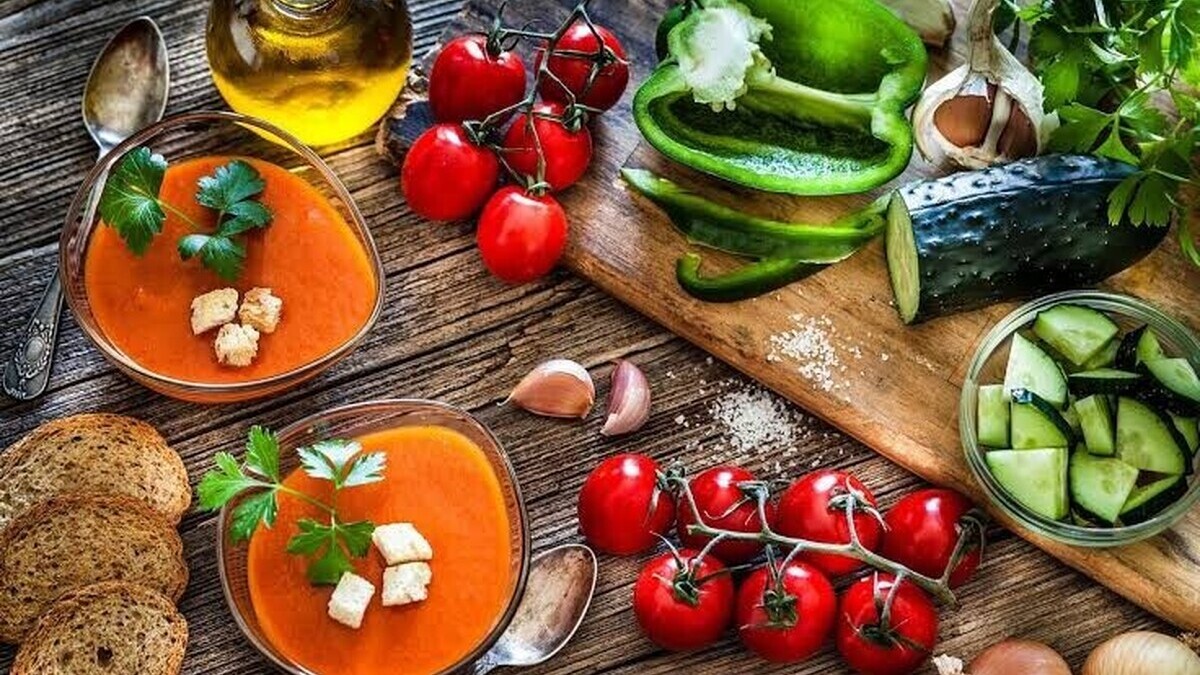
Originating in Andalusia, in southern Spain, gazpacho has become one of the iconic dishes of Mediterranean cuisine. Served cold, it is traditionally prepared with tomatoes, cucumber, bell pepper, garlic, olive oil, vinegar, and bread. Its texture can be perfectly smooth or slightly thick, depending on the recipe and regional customs.
Especially appreciated during hot weather, gazpacho is an easy way to consume several raw vegetables. A serving provides water, fiber, vitamins, and antioxidants, notably lycopene from tomatoes. Its calorie content is generally moderate, although it varies depending on the amount of olive oil and bread used in its preparation.
A simple recipe that also appeals to manufacturers
The popularity of gazpacho now extends far beyond Spain's borders. In France, it has become a staple in supermarket refrigerated sections alongside traditional soups and vegetable juices. Brands now offer numerous variations made with heirloom tomatoes, watermelon, beetroot, zucchini, or yellow bell pepper. However, commercially produced gazpacho may contain more salt, oil, or additives than a homemade version.
To make homemade gazpacho, simply blend ripe tomatoes with cucumber, bell pepper, a small amount of garlic, olive oil, and vinegar, then let the mixture cool for several hours. The dish can be served with diced vegetables, croutons, fresh herbs, or a hard-boiled egg. Economical, quick, and refreshing, gazpacho is a perfect choice for summer meals.







Community
Comments
Write a comment
Be the first to comment on this article.