

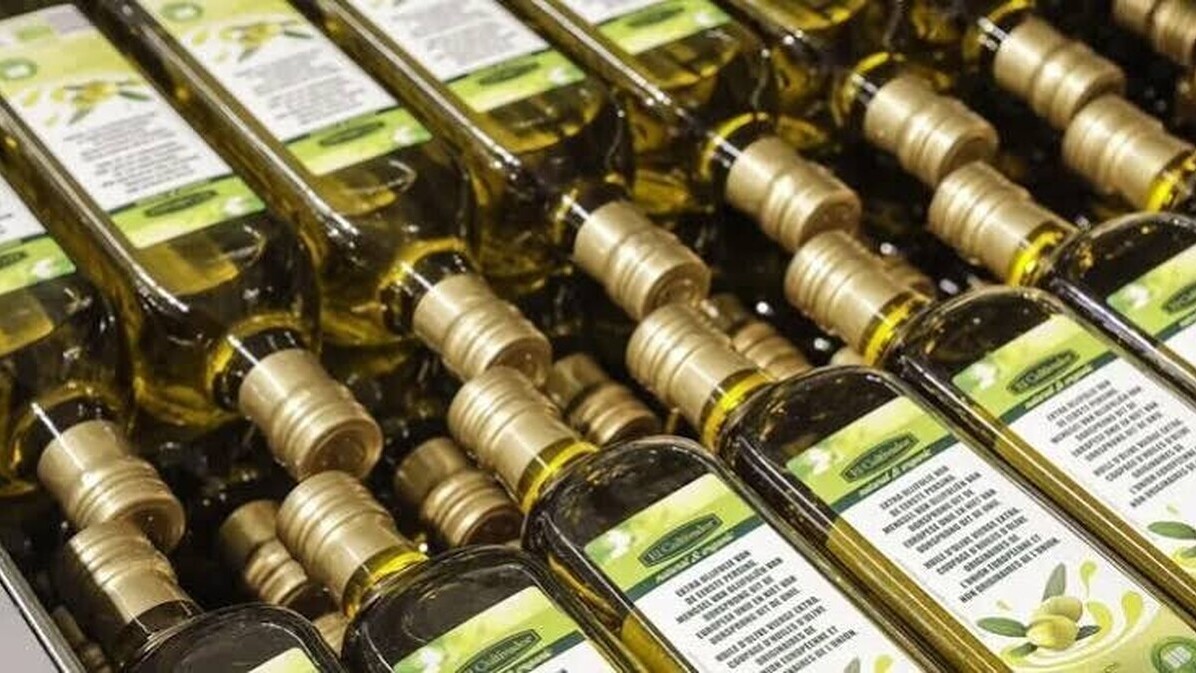
Olive oil is playing an increasingly important role in the French diet. National consumption has risen from approximately 44,000 tons per year in the late 1990s to nearly 110,000 tons today. With about 1,5 liters consumed annually per capita, France is one of the leading European markets, second only to the major Mediterranean countries. Globally, consumption is projected to reach 3,25 million tons during the 2025-2026 season, almost double the level seen in the early 1990s.
This demand contrasts sharply with the weakness of French production. In 2025, nearly 23,800 tons of olives were harvested in France, while the 2024-2025 season produced just over 5,700 tons of oil. The domestic sector therefore covers only about 5% of French consumption. By comparison, Spain produced 1,419 million tons over the same period, nearly 250 times the French volume.
A French industry focused on the high-end market
French olive growing represents approximately 17,600 hectares under cultivation, five million olive trees, and nearly 40,000 producers, the majority of whom are individuals or small family farms. Around 10,000 farmers account for between 70 and 80% of the total volume. Processing relies on nearly 300 mills, primarily located in the Bouches-du-Rhône, Gard, Drôme, Var, Vaucluse, Alpes-Maritimes, and Alpes-de-Haute-Provence departments.
Unable to compete in volume with Spain, Italy, or Tunisia, the French olive oil industry focuses on quality, short supply chains, and geographical indications. The country boasts nine olive oils with protected designation of origin (PDO) status, notably those from Provence, Nyons, Nîmes, Nice, Corsica, and the Baux-de-Provence valley. These products are generally more expensive than imported oils, but their traceability, local varieties, and artisanal image allow them to find a market in gourmet shops, restaurants, and gastronomic tourism.
A structural dependence on imports
Approximately 95% of the oil consumed in France is imported. Spain alone supplies nearly 74% of the volume, followed by Italy at around 17%, and several Mediterranean producers such as Tunisia, Portugal, and Greece. This dependence places the French market directly under the influence of Spanish harvests. A drought in Andalusia, a drop in stocks, or a rise in energy costs can quickly impact prices in French supermarkets.
Between 2022 and 2024, olive oil prices rose by 78% in the European Union, following two poor harvests caused by heat and drought. The improvement in global production, which rebounded to approximately 3,57 million tons in 2024-2025, then led to a 23% decrease in European prices in 2025. For France, the economic challenge now lies in developing orchards and modernizing mills without abandoning its premium positioning. French olive oil will remain a minority in terms of volume, but it can generate more value through protected designations of origin (PDOs), direct sales, and the attractiveness of olive-growing regions.







Community
Comments
Write a comment
Be the first to comment on this article.