

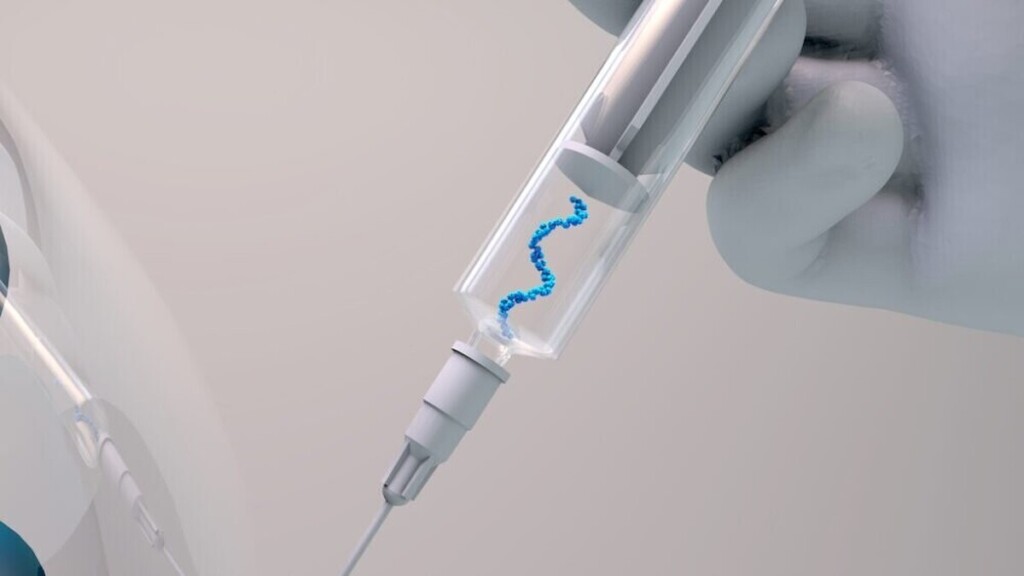
Researchers at Johns Hopkins Medicine have identified a natural modification of RNA that could enhance the production of therapeutic proteins in cells, opening a path for treatments against cancer, infectious diseases and autoimmune pathologies.
It could all come down to a chemical exchange. While current mRNA vaccines, including those against Covid-19, rely on a modification called N1-methylpseudouridine (m1Ψ), scientists at Johns Hopkins University propose replacing it with another natural RNA modification: N4-acetylcytidine, or ac4C. Their work, published in the journal Nature , shows that this change could significantly increase the amount of protein produced by cells from the same dose of mRNA.
The team conducted its experiments on human dendritic cells grown in the laboratory and on mouse liver cells. The finding is clear: ribosomes, the cellular machines that read genetic instructions to assemble proteins, move almost twice as fast along mRNA strands modified by ac4C as along those modified by m1Ψ.
“Our imaging techniques have shown that ribosomes move almost twice as fast on ac4C-modified mRNA, thus avoiding the ribosome bottlenecks observed with the industry-standard mRNA platform,” explains Bin Wu, associate professor of biophysics and biophysical chemistry at Johns Hopkins School of Medicine. This molecular bottleneck phenomenon would therefore limit the effectiveness of current therapies.
The practical implications are potentially significant. If cells produce more protein from the same amount of mRNA, the doses needed to achieve a therapeutic effect could be reduced. "Our results show that ac4C leads cells to produce more therapeutic proteins to fight disease than the mRNA platform currently used in industry. This could ultimately lead to more effective drugs requiring lower doses," Wu points out.
Over 170 RNA modifications are known, but only a fraction of them have been explored for therapeutic purposes. Ac4C, which is thought to enhance mRNA translation and accelerate protein production, remains at the experimental stage. Its ability to produce these effects safely in living organisms must be demonstrated before any clinical application can be considered.







Community
Comments
Write a comment
Be the first to comment on this article.