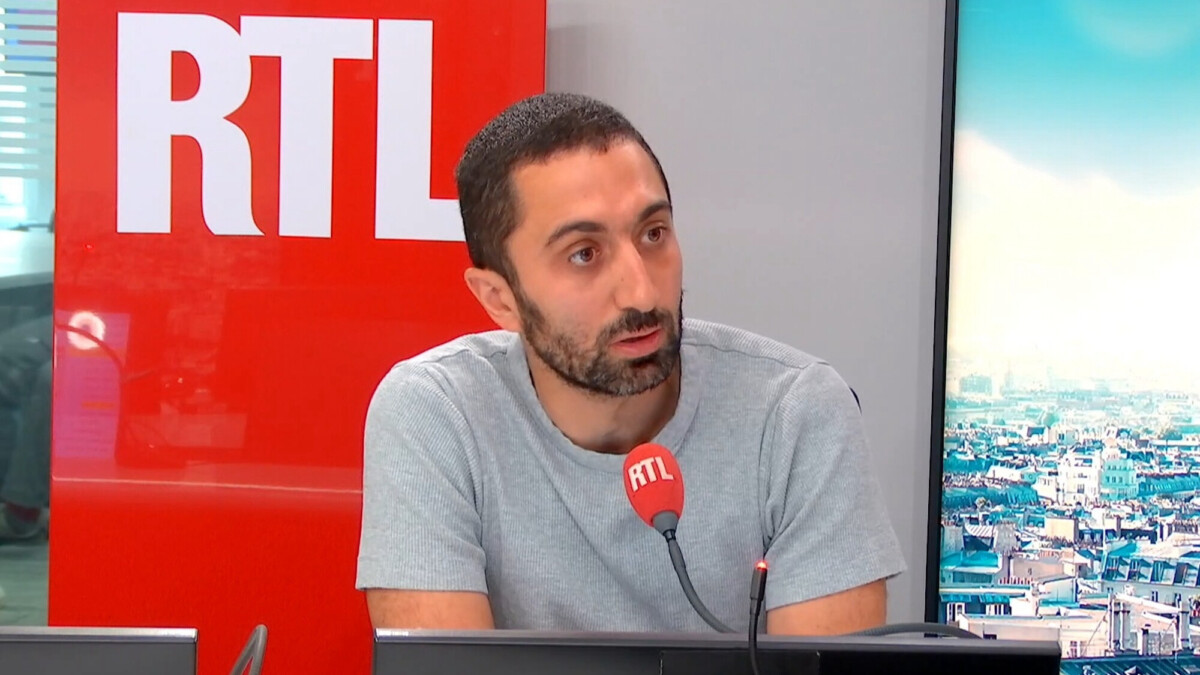


The statement leaves no room for doubt. Addressing activists gathered at the summer school of the Young Insoumis (Young Insoumis), Louis Boyard explained what he intended to do if his party came to power. Among the first measures promised by the LFI deputy for Val-de-Marne: to shut down CNews. "We will begin, week one, by banning CNews ," he declared to applause and cheers from part of the audience. A worrying statement coming from an elected official. Because Louis Boyard isn't talking about politically attacking CNews, denouncing its editorial line, referring cases to the Arcom (French Regulatory Authority for Audiovisual Communication) for violations, or even reforming broadcasting regulations. He is simply promising to "ban" a media outlet whose policies his movement opposes.
Louis Boyard wants to start by silencing CNews
The chosen wording is particularly provocative. “Week one”: according to Louis Boyard, one of the urgent priorities upon his party coming to power would be to shut down a television channel. The MP thus positions himself less as a political opponent of CNews than as a censor who, once in power, would decide which media outlets still have the right to broadcast. Everyone is free to criticize CNews, its journalists, its columnists, or its editorial line. La France Insoumise does so regularly, and sometimes with extreme vehemence. But there is a fundamental difference between fighting the ideas disseminated by a media outlet and announcing that one will shut down that media outlet once in political power. It is precisely this line that Louis Boyard crosses with his statement.
An authoritarian rhetoric that is difficult to reconcile with freedom of the press
The scene is striking: a member of parliament announces to his supporters that his party will ban a television channel as soon as it comes to power, and the room applauds. This way of viewing the relationship between power and the media resembles authoritarian logic more than the normal functioning of a pluralist democracy. In a democratic system, a government must accept the existence of media outlets that are hostile to it, that criticize its policies, and that give a platform to its opponents. A political leader can, of course, consider a channel biased, denounce its practices, and use the procedures provided by law when they believe it is violating its obligations. What is far more problematic is promising its elimination as soon as power is gained. Presented in this way, the method described by Louis Boyard is that of political power choosing which media outlets are authorized and which are no longer. This concept echoes the practices of authoritarian regimes, in which those in power seek precisely to control or eliminate media outlets deemed hostile.
CNews, the designated enemy of La France insoumise
Relations between La France Insoumise (LFI) and CNews have been abysmal for several years. Jean-Luc Mélenchon and numerous LFI officials regularly accuse the Canal+ group channel of promoting right-wing and far-right ideas. Louis Boyard has also long denounced the concentration of media ownership in the hands of the very wealthy. In the National Assembly, he notably accused billionaires of seeking to influence public opinion through the media outlets they own. These criticisms are perfectly legitimate in the public debate. Any political party can challenge media concentration, propose new regulations, or denounce a channel's programming. But announcing that a media outlet will be "banned" in the first week of taking office is a completely different matter and harks back to the darkest days of communism.
A government cannot arbitrarily decide to remove a channel
Above all, contrary to what this statement might suggest, the fate of a television channel does not depend on the whims of a member of parliament, a minister, or a president. French broadcasting is regulated by law and overseen by Arcom. This regulator can issue formal notices and impose sanctions on broadcasters when they fail to meet their obligations. Decisions made in this area are also subject to judicial review. Furthermore, freedom of expression, freedom of communication, and media pluralism benefit from strong legal protections. In other words, coming to power does not grant the power to switch off a channel simply because one dislikes its editorial line.
The former television commentator turned media critic
The statement takes on a particular significance when one considers Louis Boyard's background. Before being elected to parliament in 2022, he himself had been a regular on television and radio. He had notably participated in the Grandes Gueules program on RMC and had become a commentator on Touche pas à mon poste! on C8. The former commentator, now a member of parliament, is currently advocating a radical measure against another channel belonging to the same media landscape that he is now openly opposing.
Banning CNews today, and what media outlets tomorrow?
Ultimately, this is the question posed by this statement. If a political power grants itself the right to shut down a television channel because it deems its editorial line dangerous or ideologically hostile, what criteria will it then use to decide which media outlets are acceptable? Today it's CNews. Tomorrow, why not a radio station, a newspaper, or a website particularly critical of the government? Louis Boyard undoubtedly wanted to electrify his audience by singling out one of La France Insoumise's favorite adversaries. But by promising an enthusiastic room to begin his potential exercise of power by banning a television channel, the MP himself adopts the rhetoric of a censor. And when an elected official starts explaining which media outlets he will silence once in power, the question of press freedom is no longer a minor issue.