

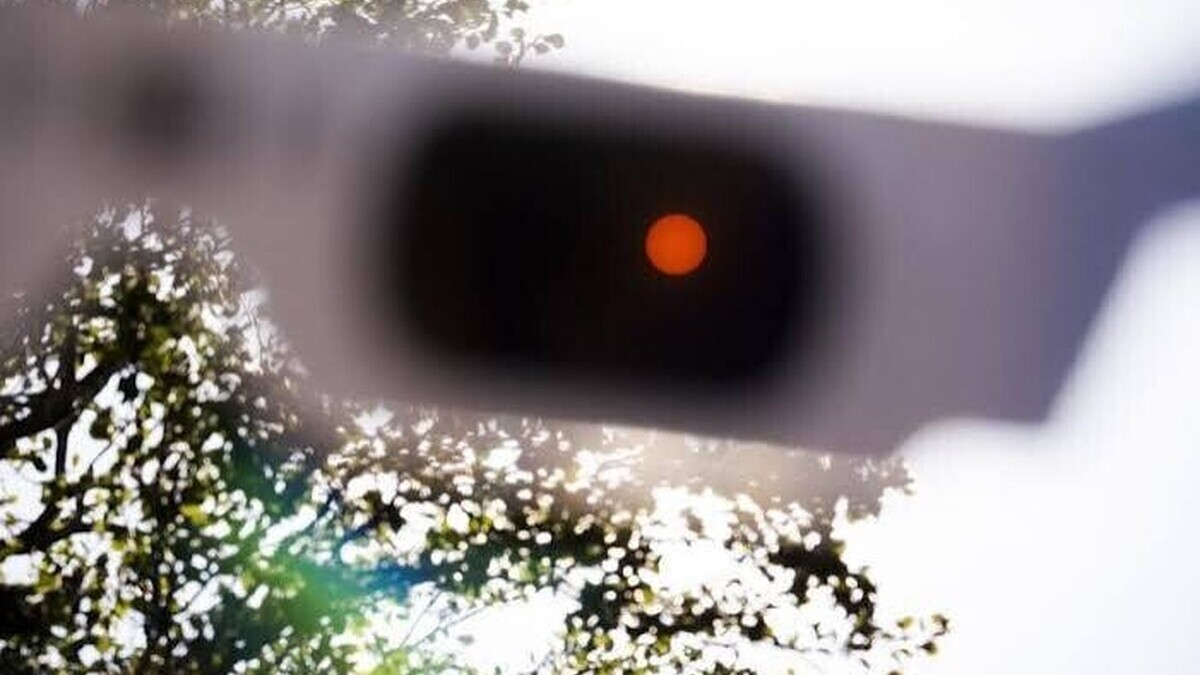
The Ministry of Health is urging people never to observe a solar eclipse without appropriate protective eyewear. Following the eclipse of August 11, 1999, Public Health France recorded 253 eye injuries in mainland France, despite the distribution of over 30 million pairs of approved eclipse glasses.
Of the patients examined, 147 had retinal damage. Seventeen had experienced severe vision loss, with visual acuity below 2/10, and seven had become visually impaired in both eyes. The remaining 106 patients had superficial, localized corneal lesions.
A painless burn at the time of exposure
Staring directly at the sun can cause retinal burns without immediate pain. The eye focuses light rays onto the back of the retina, which can damage the cells responsible for vision. Symptoms, including blurred vision, a central spot, or distorted images, may appear several hours after exposure.
Of the 253 people affected in 1999, 100 observed the eclipse with the naked eye, 74 removed their approved eclipse glasses during the event, and 32 used unsuitable eye protection. Only four patients with retinopathy reported having worn approved eclipse glasses at all times.
Sunglasses are insufficient.
Regular sunglasses, even very dark ones, do not protect against harmful radiation during direct observation. Homemade devices, old X-rays, blackened glass, CDs, or photographic filters are no more reliable forms of protection.
Only glasses specifically designed for observing an eclipse should be used. They allow only a tiny fraction of sunlight to pass through and must be intact, without scratches or perforations. Using binoculars, a telescope, or a camera also requires a solar filter placed in front of the lens, as eclipse glasses alone are insufficient to compensate for the magnification produced by these instruments.






Community
Comments
Write a comment
Be the first to comment on this article.