

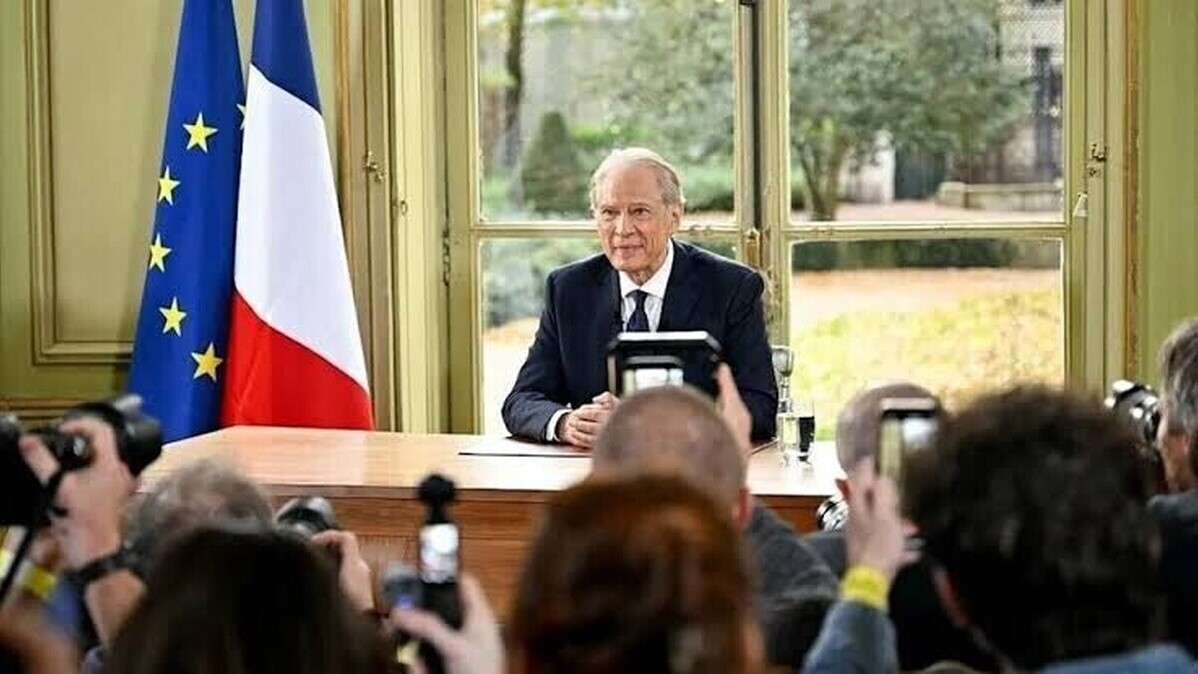
Proposal No. 231 can be summed up in three words: "Nationalize the highways." It bears the signature of the Prime Minister who, in 2005, decided to sell the State's shares in the main concession companies. Twenty years after the sale, completed in early 2006, Dominique de Villepin proposes taking over their operation under public management upon the expiration of the contracts, between 2031 and 2036. The revenues would be channeled into individual retirement savings plans through a public fund.
Having officially launched his presidential campaign on Friday, November 20th, the former Prime Minister has compiled 258 proposals in 25 chapters under the title " Succeeding Again ." In it, he advocates for the reinstatement of the wealth tax, with a scale similar to that of 2016 and an exemption for business assets essential to operations. He also wants to eliminate production taxes and reduce the tax system, which according to his platform comprises over 400 taxes, to just nine major levies. His budgetary objective is time-bound: a public deficit reduced to 2,9% of GDP by 2031.
Voting at 16, a reinstated ENA (National School of Administration), and a CSG (General Social Contribution) on artificial intelligence
Regarding institutions, Dominique de Villepin proposes that young people be able to vote from the age of 16, in their schools until they reach the age of majority. He advocates compulsory voting without penalty, coupled with a rule for blank ballots: if these reach 50%, a new election must be held. He also wants to allow citizens to initiate a referendum through a petition and to reinstate the National School of Administration (ENA), by opening its entrance exams more widely.
In terms of security, he envisions an intelligence agency to combat drug trafficking, modeled after the American DEA. The 15,000 places he promises for first-time offenders would be created in closed educational facilities under the joint jurisdiction of the Justice system and the Ministry of Education. He also pledges to enforce all sentences handed down and proposes mandatory biometric registration of foreigners residing in France without a residence permit.
One of his tax proposals concerns tokens , the units used to measure the amount of text processed or produced by an artificial intelligence model. Dominique de Villepin wants to subject business consumption to the CSG (General Social Contribution) to finance social protection. AI providers, for their part, should offer each user a set number of tokens. The candidate also proposes bringing together European stakeholders to develop cutting-edge models and banning infinite scrolling mechanisms to limit children's screen time.
The commitments regarding daily life follow two timelines. Over his five-year term, Villepin promises one million compact electric cars for rent at social rates, with expanded access for middle-income households. Over ten years, he plans 100,000 places for the elderly, divided between nursing homes and intermediate housing. These are complemented by a universal rental guarantee, which would require insurers to cover landlords against rent arrears, and an artist status guaranteeing creators an income of €1,000 per month.
At 73, the former Prime Minister still needs to gather the 500 endorsements he lacked in 2012. His team claims to have around 300 pledges. Among the elected officials he was scheduled to meet on Friday in Val-d'Oise was Laurent de Gaulle , mayor of Valmondois and great-nephew of the General.




Respond to the article
Be the first to comment on this article.