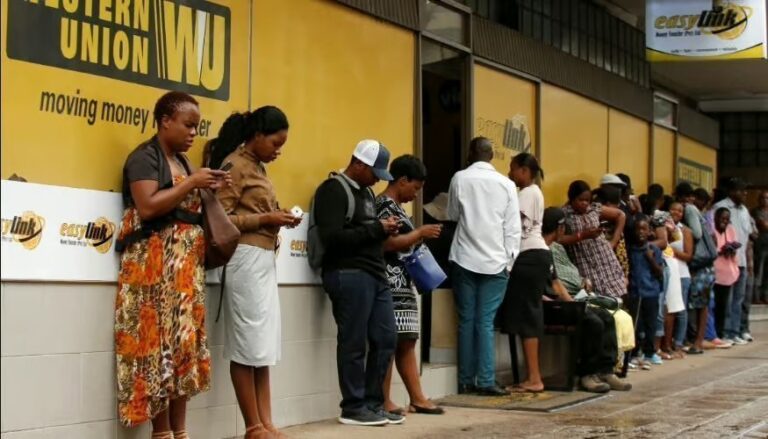
At a time when the government is scrutinizing every penny in the pockets of the French, going so far as to consider a bathtub or a sink as "comfort items" justifying a property tax increase, a question arises: why tax honest homeowners more and more, and never massive money transfers abroad? Because a study by the Observatory of Immigration and Demography (OID) reveals a staggering figure that has been largely hidden from public debate: in fifteen years, France has let slip 155 billion euros sent by immigrants to their countries of origin, a colossal loss for our economy.
155 billion gone abroad, a deficit that explodes year after year
According to the OID, remittances from immigrants have created an annual deficit that has grown from 7 billion in 2008 to over 15 billion in 2023. France is by far the most affected country in Europe, accounting for 44% of the European deficit. The main destinations are in Africa, particularly the Maghreb, but the data is so incomplete that a large portion of these flows goes completely unrecorded in official statistics. For Algeria, for example, the recorded legal transfers (1,8 billion) are, according to a parliamentary report, at least four times underestimated due to the widespread use of the informal system known as "hawala," which bypasses all banking records and avoids taxation.
The OID reiterates that these private flows leave France without equivalent returns and directly impact our GDP, consumption, and tax revenues. In other words, they mechanically impoverish the national economy while enriching the countries of origin. This is precisely why several countries, including the United States, have already implemented specific taxes on these remittances.
A massive and opaque siphoning off of funds, fueled in part by illegal channels.
The study highlights a point almost never discussed publicly: the importance of clandestine remittances. An Ipsos survey reveals that nearly one in five migrants uses informal channels, particularly for travel to North Africa. These "exchanges" sometimes take place in cafés, through intermediaries, at the parallel exchange rate. The result: no accounting records, no taxation, no transparency for the French state. For North Africa, the available figures are so incomplete that the actual amounts are likely much higher than current estimates.
The International Organization for Migration (IOM) believes that this financial evasion creates a form of economic dependency in recipient countries and permanently weakens those that finance these flows. The International Organization for Migration itself speaks of a "culture of dependency" fostered by these transfers, which discourage investment and local economic activity.
Given this situation, the question is no longer whether these transfers are costly for France: they are extremely costly. However, their continuation without oversight or taxation raises questions about the consistency of a state that overtaxes its taxpayers to gain a few square meters of "comfort" while allowing the equivalent of a full year's budget for national education to slip away every fifteen years without any reaction.
Reduce, tax, control: the options on the table
The OID puts forward several simple and applicable proposals in this regard:
– reduce migration flows from the most beneficiary countries;
– introduce a European tax on transfers of funds to third countries, as the United States has done;
– combat illegal hawala-type circuits by strengthening financial controls;
– to use these flows as diplomatic leverage to force countries of origin to take back their nationals who are in an irregular situation.
At a time when the French are being asked to pay more for "their bathtub, their sink, or their heating," perhaps it's time the government stopped turning a blind eye to the billions of euros that leave the country and never return. If sacrifices are to be demanded, it should start with those that are truly costing France dearly.