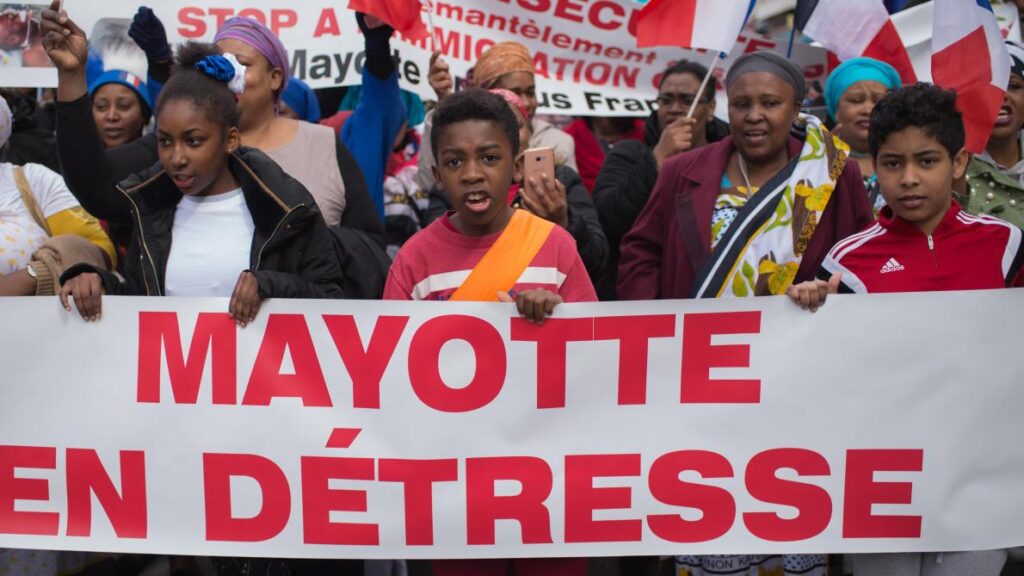
While Paris debates, Mayotte is suffocating. This Thursday, INSEE (the French National Institute of Statistics and Economic Studies) is launching an unprecedented operation on the island: a comprehensive census, house by house, shantytown by shantytown, to finally determine how many people actually live in France's 101st department. This step became inevitable after Cyclone Chido, which displaced thousands of residents, but above all after years of downplaying the demographic shock and political blindness.
An extraordinary census for an extraordinary situation
For two months, 700 agents will survey 65,000 dwellings, including tin shacks and informal settlements that authorities have struggled to map for years. To guarantee a reliable count, INSEE is foregoing a digital census and opting for face-to-face interviews, the only method capable of reaching all residents, both those with and without legal status.
The official objective is to resolve a national controversy. Some local elected officials claim that Mayotte has between 450,000 and 500,000 inhabitants. INSEE maintains a much lower estimate of 321,000 people as of January 1, 2024, figures supported by tangible indicators such as food consumption and the number of active SIM cards. But whatever the exact figure, one thing remains certain: Mayotte is at the heart of an unprecedented demographic upheaval.
Explosive immigration and population growth, security in tatters
The figures speak for themselves. According to INSEE, 48% of the population is foreign-born. Among them are primarily Comorians: one in three adults was born in Anjouan, 70 km from the coast of Mayotte. And regarding irregular immigration, the situation is even more stark: one in two foreigners arriving in Mayotte is undocumented, a rate that climbs to 74% among 18-24 year olds.
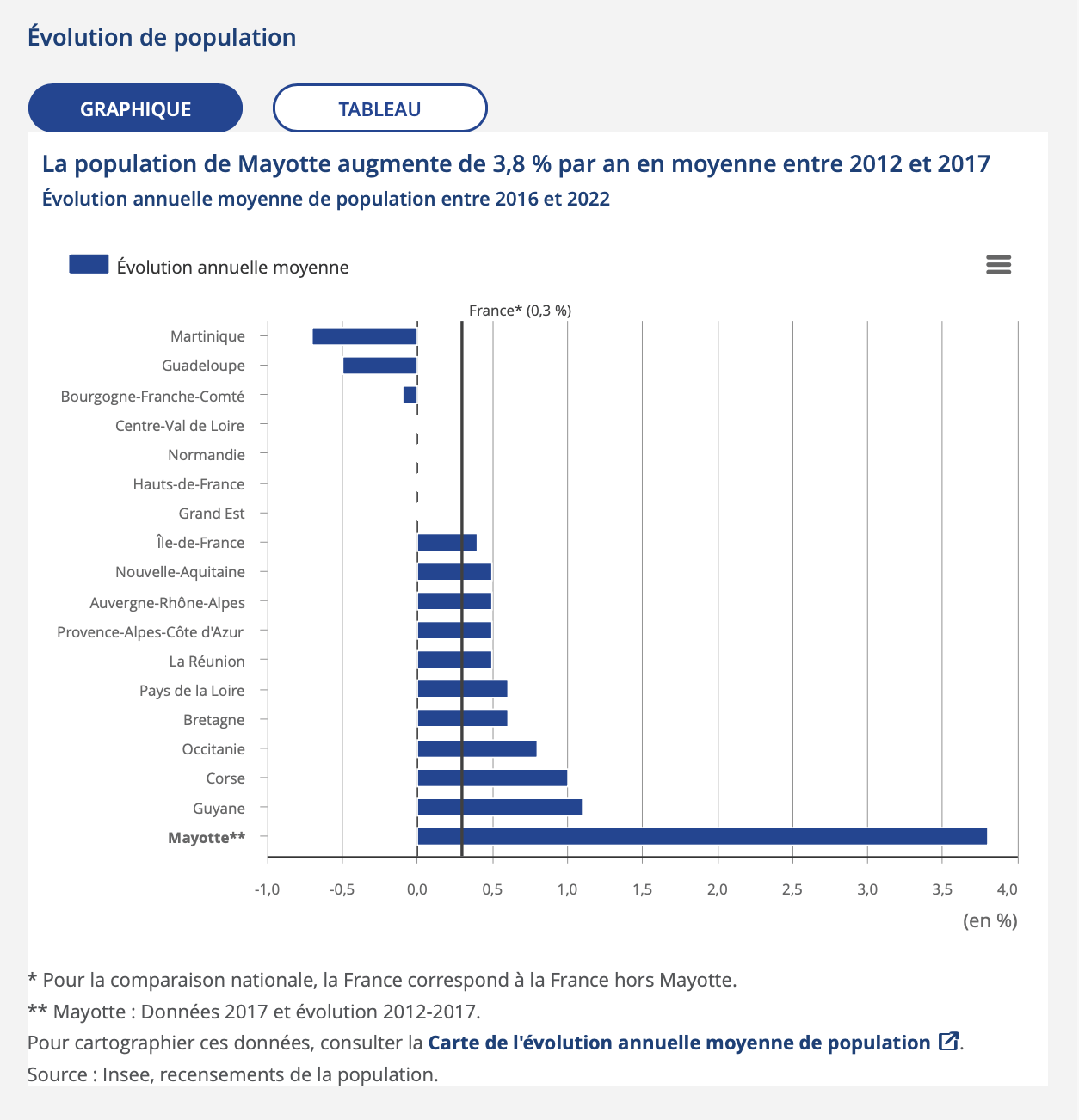
The birth rate follows the same explosive trend. With 4,6 children per woman in 2021, Mayotte holds the absolute record for fertility in France. The maternity ward in Mamoudzou is the busiest in Europe, recording more than 30 births per day, or 10,000 per year. Many Comorian women cross the strait clandestinely in kwassa-kwassa boats to give birth there for free. As a result, one in two young people in Mayotte has a mother born in Anjouan.
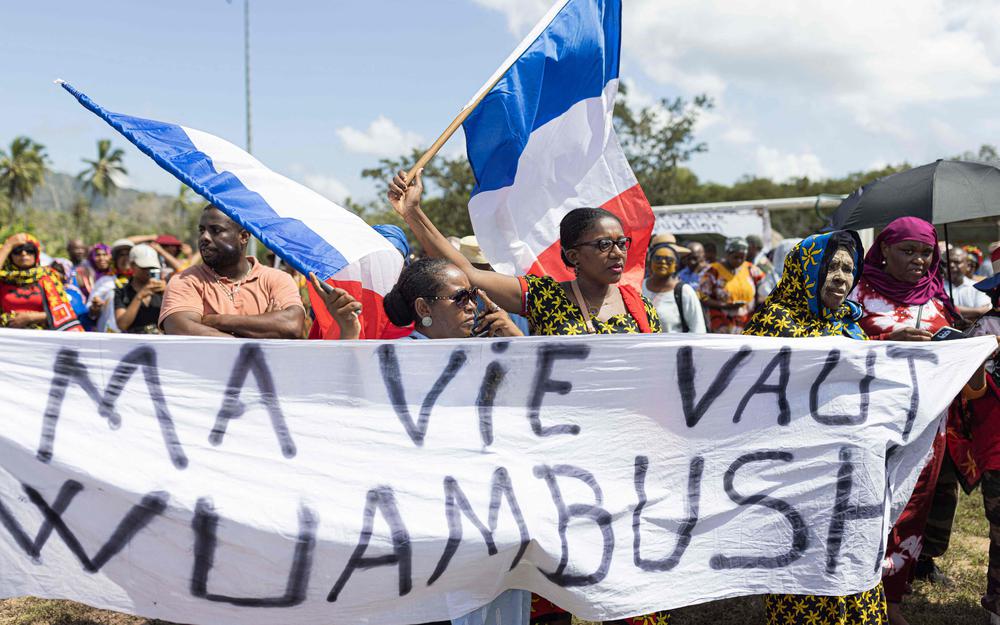
This migratory pressure is compounded by widespread poverty: 77% of the population lives below the poverty line. And insecurity is exploding. INSEE (the French National Institute of Statistics and Economic Studies) describes an "exceptional level of crime," with three times more violent robberies than in mainland France, four times more burglaries, and a French record for assault and battery. For years now, while successive governments have repeatedly promised a firm stance, Mayotte has been living to the rhythm of riots, roadblocks, and failed Wuambushu operations (evictions).
A census to end political denial
In this context, finally knowing the island's true population is not a technical exercise: it is a vital political necessity. Infrastructure, hospitals, schools, the police, the justice system—everything is collapsing under demographic pressure. Without reliable figures, the government is proceeding blindly. This census, estimated at 2 million euros, must therefore allow us to correct inaccurate statements and make visible a reality that many refuse to acknowledge.
The first results will be known in the summer of 2026 and may confirm what the people of Mayotte have been saying for twenty years: Mayotte is no longer simply a department in difficulty, but a territory overwhelmed by a continuous, structural, massive influx that public policies have never been able to anticipate.