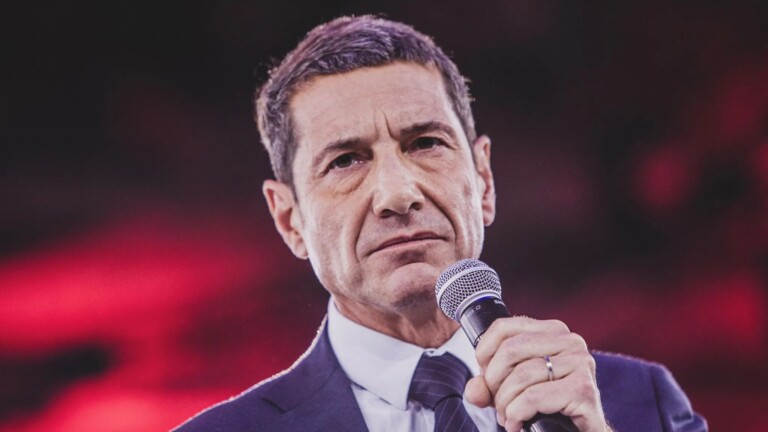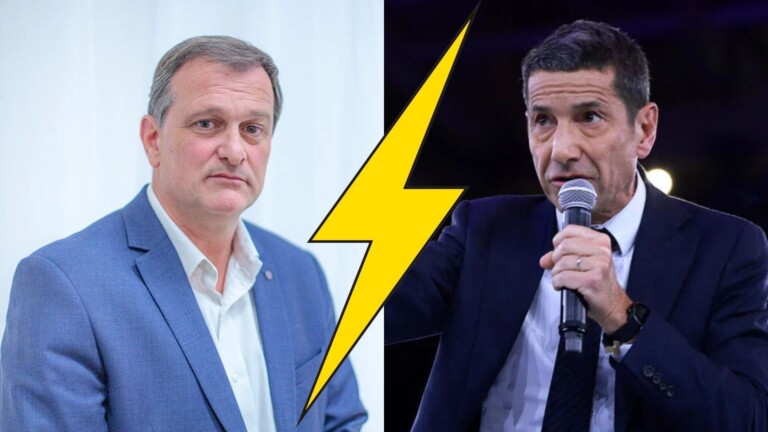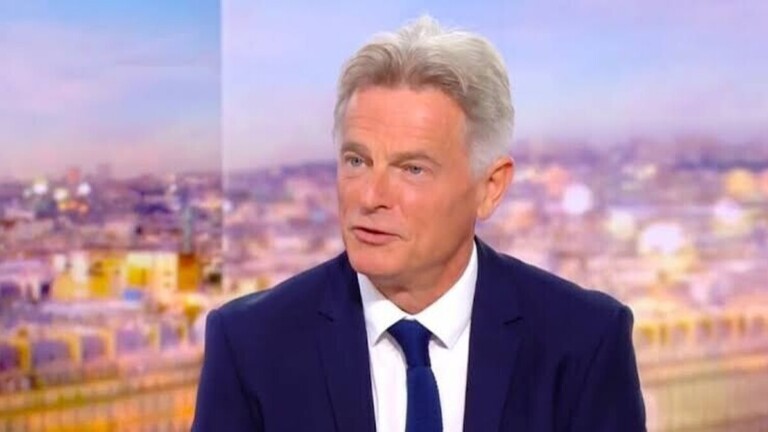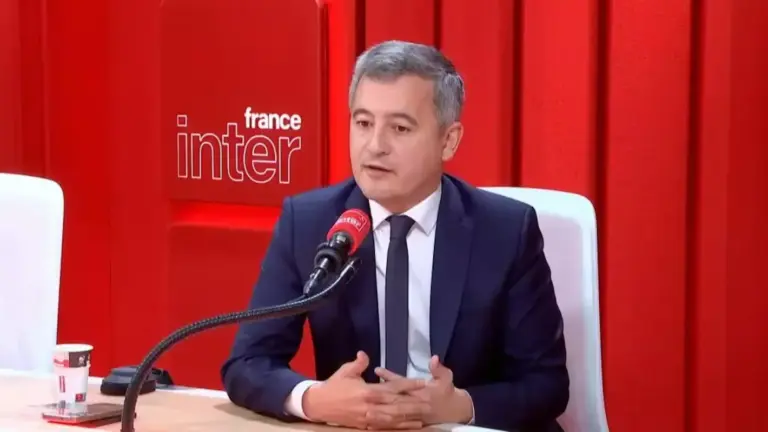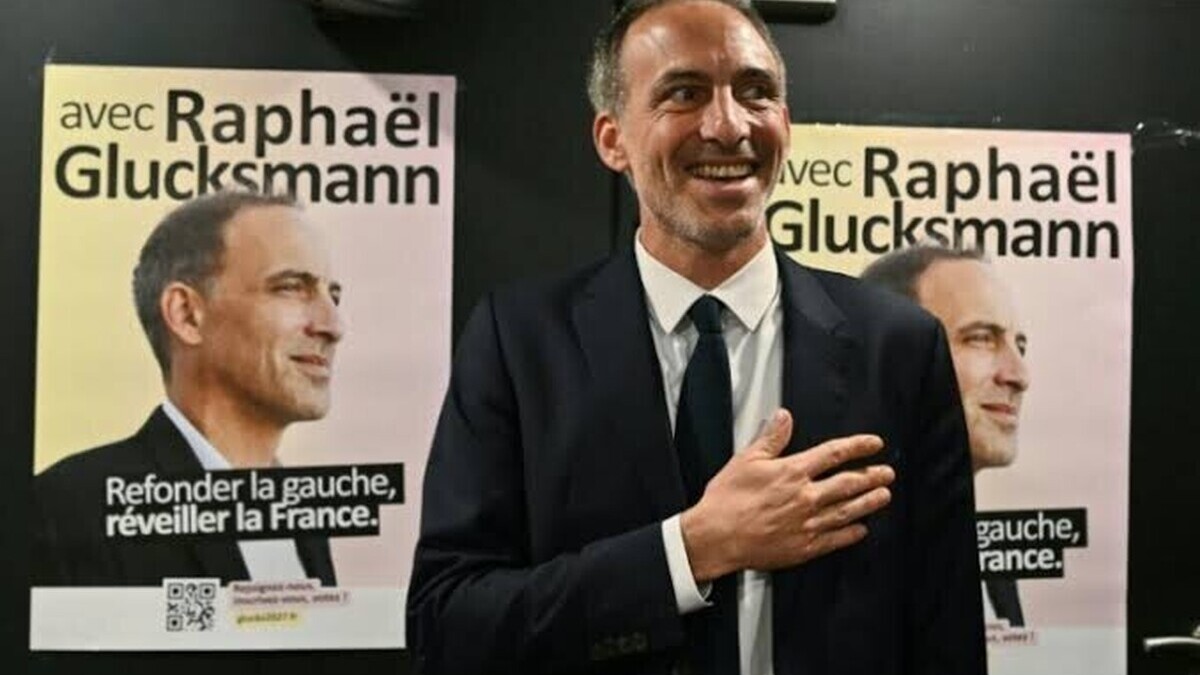
The social-democratic left is about to learn the result of a decisive primary for the 2027 presidential election. This Sunday, October 11, the approximately 140,000 registered voters have until 6 p.m. to choose among five candidates: Raphaël Glucksmann, Olivier Faure, Ségolène Royal, Jérôme Guedj, and Emmanuel Maurel. The MEP and leader of Place publique expresses the ambition to win this consultation in the first round, supported by many socialist leaders. However, the outcome of the vote remains uncertain, notably due to the significant number of voters not affiliated with the organizing political parties. The first results are expected early evening, after a vote disrupted from the start by a cyberattack.
Participation is already one of the notable aspects of this consultation. By 10 p.m. Saturday, 107,356 people had voted, representing more than three-quarters of registered voters. The vote, initially scheduled to end Saturday night, was extended until Sunday at 6 p.m. following a cyberattack that severely slowed the voting platform on Friday morning. Patrick Mennucci, president of the organizing commission, condemned this as an infringement on the democratic process, considering the incident exceeded the scope of the primary alone. The system was restored Friday evening, allowing voters to resume their voting operations. This extension now gives participants a few extra hours to express their choice, while the five contenders await a decisive verdict for their political futures.
Raphaël Glucksmann Faces Four Competitors with Different Strategies
Raphaël Glucksmann approaches this final day with significant mobilization of support. The leader of Place publique notably benefits from the backing of many socialist elected officials, including the presidents of the PS parliamentary groups in the National Assembly and the Senate. His European stance, commitment to international issues, and clear intention to break with La France insoumise are the main markers of his campaign. He presents this primary as the starting point for rebuilding the left around an openly social-democratic orientation. A first-round victory would allow him to avoid another internal confrontation and to begin preparing his presidential campaign more quickly.
Opposing him, Olivier Faure advocates a different conception of left-wing unity. The first secretary of the Socialist Party intends to preserve his party’s autonomy and influence while maintaining the possibility of parliamentary cooperation with other left-wing movements. Ségolène Royal, finalist in the 2007 presidential election, also seeks to mobilize voters sensitive to her experience and political career. Deputies Jérôme Guedj and Emmanuel Maurel complete this competition by defending their own orientations. A Toluna Harris Interactive poll published Friday by M6 and RTL placed Raphaël Glucksmann ahead among French left-leaning respondents, with 33%, followed by Ségolène Royal at 16% and Olivier Faure at 9%. However, these results do not specifically concern registered primary voters and therefore cannot directly predict the outcome.
Relations with Jean-Luc Mélenchon at the Heart of Disagreements
The question of alliances with La France insoumise dominated much of the campaign. Raphaël Glucksmann advocates a clear break with Jean-Luc Mélenchon, criticizing his positions and political strategy. He notably reproaches Olivier Faure for participating in alliances concluded with the insoumis during the New Ecological and Social People’s Union in 2022, then the New Popular Front in 2024. The PS first secretary rejects this interpretation and considers that his competitor risks, on the contrary, bringing the social-democratic left closer to the political center. This opposition led to several tense exchanges during televised debates before the vote. Disagreements also concerned economic orientations, international relations, and strategy to adopt regarding the National Rally.
Tensions also concern the future of the Socialist Party itself. Olivier Faure fears that a victory by Raphaël Glucksmann could weaken the PS’s identity and influence in the presidential campaign. Ségolène Royal also criticized the role occupied by the leader of Place publique in this consultation. Conversely, Raphaël Glucksmann believes his competitors do not carry a sufficiently assertive ambition for the 2027 election. These divergences raise questions about the conditions under which the different factions will unite behind the designated candidate. Jean-Luc Mélenchon, who is not participating in the primary, observes the process from a distance. On Saturday, he explained he is waiting for the social-democratic candidate’s designation to have a clearer view of the balance of power on the left.
An Encouraging Mobilization, but Far from the Large Socialist Primaries
With more than 140,000 registered voters, this consultation exceeds the initial goals of its organizers, who expected about 90,000 participants. But it remains far from the large primaries organized by the Socialist Party during previous presidential elections. In 2011, the vote that selected François Hollande for the 2012 presidential election mobilized several million voters. In 2017, the primary won by Benoît Hamon also gathered between 1.6 and 2 million participants depending on the rounds. However, this comparison must be nuanced, as participation methods, political context, and the scope of involved parties differ. This year, fully electronic voting and prior registration shaped a smaller electorate, a significant part of which remains difficult to identify politically.
The main unknown now lies in the behavior of about 80,000 registered voters who are not clearly affiliated with the parties involved in the consultation. Their vote could alter expected balances and influence the need for a second round, scheduled for October 16 and 17 if no candidate is designated on Sunday. The five contenders have committed to supporting the winner, but tensions observed during the campaign show that political unity will not necessarily be automatic. Beyond designating a candidate, this primary aims to determine the orientation of the social-democratic left for the 2027 presidential election. The results expected Sunday evening will therefore open a new phase, between seeking a common candidacy, internal rivalries, and the need to build a program capable of uniting beyond just the participants in the vote.