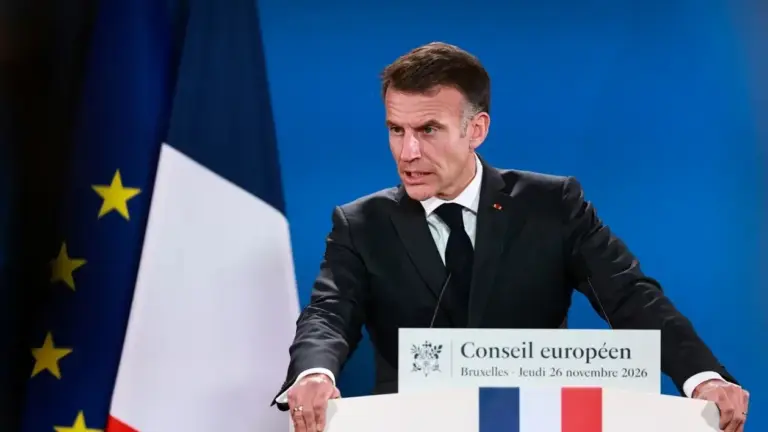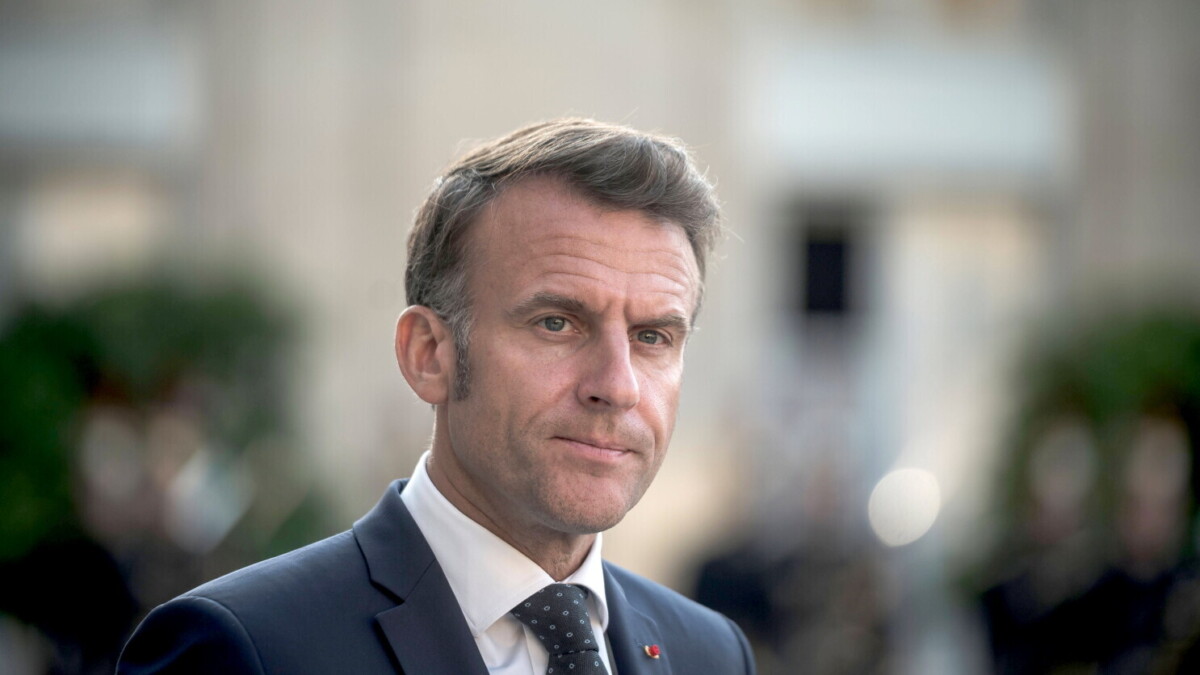
Emmanuel Macron will not be able to run in the 2027 presidential election, but he is now refusing to explicitly rule out the idea of a return five years later. When questioned by the American press about his future after the Élysée Palace, the head of state reiterated that he would complete his second term in May 2027 before adding that he would have to "reinvent something else" and that he was "not ruling anything out." Legally, a candidacy in 2032 would be possible: Article 6 of the Constitution only prohibits serving more than two consecutive presidential terms. After a five-year hiatus, nothing would legally prevent Emmanuel Macron from running again.
This possibility remains, for the time being, a political hypothesis, not a declared candidacy. With less than seven months until the 2027 presidential election, the situation is all the more sensitive as the central bloc prepares for its succession in an already fragmented political landscape. Several Renaissance officials interviewed in recent months have spoken favorably of the idea of the current president retaining a role after leaving office, while others see it primarily as a way to avoid disappearing completely from the public debate. The declaration also comes at a time when his popularity is particularly low: the Ipsos poll of September 2026 gives him 16% favorable opinions, his lowest level in this survey, compared to 81% unfavorable opinions.
French history has seen few comparable reversals of fortune.
A return to the Élysée Palace after a hiatus would be unusual under the Fifth Republic. Since 1958, no president elected by direct universal suffrage has served two terms, left the Élysée for five years, and then returned to the presidency. François Mitterrand and Jacques Chirac served two consecutive terms, while Nicolas Sarkozy and François Hollande left office without returning to the presidency. The two-term limit was only introduced in 2008, under Nicolas Sarkozy. It does not set any limit on the total number of terms a single person could theoretically serve, provided they are not all consecutive.
The situation is therefore different from that of the United States, where the 22nd Amendment prohibits a person from being elected president more than twice. In France, Emmanuel Macron could legally run for president again after 2027 without the need for a constitutional amendment. This obviously prejudges neither his true intentions nor the state of the political landscape in 2032. In the meantime, another president will have held office for five years, and the current balance of power between the center, the right, the left, and the National Rally could shift significantly.
Five years away from the Élysée Palace, inventing things.
The central question, therefore, concerns what Emmanuel Macron would do between 2027 and 2032. Several scenarios are already circulating among his inner circle and supporters: international activity, European responsibilities, a foundation or institute, interventions in public debate, or maintaining influence over the Renaissance movement and the central bloc. Nothing, however, is set in stone. Furthermore, a major European role would be subject to specific institutional procedures and would not depend solely on the will of a former French president.
The context of 2027 also makes any projection highly uncertain. Emmanuel Macron has indicated that he intends to remain in his role as president until the end of his term without becoming a permanent commentator on the succession campaign. His remark about a possible return, however, allows for a longer-term perspective to remain open. For his supporters, it reinforces the idea that his departure from the Élysée Palace would not necessarily mean his disappearance from public life. For his opponents, it already offers a new avenue of opposition at the end of his second term. At this stage, the only certainty is constitutional: 2027 is closed to him, 2032 would not be.