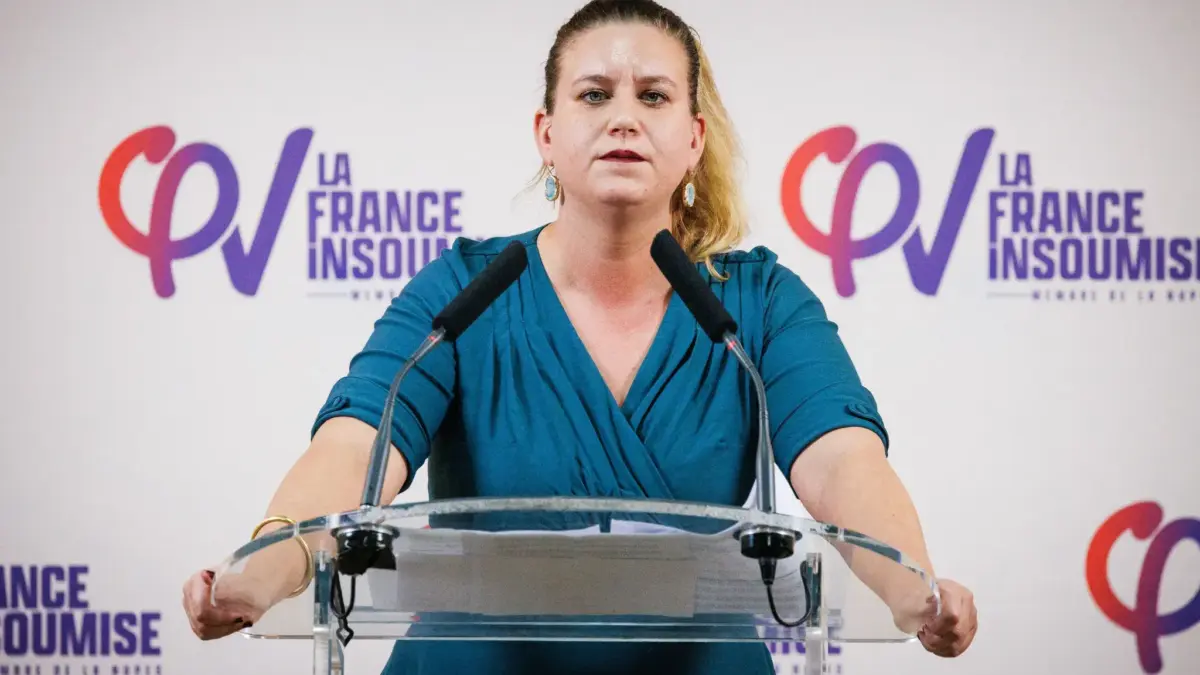
Four members of parliament from La France Insoumise (LFI) received new death threats during the night of Thursday, November 26, to Friday, November 27, 2026. Mathilde Panot , president of the LFI parliamentary group in the National Assembly , announced that she had contacted the Paris public prosecutor after receiving emails that also contained racist and sexist insults. The messages also targeted Danièle Obono, Manuel Bompard , and Aly Diouara , as well as some of their staff. The email address used included the name of Kévin Tessier, a suspect in the racist attack committed in October in Trappes and La Verrière, in the Yvelines department. However, no publicly available evidence confirms that Tessier was responsible for sending the messages.
According to information provided by Mathilde Panot, the messages were received on Friday between 3:00 and 4:00 a.m. The sender's email address bore the identity of the main suspect in the October 23 racist attack in the Yvelines region , an event that sparked widespread outrage in France. The emails contained explicit threats and remarks targeting, in particular, the origin and gender of the parliamentarians involved. The MPs' staff were also reportedly identified as potential targets. The use of the name of someone implicated in a terrorist case reinforces the disturbing nature of the messages, but does not constitute proof of their true author. It will be up to investigators to determine the technical origin of the emails and the intentions of the person responsible.
Mathilde Panot filed a report with the Paris public prosecutor , Laure Beccuau, invoking Article 40 of the Code of Criminal Procedure. This provision requires certain public authorities to report crimes or offenses they become aware of in the course of their duties to the public prosecutor's office. The leader of the La France Insoumise group also publicly denounced an attempt to intimidate elected representatives of the nation. The four members of parliament concerned hold different political and parliamentary responsibilities but belong to the same group in the National Assembly. The threats received could lead to investigations aimed at identifying the perpetrator and determining the applicable criminal charges.
A series of threats that worries the elected officials of La France Insoumise.
This new case comes just days after a previous legal action initiated by several members of parliament from La France Insoumise . On Tuesday, November 24, six MPs, including Éric Coquerel, Antoine Léaument, Sarah Legrain, Marie Mesmeur, Thomas Portes, and Carlos Martens Bilongo, announced the filing of a collective complaint concerning handwritten letters containing death threats. Some messages included swastikas or references to far-right organizations. The elected officials involved had already denounced the repeated nature of such incidents and the difficulties encountered in obtaining swift legal responses. At this stage, no link between these letters and the new emails received on Friday has been publicly established.
Threats against members of parliament raise a broader question about the safety of politicians and their staff. Elected officials may be subject to criticism, sometimes particularly virulent, but death threats and intimidation constitute criminal offenses that can lead to prosecution. Social media and electronic communications sometimes facilitate the dissemination of anonymous messages, necessitating technical investigations to identify the senders. For the MPs concerned, the issue is also how to continue their mandate without being subjected to pressure that jeopardizes their safety. Investigations will now have to determine whether the messages were sent by a single individual, whether they are part of a coordinated effort, and whether specific protective measures are required.