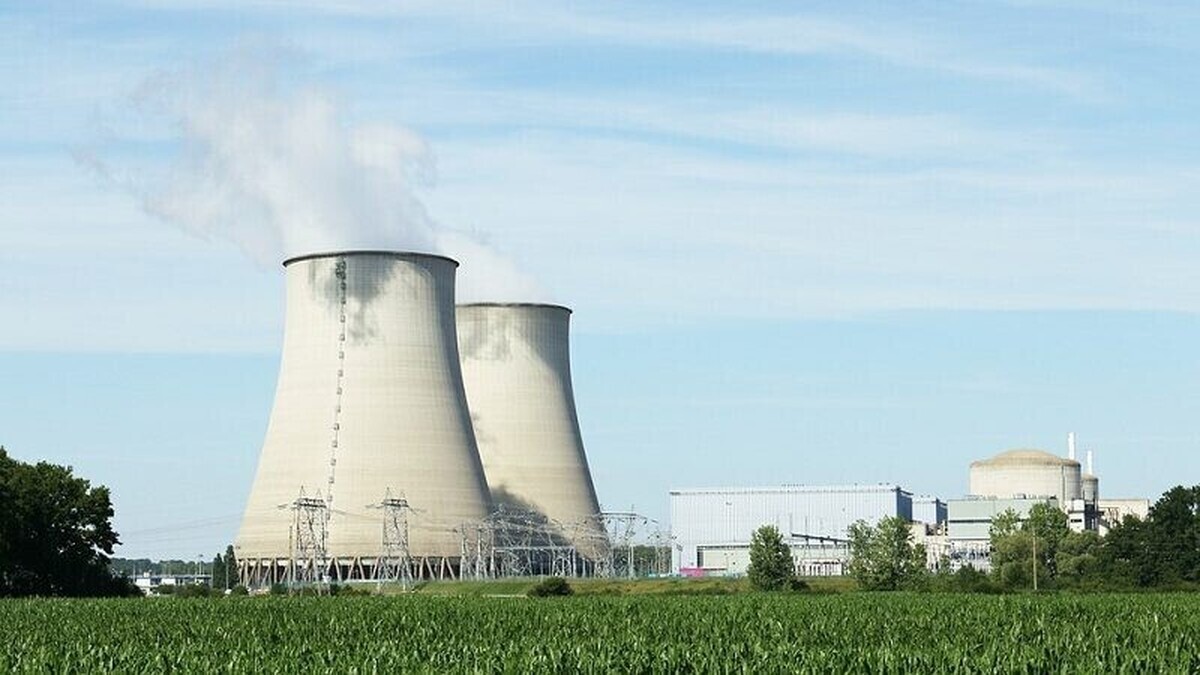
Construction of the first six EPR2 reactors hasn't even begun, but the battle for the next wave is already underway. After Penly, Gravelines, and Bugey, each slated to host a pair of reactors, the French government and EDF are studying the possibility of building eight more EPR2s, meaning four new sites to be selected. Six candidates are currently being given particular prominence: Tricastin, Blayais, Nogent-sur-Seine, Golfech, Chinon, and Creys-Malville. Other nuclear power plants, such as Chooz, Belleville-sur- Loire , Dampierre, and Cattenom, are also monitoring the situation. However, the timeline remains uncertain: the option of eight additional reactors has not yet been definitively committed to, even though EDF must submit a comprehensive proposal for this second program to the government.
The reason local authorities are mobilizing so early is primarily because a nuclear site represents a powerful local economic driver. The 57 reactors currently in operation generated approximately €1,1 billion in local tax revenue in 2025, distributed among municipalities, inter-municipal authorities, and departments. This is in addition to thousands of direct, indirect, and induced jobs, often in sparsely populated areas where a power plant has a significant impact on the local economy. Furthermore, an EPR2 construction project spans more than a decade and involves engineers, workers, construction companies, metallurgy firms, transportation companies, catering services, housing, and training providers. In Gravelines, for example, the two future reactors will occupy approximately 200 hectares and already require a specific local planning strategy to anticipate the needs for housing, transportation, skilled workers, and employee accommodation.
Jobs, taxation and infrastructure: an economic challenge spanning several decades
For local elected officials, securing two EPR2 reactors means guaranteeing a long-term business. EDF anticipates an operating life of approximately sixty years for these new reactors, and their construction alone can take twelve to fifteen years. The initial program of six EPR2 reactors is currently valued at €72,8 billion based on 2020 economic conditions, with the first reactor at Penly targeted for commissioning in 2038, followed by a phased rollout of the remaining reactors. While the cost of the additional program has not yet been finalized, the order of magnitude gives an idea of the investments likely to benefit the selected regions and the entire French industrial sector. EDF is already investing nearly €100 million in a new heat exchanger plant in Chalon-sur-Saône, specifically designed for the first six EPR2 reactors and the eight potential additional reactors.
Local authorities are also putting forward arguments related to networks and regional planning. Nogent-sur-Seine emphasizes its proximity to Île -de-France , the country's largest electricity-consuming region. Blayais defends its position in the Southwest, while Golfech seeks to strengthen nuclear production in Occitanie. Tricastin, excluded from the first batch in favor of Bugey, hopes to secure its pair of reactors this time. Creys-Malville is playing a different card: the former Superphénix site, still being decommissioned, could benefit from its proximity to the Bugey construction site and share certain transport, housing, or Rhône River crossing infrastructure. In all cases, EDF is currently favoring regions already familiar with nuclear power, both for existing expertise, grid connection, and generally higher local acceptance.
Local acceptability is becoming almost as strategic as technology.
The enthusiasm of many elected officials does not mean that these projects will proceed without debate. The first three sites have already been the subject of consultation and public debate procedures under the auspices of the National Commission for Public Debate. In Gravelines, for example, the public inquiry conducted in the spring of 2026 received a favorable opinion, before the issuance in August of an environmental permit allowing certain preparatory work. The future sites will also have to address issues of water consumption, cooling, land use, biodiversity, electrical connection, housing, and mobility. Hosting an EPR2 reactor can create jobs and revenue, but it also requires significant public investment to accommodate several thousand workers during construction.
The current competition thus illustrates a reversal compared to the decades when numerous nuclear projects initially provoked local opposition. For some of the elected officials involved, the challenge now is to prevent the eventual disappearance of the economic activity generated by existing reactors, whose average age is approaching forty years. Hosting EPR2 reactors would allow for the continuation, over several generations, of an industrial ecosystem, skilled jobs, and tax revenues already integrated into the local economy. But the final decision will not hinge solely on political mobilization: EDF and the State will have to arbitrate between industrial constraints, land availability, access to water, grid connection, infrastructure costs, and the capacity of the regions to absorb massive construction projects. The choice of the four future sites will therefore reveal as much about the geography of France's nuclear industry tomorrow as it will reveal the regions that want to maintain a role in its revival.