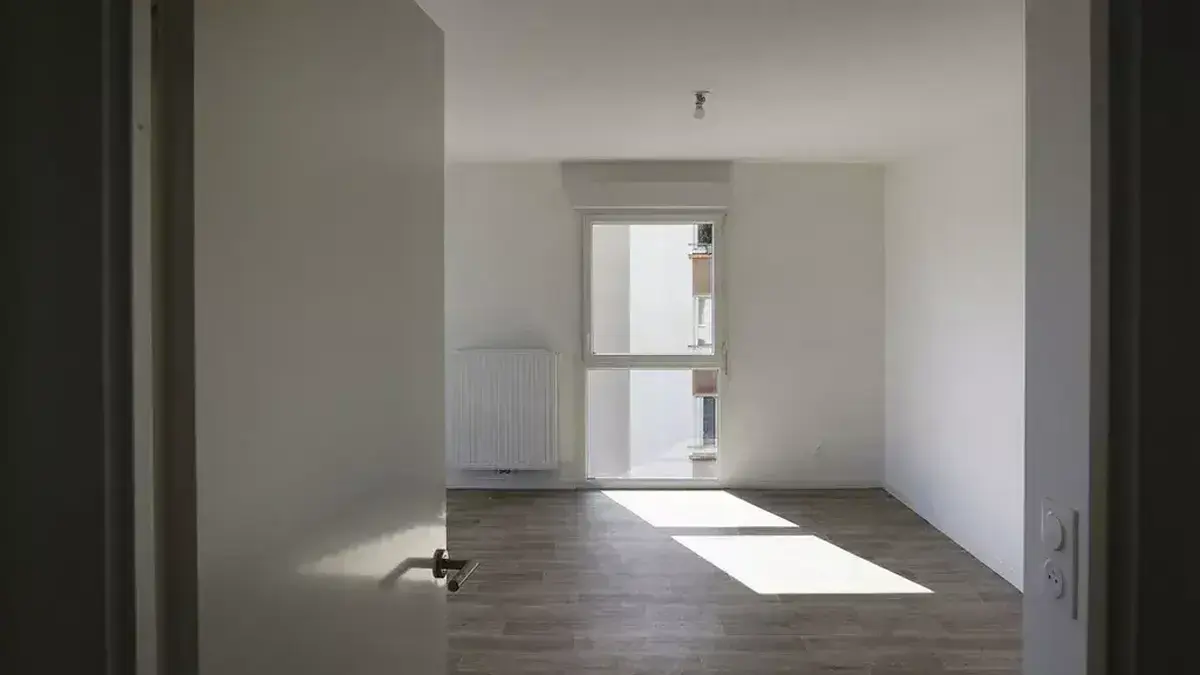
The taxation of vacant housing will undergo significant changes starting in 2027. The 2026 Finance Act plans to replace the two current systems—the annual tax on vacant housing and the housing tax on vacant housing—with a single tax on vacant residential properties. The stated objective is to simplify the system while giving more flexibility to municipalities facing a housing shortage. The reform will apply to taxes levied from 2027 onward.
In municipalities where the housing market is considered particularly tight, the base rate will remain fixed at 17% for the first year of taxation and at 34% from the second year onward. However, municipalities may decide to raise these rates to 30% in the first year and up to 60% in subsequent years. Outside the most strained areas, municipalities may also implement the tax, with a rate that can reach 50%.
A tax calculated on the cadastral rental value
The amount will not be calculated based on the actual market rent, but on the cadastral rental value of the property, that is, the theoretical income used by the tax authorities. A property with an annual rental value of €10,000 could therefore, in a municipality applying the maximum rate of 60%, generate a tax of €6,000 starting from the second year of taxation. The owner, the usufructuary, or certain holders of real rights to the property will be liable for this tax.
The reform also establishes two different vacancy periods. In the most densely populated areas, a property will be taxable if it has been vacant for at least one year as of January 1st of the tax year. In other municipalities where the tax is introduced, the minimum vacancy period will be two years. For the year 2027, the tax authorities may take into account the vacancy period prior to January 1st, 2027.
Certain situations will remain exempt.
Not all vacant properties will automatically be included. The law specifically excludes properties occupied for more than 90 consecutive days during the reference period, as well as properties whose vacancy is beyond the owner's control. The owner can therefore demonstrate, for example, that they have taken genuine steps to rent or sell the property, or that they have carried out significant renovations that render the property temporarily uninhabitable.
This reform is part of a policy aimed at bringing more housing back onto the market in areas where demand is high. Above all, it gives municipalities a much more powerful tax tool than before. The challenge now will be to determine how many municipalities will actually choose to use the maximum rates. From 2027 onwards, a long-term vacant property could therefore become significantly more expensive to maintain, particularly in areas where the housing supply is already insufficient.