In response to an executive order signed by US President Donald Trump , the confidentiality of documents related to the assassination of three American political figures, namely John Kennedy, his brother Robert and the preacher Martin Luther King (nothing has yet been revealed about Malcolm X), has been lifted.
The most famous of these (all famous) is John Kennedy, the 35th President of the United States, who was assassinated by Lee Harvey Oswald while riding in a convertible car with his wife Jacqueline during a parade on a street in Dallas, Texas, on November 22, 1963.
Burning questions
John Kennedy was assassinated 62 years after the last assassination of a US president, that of William McKinley on September 14, 1901. Before that, there were two other assassinations: the most famous, that of Abraham Lincoln (1865), and that of James Garfield (1881). While it has not been proven that the murders of McKinley and Garfield were political, Lincoln's assassination was political in nature, as he had won the four-year War for the Liberation of Slaves (1861-1865), which had sparked widespread protests from various sources.
However, the Kennedy assassination has given rise to many mysteries, explanations, and accusations: Who was behind the crime? Who paid for Oswald's assassination? Is it true that Oswald was not alone and that the fatal bullets may not have been fired from his rifle? Who was responsible: the FBI? the CIA? the deep state? a foreign country? And of course, why?
All these subjects have not escaped the attention of cinema, which has devoted documentary and dramatic works to them, including more than 30 films since then.
Many conspiracies
The most famous film on this subject is "JFK," directed by Oliver Stone at the height of his career in 1991. It is a documentary-style film that presents the possibilities and theories of conspiracy through the investigations of prosecutor Jim Garrison, played by Kevin Costner. The director's intention is not to point the finger at a single culprit, but rather to propose several conspiracy theories, each open to debate, if not credibility. However, one thing is clear: the official investigation hid more than it revealed, which makes it difficult to fully trust.
Stone's journey goes through all these stages, as if to suggest that the truth was missing, thus supporting his view that official reports of the incident were neither sufficient nor honest.
In any case, the director's effort is impressive, bringing together in three and a quarter hours all the possible conclusions and all the possible scenarios, without favoring one theory over another.
Before this film, David Miller had directed a film in 1973 called "Executive Action." In this film, the director does not attempt to avoid the subject, but explores the idea that Kennedy's assassination was planned by government political forces seeking to get rid of him for personal reasons.
A similar accusation lies at the heart of Robert J. Groden's 1993 documentary "JFK: The Case for Conspiracy." The film follows the efforts of District Attorney Garrison as he explores the hypothesis that the assassination was a precisely and successfully executed government conspiracy. What's interesting about the film is that it presents excerpts from the official report on the incident and questions its veracity, contradicting some official claims or, in some scenes, casting doubt on what those reports claim.
Mock trial
In David Greene's "The Trial of Lee Harvey Oswald" (1977), the film verges on speculation with every scene. Greene imagines a trial that never took place, as Oswald was assassinated before being tried. The film imagines what the outcome of the trial would have been, how Oswald might have defended himself and exposed the parties who had manipulated him.
Although this film is entirely fictional, it still holds a special place among those that deal with this subject. This characteristic gives it its power, because it makes Oswald say what he could have said, thus revealing hidden truths.
Oswald's killer, Jack Ruby, has also been the subject of at least two films, Mel Stewart's "Ruby and Oswald" (1978) and John Mackenzie's "Ruby." The latter takes a new perspective on the subject, focusing on who killed Oswald and why. While it promotes the idea of "JFK," this film isn't really about the president, but about Ruby, who knew Oswald before Kennedy's assassination.
Another director, David Mackenzie, made a film in 1999 called "The Secret KGB: JFK Assassination Files," suggesting that Russian intelligence was behind the assassination.
This film contrasts with Rob Reiner's "LBJ" (2016), which suggests that Kennedy's successor, Lyndon B. Johnson, was in constant conflict with him and may have been involved in his demise.
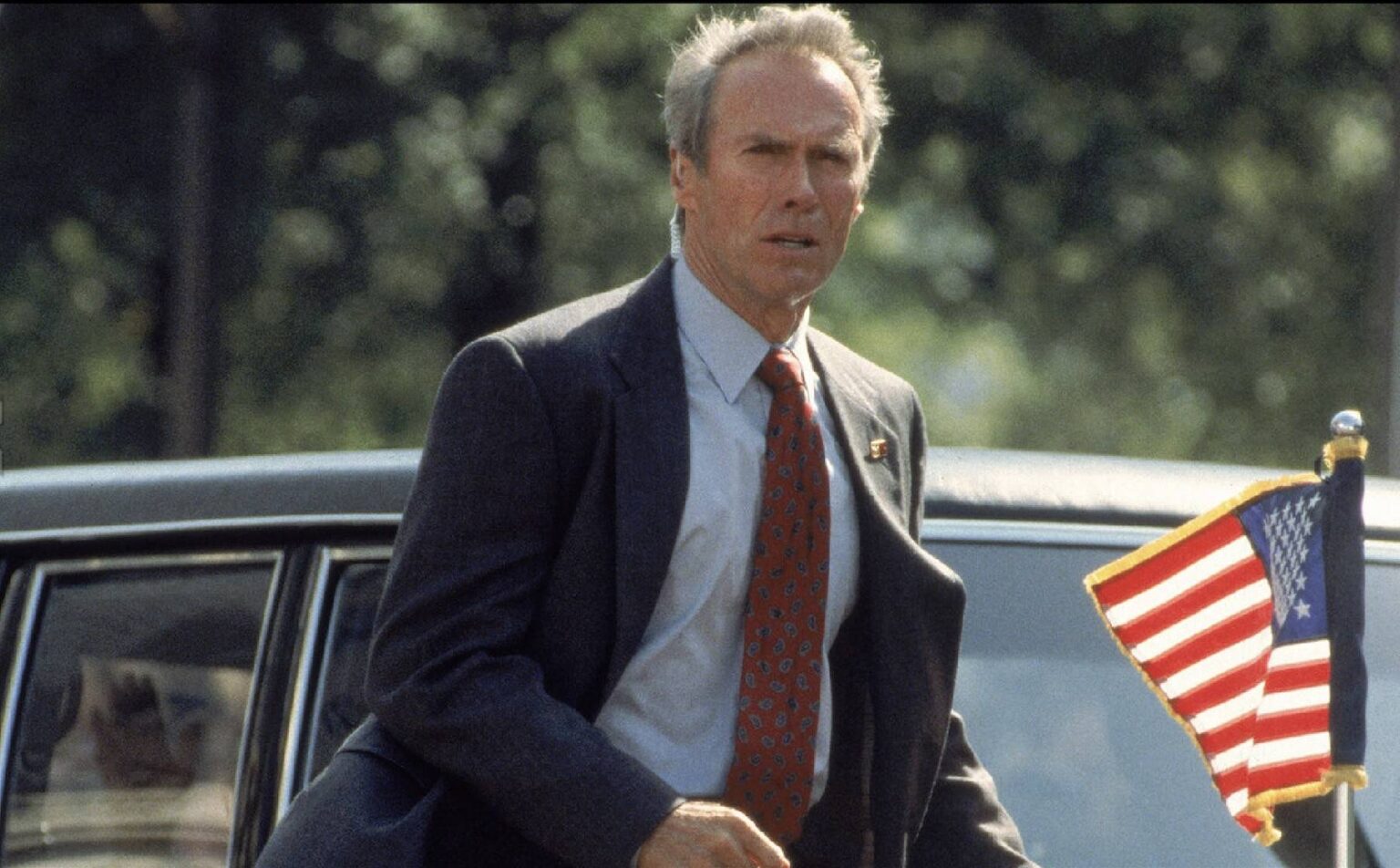
Finally, for those who want to spark their imagination, German director Wolfgang Petersen created "In the Line of Duty" (1993). This film is not about John Kennedy, but about one of his bodyguards (Clint Eastwood), who feels responsible for the failure to protect the president and who, from now on, must face another plot to assassinate a new president, and attempt to accomplish what he was unable to do before.