

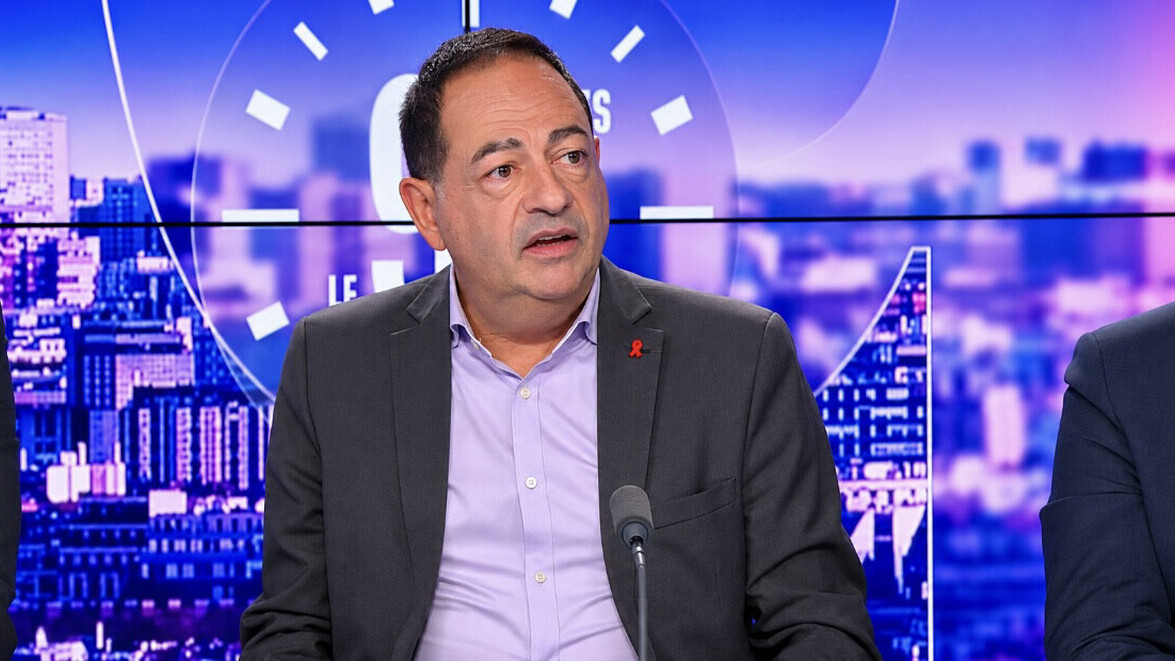
Jean-Luc Romero-Michel, former deputy mayor of Paris and a historic figure in the fight against AIDS, has revealed that he is diagnosed with anal cancer. At 67, the former Parisian official chose to make public the location of his illness while addressing the homophobic reactions he expected. « I suspected there would be homophobic remarks », he confided this Sunday to Le Parisien. Already known for revealing his HIV-positive status in 2002, Jean-Luc Romero-Michel faces this new challenge after nearly forty years living with HIV.
Anal cancer publicly announced after decades of fighting AIDS
Jean-Luc Romero-Michel had already announced in October that he had recently learned he was suffering from cancer. He then mentioned his diagnosis by recalling that hundreds of thousands of people discover each year that they have this disease in France. This Sunday, he specified that he is affected by anal cancer, a location still surrounded by many taboos.
The former official also explained that he had anticipated hostile reactions related to this revelation. His homosexuality, which he has publicly embraced for many years, has already earned him insults and attacks. By choosing to speak about his cancer, he once again exposes a part of his private life, as he did when he revealed his HIV-positive status.
Anal cancer is a disease distinct from colorectal cancer. It develops in the tissues of the anal canal or the anal margin. A large portion of these cancers is associated with persistent infection by certain human papillomaviruses, very common viruses that can affect both women and men, regardless of their sexual orientation.
HIV-positive since 1987, he revealed his HIV status in 2002
Jean-Luc Romero-Michel has been living with HIV since 1987. When he learned of his HIV-positive status, modern antiretroviral treatments did not yet exist and AIDS caused thousands of deaths. He has recounted several times that he thought he would not live to 30 years old.
In 2002, he decided to make his HIV-positive status public in his book Virus de vie. He thus became the first French political leader to publicly reveal that he lives with HIV. This announcement helped make him one of the most recognized personalities in the fight against discrimination targeting HIV-positive people.
Founder in 1995 of the association Local Elected Officials Against AIDS, he has since multiplied public interventions in favor of testing, prevention, and access to treatments. He also presided over Sida Info Service, whose role in listening and support he defends.
Thanks to antiretroviral treatments, a person living with HIV can now maintain a good quality of life for many years. When the viral load is durably undetectable, HIV is not transmitted sexually. However, people living with HIV have an increased risk of developing certain cancers, notably those associated with human papillomaviruses.
A political commitment marked by the fight against discrimination
Former member of the RPR, Jean-Luc Romero-Michel gradually moved closer to the left. He notably served as deputy to Anne Hidalgo at the Paris city hall, responsible for human rights, integration, and the fight against discrimination. He also committed for several decades to the right to die with dignity, eventually becoming honorary president of the Association for the Right to Die with Dignity.
His path has also been marked by personal tragedies. In 2018, his husband Christophe Michel died at 31. Since then, Jean-Luc Romero-Michel has continued his commitment against risks related to chemsex, notably calling for better protection for people who call emergency services during an emergency.
Last January, he was also at the center of a controversy after publishing a selfie taken with Anne Hidalgo on a plane heading to Auschwitz. The former deputy acknowledged a misstep and apologized, while denouncing the homophobic insults received after this publication.
« I want to remain master of my choices, my daily life, and my life »
When he announced his cancer in October, Jean-Luc Romero-Michel expressed his desire to continue his fights despite the illness. « Today, a new challenge presents itself to me. I will face it in my own way, with lucidity and determination », he wrote publicly.
He also stated: « I want to remain master of my choices, my daily life, and my life. » A position consistent with his long-standing commitment to patient autonomy and their freedom of decision in the face of illness.








Respond to the article
Be the first to comment on this article.