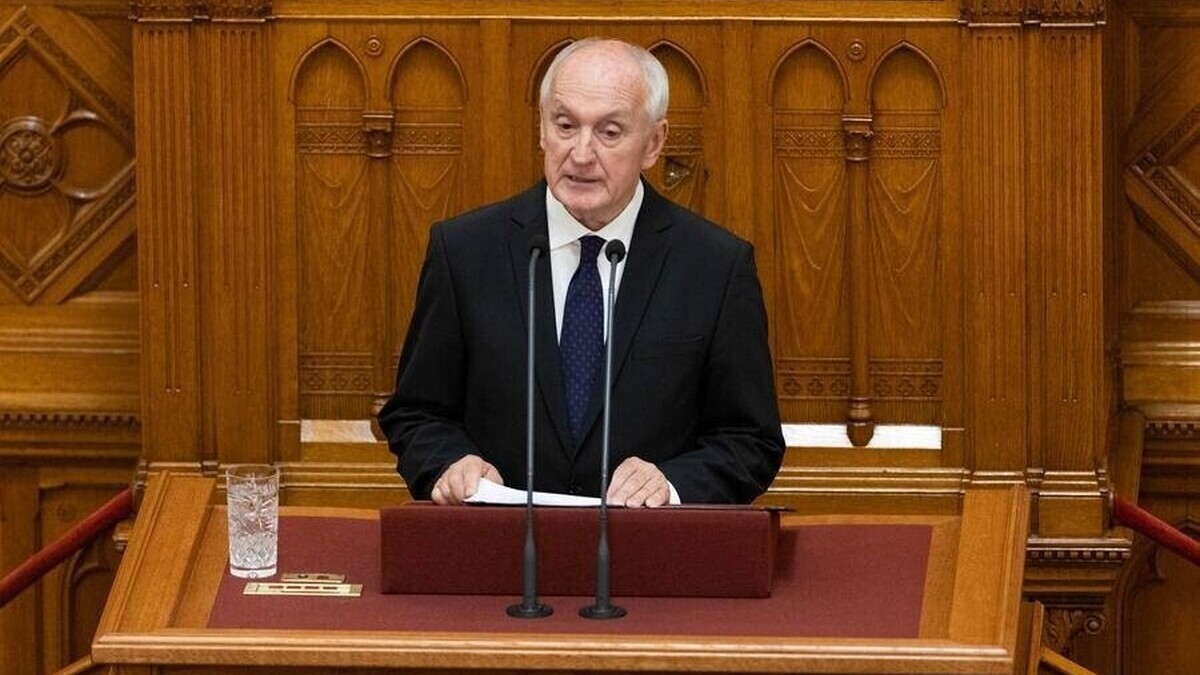
The Hungarian Parliament elected on Tuesday, András Baka, 73, as President of the Republic by 140 votes to 6. This former president of the Supreme Court, who Viktor Orbán himself had dismissed in 2011, will have to oversee the drafting of a new constitution and ensure the dismantling of the institutional legacy of the former Prime Minister.
András Baka is well acquainted with political setbacks. In 2011, the Fidesz government removed him from the presidency of the Supreme Court for attempting to oppose the weakening of the rule of law. Fourteen years later, it is this same background that has led the Péter Magyar government to appoint him head of the Hungarian state.
Before Parliament, Baka delivered a deliberately calming speech. “We cannot build the new Hungary on revenge,” he declared. “The majority of society today feels a sense of liberation and hope. Others feel disappointment and uncertainty. In a democratic society, this is not an anomaly; it is a natural state of affairs.”
The 51 Fidesz deputies left the chamber before the vote, in protest against the dismissal of their candidate Tamás Sulyok, removed from office last month. Orbán’s party accuses the Tisza government of establishing a “tyranny.”
Baka spent seventeen years as a Hungarian judge at the European Court of Human Rights in Strasbourg. “I am not a politician,” he told the BBC last month. “I found myself involved in politics through my professional and legal way of thinking.”
His presidency, however, promises to be far from merely symbolic. Even before being considered for the position, he had expressed opposition to limiting the number of parliamentary terms, included in recently adopted constitutional amendments, seeing it as an infringement on voters’ right to freely choose their representatives. The Magyar government, which may be hoping for a compliant president, could be surprised.
Since taking office in early May, the government has adopted twenty-seven laws and two constitutional amendments. The states of emergency related to migration, Covid, and the war in Ukraine, which Orbán used to govern by decree, have been lifted. The Sovereignty Protection Office, used to target critical journalists and NGOs, has been abolished. A National Office for Asset Recovery and Protection, endowed with broad investigative and prosecutorial powers against those accused of embezzlement under the previous government, has taken its place.
Public radio and television channels have been off air since July 9, during a revamp of their news programs, with the stated goal of removing them from their role as conduits of the Fidesz-era government propaganda.
Baka’s presidency is designed to be transitional. A constitutional amendment provides that he will remain in office until the new constitution comes into effect, with a term capped at five years. Before Parliament, he emphasized a fundamental conviction: “The State does not exist for itself. It exists for the people.”