

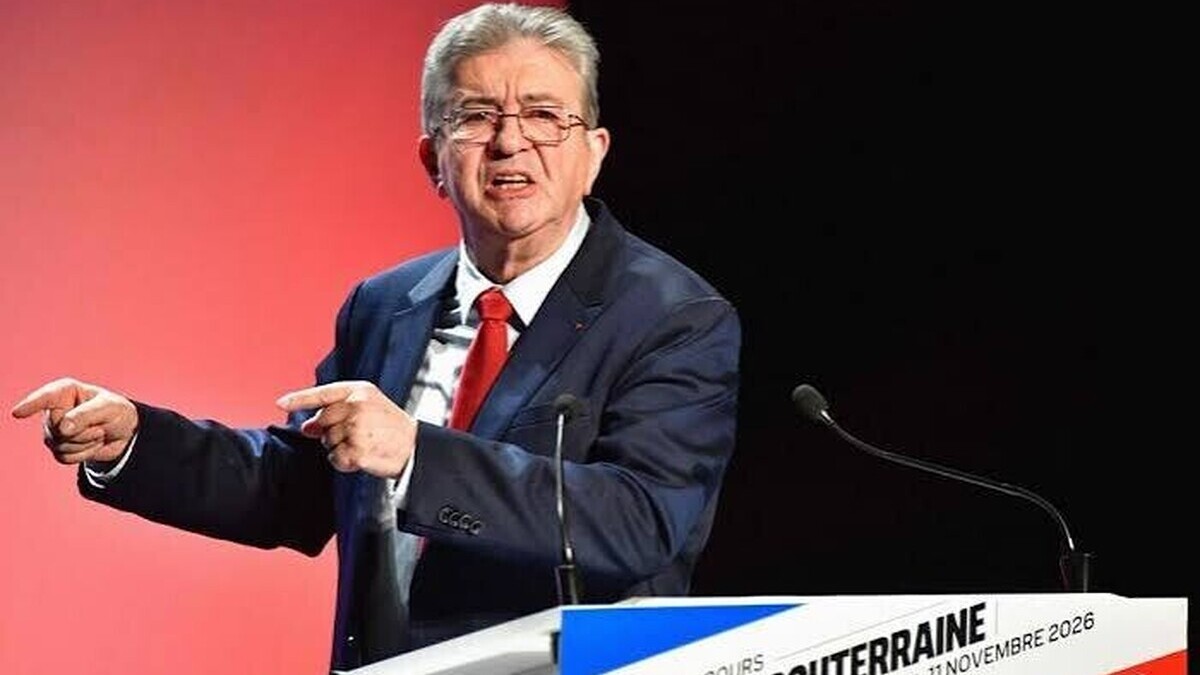
Relocating clothing production, developing flax and hemp cultivation, supporting recycling, and creating thousands of jobs: Jean-Luc Mélenchon is presenting a plan this Friday, November 13th, aimed at rebuilding the French textile industry. With a budget of €3,45 billion over five years, this project aims to increase the share of new clothing manufactured in France to 10% by 2032, compared to just 3% today.
With the 2027 presidential election approaching, Jean-Luc Mélenchon intends to make reindustrialization a cornerstone of his economic program. The La France Insoumise candidate will unveil an investment plan dedicated to the textile sector this Friday during his visit to the Made in France trade show. The stated objective is to rebuild a complete production chain within France, from the cultivation of raw materials to the manufacturing of garments, including spinning and weaving.
The movement's assessment is that the industry has largely been outsourced. According to figures presented in its plan, only 3% of clothing purchased in France is currently manufactured within the country . To reverse this trend, LFI proposes allocating €3,45 billion over five years to increase this proportion to 10% by 2032. This increase would represent approximately 80,000 additional tons of clothing produced annually in France.
Flax and hemp at the heart of the industrial strategy
The project envisions a significant expansion of French flax and hemp cultivation, two raw materials capable of supplying a textile industry less dependent on imports. The area dedicated to flax would increase by 40,000 hectares, reaching 240,000 hectares, while the area dedicated to hemp would grow proportionally, up to 65,000 hectares. This strategy aims to strengthen domestic supply while prioritizing plant-based fibers.
France already has a significant flax production, but part of its industrial processing takes place abroad. Jean-Luc Mélenchon therefore wants to relocate the spinning, weaving, and garment-making stages to France in order to retain more added value within the country. His platform also relies on automation and large-scale production to reduce manufacturing costs. A public fund would be established to support the emergence of companies capable of producing French-made clothing accessible to the general public.
Public procurement and an ecological bonus-malus system
To guarantee market access for businesses, La France Insoumise (France Unbowed) wants to leverage public procurement, estimated at €722 million annually in the clothing sector. The movement is also considering mandatory purchases for certain private orders placed by companies. The goal is to create sufficient and consistent demand to support the development of new industrial capacity.
The plan also includes a regulatory component aimed at limiting competition from the most polluting imported clothing. LFI proposes, in particular, an eco-bonus-malus system, a ban on certain hazardous chemicals, and the creation of a national platform dedicated to clothing made in France. These measures, however, will need to be clarified from a legal standpoint, especially with regard to European rules concerning the internal market and international trade.
Reuse and recycling to reduce textile waste
Jean-Luc Mélenchon also wants to develop the circular economy. His goal is for 25% of clothing sold on the French market to come from reuse or circular economy channels. The program aims to reach 70,000 tons of reused textiles and 200,000 tons recycled annually by 2032, compared to approximately 60,000 tons recycled currently. The movement advocates for public management of this sector to structure its development.
Finally, the plan includes an additional €10 million per year to support technical textiles and a national training program developed in partnership with France Travail. LFI (La France Insoumise) aims to create at least 55,000 direct jobs through this strategy. However, achieving these ambitions depends on the ability to attract investment, rebuild industrial skills, and produce at competitive prices. Just months before the presidential election, this project illustrates Jean-Luc Mélenchon's commitment to linking industrial sovereignty, ecological transition, and employment policy.






Respond to the article
Be the first to comment on this article.