

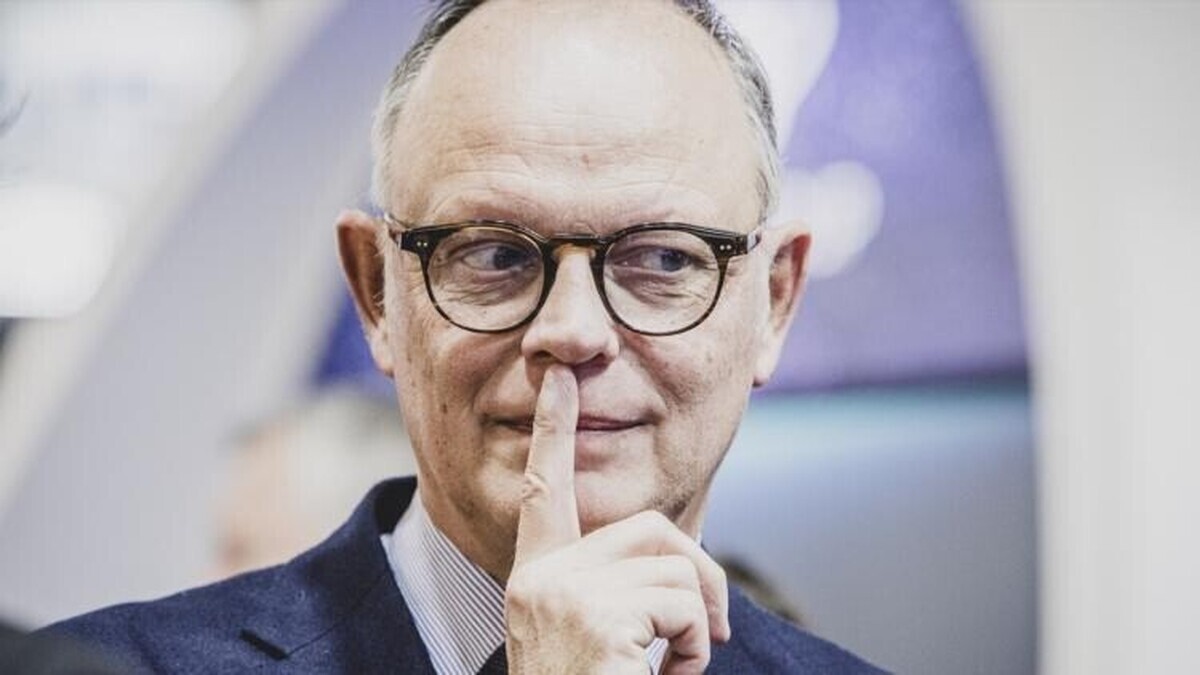
Édouard Philippe specifies his ambitions for the 2027 presidential election. The Horizons candidate updated his program this Thursday, November 12, on his official campaign website, gathering particularly important proposals on pensions, the civil service, labor, and state finances. The former Prime Minister notably wishes to gradually raise the legal retirement age to 65 and increase the contribution period to 45 years within less than ten years, while maintaining early retirement options for people affected by certain health issues, arduous work conditions, or long careers. He also supports the development of collective funded pensions. Another measure: the elimination of more than 250,000 civil servant positions over the five-year term, by not replacing one retirement out of three, without layoffs. Édouard Philippe also aims to reduce the maximum unemployment benefit duration to twelve months for those under 50 and to generalize a three-day waiting period for sick leave, both in the public and private sectors.
On the economic front, the mayor of Le Havre promises not to create any new taxes for five years and to reduce production taxes by 50 billion euros, in exchange for an equivalent reduction in public aid to businesses. He also wants to enshrine a budget balance rule in the Constitution, after a referendum held at the start of the term, aiming to bring the public deficit to about 2% of GDP by the end of the mandate. The candidate intends to place half of the adjustment effort on social spending and a quarter on the state and local authorities, with the remainder coming from economic growth. He finally proposes to encourage increased working time and reduce levies on wages to increase net salaries. These orientations outline a policy of controlling public spending and reducing certain levies, whose effects would notably depend on the actual savings achieved and the chosen financing methods.
Immigration, justice, security: a program of assumed firmness
Édouard Philippe also advocates a significant tightening of migration policy. He proposes to halve immigration, suspend family reunification during the five-year term, and denounce the 1968 Franco-Algerian agreement, which sets specific residence rules for Algerian nationals. He wishes to establish quotas for professional immigration, create return centers abroad for people subject to removal orders, and reinstate double punishment for foreigners convicted of offenses. In Mayotte, the candidate considers a five-year moratorium on immigration, including family immigration, as well as suspending birthright citizenship and the registration of new asylum applications. On security, he proposes reinstating mandatory minimum sentences, allowing short incarcerations from the first offense, and abolishing the role of the sentence enforcement judge. He also wants to deduct certain unpaid fines from social benefits and establish a specific state of emergency against drug trafficking in the most affected territories, with targeted use of video surveillance and artificial intelligence to identify offenders. Several of these measures would, however, require legislative changes and must respect applicable constitutional and European guarantees.
The program finally includes a section dedicated to family, education, and national sovereignty. Édouard Philippe proposes a single family allowance that can reach 350 euros per month from the first child, decreasing according to income, as well as an income tax exemption during the child’s first three years for middle-class families. He wants to allow a parent to resume work at 80% while retaining full salary for two months and promises an average 20% salary increase for teachers over five years. On defense, he plans a voluntary military service involving 50,000 young people each year and maintains his support for Ukraine in the face of the Russian invasion. He also intends to make France a European power in artificial intelligence, notably by gradually increasing the number of engineers trained each year to 100,000. While Gabriel Attal, Bruno Retailleau, and David Lisnard work on organizing a joint primary, still refused by Édouard Philippe, this presentation allows the candidate to more precisely assert his political and economic choices.




Respond to the article
Be the first to comment on this article.