

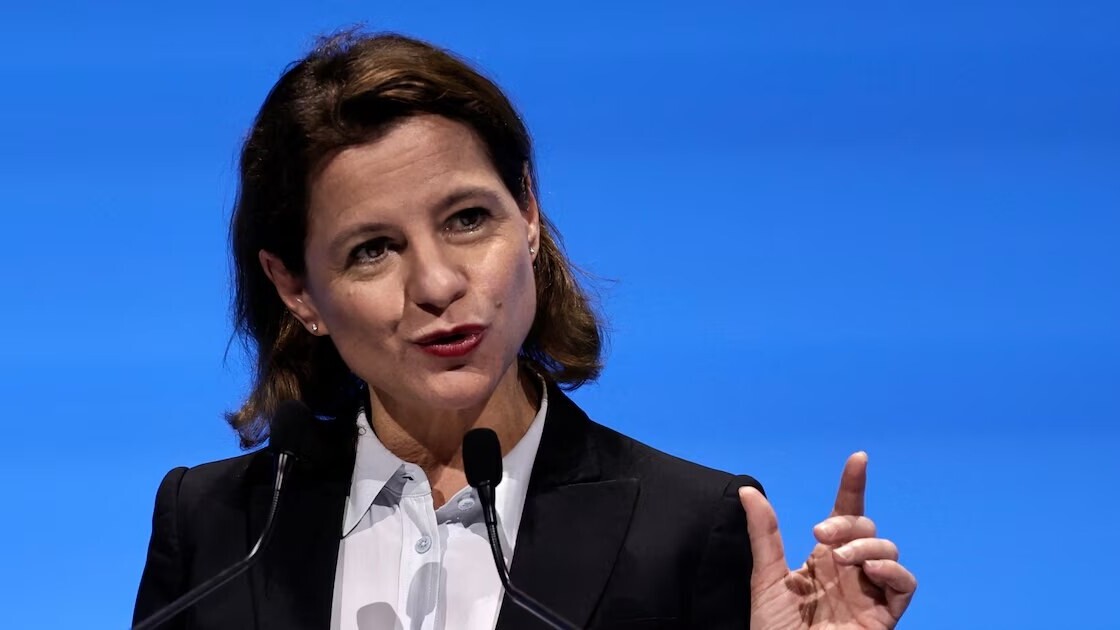
The dinner between Jean-Luc Mélenchon and several leading French business executives resulted in particularly direct exchanges. Invited to speak on France Inter radio on Wednesday, November 18, Catherine MacGregor, CEO of Engie, discussed the meeting held the previous day in Paris between the La France Insoumise presidential candidate and about ten CEOs of major companies. Among the participants were Bernard Arnault , head of LVMH, and Patrick Pouyanné, CEO of TotalEnergies. Accompanied by La France Insoumise MP Aurélie Trouvé, Jean-Luc Mélenchon was able to present his economic policies and discuss topics such as energy, taxation, and international relations. Catherine MacGregor described the meeting as taking place in an "atmosphere of dialogue," while acknowledging the existence of significant disagreements with the candidate's platform.
One of these disagreements directly concerns the future of Engie. La France Insoumise (France Unbowed) advocates for the renationalization of the energy group, in which the state remains a minority shareholder, as part of a plan to strengthen public control over sectors considered strategic. Catherine MacGregor rejects this prospect. "I disagree, and I told him so," she explained on France Inter radio . The party leader believes that a full state takeover is not necessary for Engie to invest in France, develop renewable energies, manage storage infrastructure, and continue its industrial activities. She also points out that the group employs approximately 40,000 people in France and believes that its current structure already allows it to meet some of the national energy objectives.
Deep differences exist, but there is a stated willingness to engage in dialogue.
Engie's CEO, however, did not present this dinner as a sterile confrontation. On the contrary, she emphasized the importance of being able to engage directly with political leaders who hold different views from those of the companies. Energy issues, in particular, featured prominently in the discussions, as France faces substantial investments in electricity production, grids, and the decarbonization of its economy. Jean-Luc Mélenchon, for his part, believes that public control of large corporations would allow for better guidance of these investments and guarantee prices that meet the needs of households and businesses. The executives present at the table did not necessarily share this analysis, but the meeting allowed them to exchange arguments outside the usual media discourse.
This meeting comes during a presidential campaign where relations between large corporations and candidates are playing an increasingly important role. Marine Le Pen has also met with several CAC 40 executives in recent months, notably to present her economic proposals. Catherine MacGregor participated in some of these discussions and also expressed reservations about several energy policies advocated by the National Rally . For Jean-Luc Mélenchon, Tuesday's dinner does not represent a renunciation of his economic transformation program. The La France Insoumise candidate maintains his proposals on taxation, pensions, wages, and the energy sector. Catherine MacGregor's reaction nevertheless shows that dialogue with business leaders does not eliminate fundamental disagreements.


Respond to the article
Be the first to comment on this article.