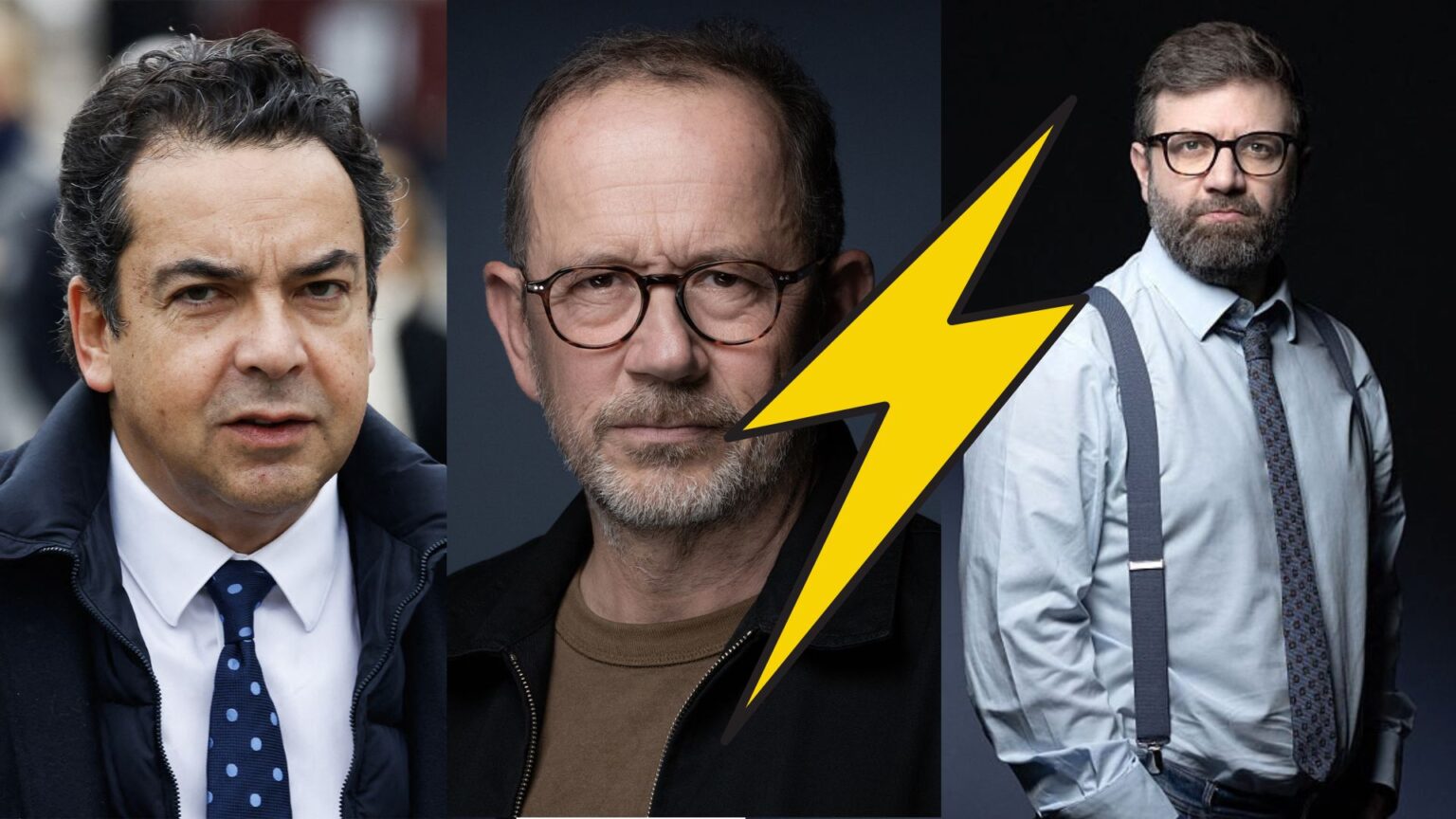
According to our information, Arthur de Watrigant, editor-in-chief of the magazine L'Incorrect, is expected this afternoon at the Paris Police Prefecture's Regional Directorate of the Judicial Police, to be questioned as a suspect in the investigation opened following a complaint by Thomas Legrand and Patrick Cohen. His alleged "crime"? Having published videos showing two prominent figures in public broadcasting discussing electoral strategy with Socialist Party officials, complete with compromising remarks. Where has freedom of information gone?
From a Parisian café to the offices of the Criminal Investigation Department, a case that spirals out of control.
At the heart of the matter are the now-famous images filmed in July in a Parisian restaurant, where Thomas Legrand can be heard declaring, regarding the Paris mayoral race: "We're doing what's necessary for Dati, Patrick, and me." Published online in early September by L'Incorrect, the clip triggered a political and media firestorm, with France Inter immediately suspending Thomas Legrand before revising its broadcast, and both men denouncing the video as "truncated" and "manipulated." To put an end to these accusations, L'Incorrect had a court-appointed expert verify that the raw footage corresponded to what had been published, excluding silences and inaudible passages—an official authentication that the magazine fully stands by.
Yet it is this same media outlet, and its director, who now find themselves in the crosshairs of the judicial police, following the complaint filed by Patrick Cohen and Thomas Legrand. In this case, those caught red-handed in political collusion are now attempting to shift the debate to the criminal arena, attacking not the content of the revelations, but those who made them public. This judicialization of journalistic work raises questions: since when has filming and publishing statements of public interest in a public place become a crime, when the same columnists routinely applaud "leaks" and clandestine recordings targeting their political opponents?
When informing becomes suspect, the incorrect is in the crosshairs
This legal offensive is part of a broader power struggle. France Télévisions and Radio France have already filed a complaint with Arcom, denouncing an alleged "systematic smear campaign" waged, according to them, by the Bolloré group's media outlets regarding the Legrand-Cohen affair, accusing CNews and Europe 1 of undermining trust in public service broadcasting. In other words, the management of public broadcasting are portraying themselves as victims of the system, while remaining strangely silent on the decidedly partisan conversations of their own stars and on the chronic ideological imbalance of their stations.
Added to this is a poisonous atmosphere among colleagues: insults from a comedian on France Inter against journalists from L'Incorrect, exchanges of indignant press releases, and now a criminal complaint. This is no longer a debate of ideas, a right of reply, or even media criticism, but a veritable trench warfare campaign aimed at criminalizing the work of a rival media outlet. For a side that spends its time denouncing attacks on press freedom in Central Europe and elsewhere, the contradiction is laughable.
The fact that an editor-in-chief is summoned by the police for publishing images whose authenticity has been verified by a court officer is a worrying sign for all those who believe the press must be able to document collusion between public service journalists and partisan organizations. In this case, the question is no longer simply what Thomas Legrand and Patrick Cohen said, but whether, in a country that prides itself on freedom of expression, it is still permissible to inform the French people. And judging by the reaction this has provoked, L'Incorrect has certainly never been more aptly named.