


Faced with tensions shaking several higher education institutions, the Minister of National Education Édouard Geffray calls for collective responsibility. He demands an unequivocal condemnation of violence, while emphasizing the importance of dialogue and respect for institutions. This stance reignites the debate on the limits of student protest and security within institutions.
Student mobilizations and reported incidents in certain institutions have sparked reactions within the government. Édouard Geffray called for “collective responsibility” and a “unanimous condemnation” of violence. Through this statement, the minister intends to remind that disagreements and demands can be expressed within a democratic framework, but that assaults and damage cannot be considered legitimate means of protest. His intervention comes amid tensions concerning study conditions and the functioning of institutions.
This position also highlights the responsibility of various actors in the educational community. Institution management, teachers, student organizations, and public authorities face the necessity to preserve an environment that allows the continuation of teaching. Protest movements can take various forms, from gatherings to blockades, and are not systematically accompanied by violence. The distinction between peaceful mobilization and punishable acts remains essential to assess the events.
The government insists on the security of institutions
Édouard Geffray’s call reflects the executive’s desire to make security a central principle in managing tensions. Institutions have responsibilities regarding the protection of students and staff. When an incident occurs, management can take internal measures and, if circumstances justify it, refer the matter to competent authorities. The response must nevertheless consider the nature of the facts, their severity, and the rights of the persons involved.
The issue of violence in higher education goes beyond disciplinary matters. It also concerns the conditions under which debates and exchanges of ideas can take place. Universities are spaces of freedom of expression, discussion, and collective engagement. However, this freedom implies respect for the safety of others and the functioning of institutions. Public officials thus seek to reconcile the protection of individuals with the maintenance of university freedoms.
An elected official assaulted in Chelles, a high school set on fire in Aix-en-Provence
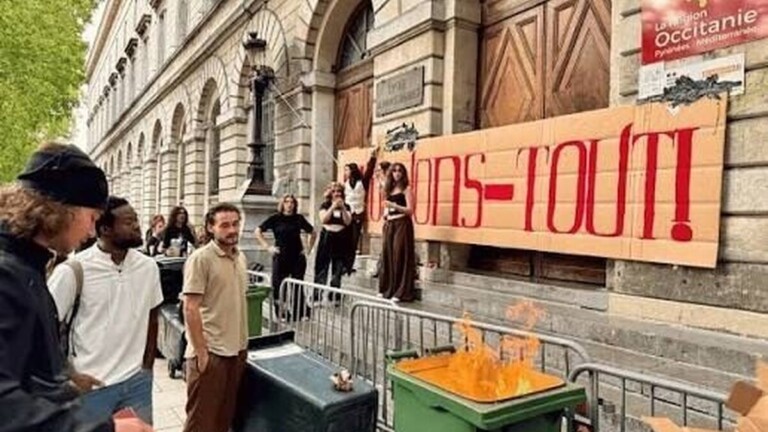
Events that occurred on Tuesday, November 10, particularly caught the government’s attention. In Chelles, Seine-et-Marne, Angela Avond, regional councilor of Île-de-France, was targeted with a bottle containing gasoline in front of the Gaston-Bachelard high school. The elected official filed a complaint. A fire also affected a high school in Aix-en-Provence. These incidents led Édouard Geffray to denounce, Wednesday morning on BFMTV, an “unprecedented violence” in some institutions, the intensity of which reportedly increased over the past ten days.
The minister also provided a report of 245 staff injured in the context of violence surrounding school mobilizations. He specified that fewer than 50 high schools have been blocked since the start of November, representing a small proportion of French institutions. According to him, the vast majority of high school students continue to attend classes normally. Édouard Geffray calls on political leaders to unequivocally condemn assaults and also asks parents to discuss with their children the risks related to violence.
High school organizations, for their part, distinguish the movement’s demands from violent acts. The Union Syndicale Lycéenne condemned the assaults while considering that the tensions reflect the government’s insufficient responses to students’ concerns. Among the main demands are improved learning conditions, renovation of institutions, and strengthening of educational resources. The government has already announced several measures, notably concerning class sizes and the evolution of Parcoursup, without yet managing to end the mobilization.








Respond to the article
Be the first to comment on this article.