

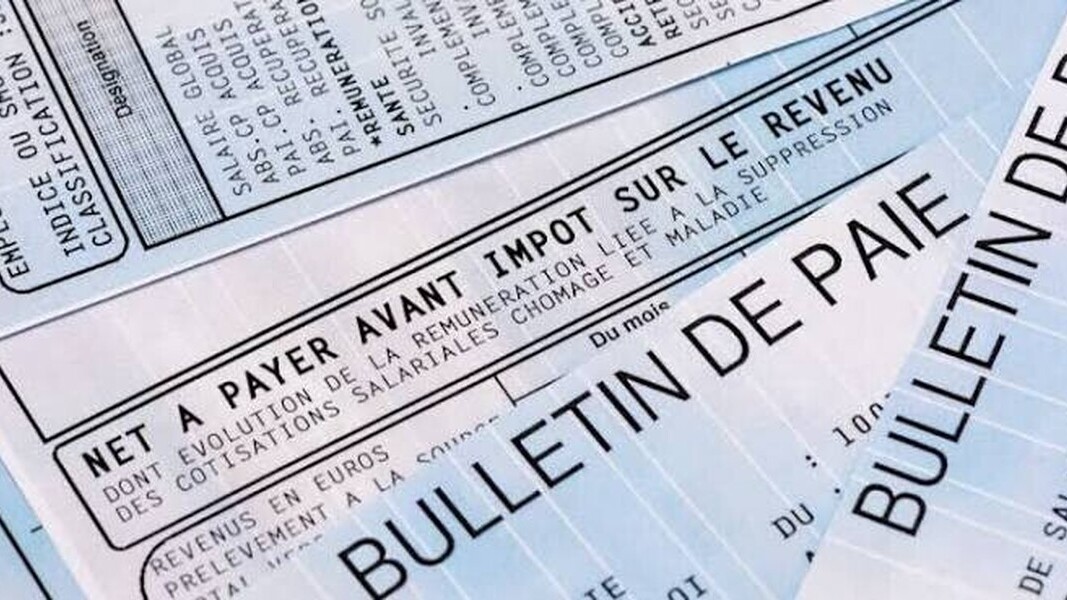
The government is taking a tougher stance against professional sectors that are slow to update their salary scales. A decree published this Tuesday, November 10, 2026, in the Official Journal plans to reduce employer social security contribution reductions granted to companies belonging to sectors whose collectively agreed minimum wages remain below the national minimum wage (SMIC). This measure comes as the minimum wage is set to increase by 1,6% on December 1st. According to the Ministry of Labor, 69 sectors are currently affected, and 64 more could be added to this list after the next increase.
The government intends to accelerate wage negotiations in sectors where minimum wages stipulated by collective bargaining agreements have not kept pace with increases in the minimum wage (SMIC). The decree published this Tuesday specifies the implementation details of a measure introduced by the 2026 Social Security Financing Law . Its principle is to financially penalize companies in professional sectors where the lowest wage levels remain consistently below the legal minimum wage. Until now, employer social security contribution reductions on low wages were calculated based on the SMIC, even when collectively agreed minimums were lower. From now on, the companies concerned will have these reductions calculated based on the minimum wage for their sector, thus decreasing the amount of the benefit granted. The objective is to encourage employers' and trade union organizations to renegotiate their wage agreements.
This reform comes amidst a climate of mobilization around purchasing power and wages. On Monday, November 9, the Minister of Labor, Jean-Pierre Farandou , announced a 1,6% increase in the minimum wage (SMIC) effective December 1, bringing its net monthly amount to approximately €1,502 for a full-time employee. This increase, however, is expected to widen the gap between the legal minimum wage and the pay scales of several collective bargaining agreements. According to the Ministry, 69 professional sectors already have minimum wages below the SMIC. With the new increase, 64 additional sectors could find themselves in this situation, potentially bringing the total to 133. These discrepancies do not mean that the employees concerned can legally be paid below the SMIC. Employers remain obligated to respect the national minimum wage. However, insufficiently increased collective bargaining agreement pay scales can lead to wage stagnation and reduce prospects for salary progression.
Financial sanctions from 2027
The new system does not provide for immediate penalties as soon as a sector falls below the minimum wage (SMIC). To be affected, a sector must have maintained its collectively agreed minimum wage below the legal minimum wage throughout the previous calendar year. The list of sectors concerned will be established annually by ministerial decree, no later than January 31. An adjustment may be made until November 30 to remove sectors that have sufficiently increased their minimum wages. The new methods for calculating employer social security contribution reductions will apply to employment periods beginning on or after January 1, 2027. The government thus wishes to give social partners the opportunity to negotiate before the financial consequences of the system materialize for businesses.
The text also includes exceptions. A company belonging to a sector where minimum wages are lower than the national minimum wage (SMIC) may avoid the reduction of its tax relief if it demonstrates that it itself applies a minimum wage higher than the legal minimum wage, particularly within the framework of a collective agreement or an employer commitment meeting the required conditions. This provision aims to avoid penalizing employers who have already taken steps to improve their employees' compensation, independently of negotiations conducted at the sector level. The government believes that the measure should encourage employers' organizations to update their collective agreements. Jean-Pierre Farandou also warned that the measures could be strengthened if negotiations do not progress sufficiently quickly.
A reform deemed too slow by some unions
Trade unions are cautiously welcoming this development. For several years, they have denounced the maintenance of collectively agreed minimum wages below the national minimum wage (SMIC), arguing that this situation contributes to blocking wage increases in certain sectors. The CGT, in particular, believes that the chosen mechanism risks taking too long to produce results. Its representative, Agathe Le Berder, emphasizes that collective sanctions require a full year of non-compliance before they can be applied. The union also criticizes the exemptions granted to companies, which could limit the scope of the system. Employers' organizations, for their part, are questioning the economic consequences of a reduction in social security contribution relief, particularly for sectors employing a significant proportion of workers earning close to the minimum wage.
Beyond the sanctions, this reform raises the broader question of the evolution of low wages in France . Successive increases in the minimum wage (SMIC) help to partially preserve the purchasing power of the lowest-paid workers, but they can also bring the lower levels of the pay scales closer together and reduce disparities related to seniority or qualifications. The government now intends to use payroll tax reductions as leverage to revitalize collective bargaining. A monitoring committee, including representatives from unions, employers, and public authorities, will assess the effects of the reform until 2029. For employees, the key question will be whether this financial pressure leads to genuine pay increases and improved career progression. For companies, it will be a matter of adapting their pay scales while controlling costs. The first official lists of affected sectors, expected in January 2027, will allow for an assessment of the scope of this new wage policy.






Respond to the article
Be the first to comment on this article.