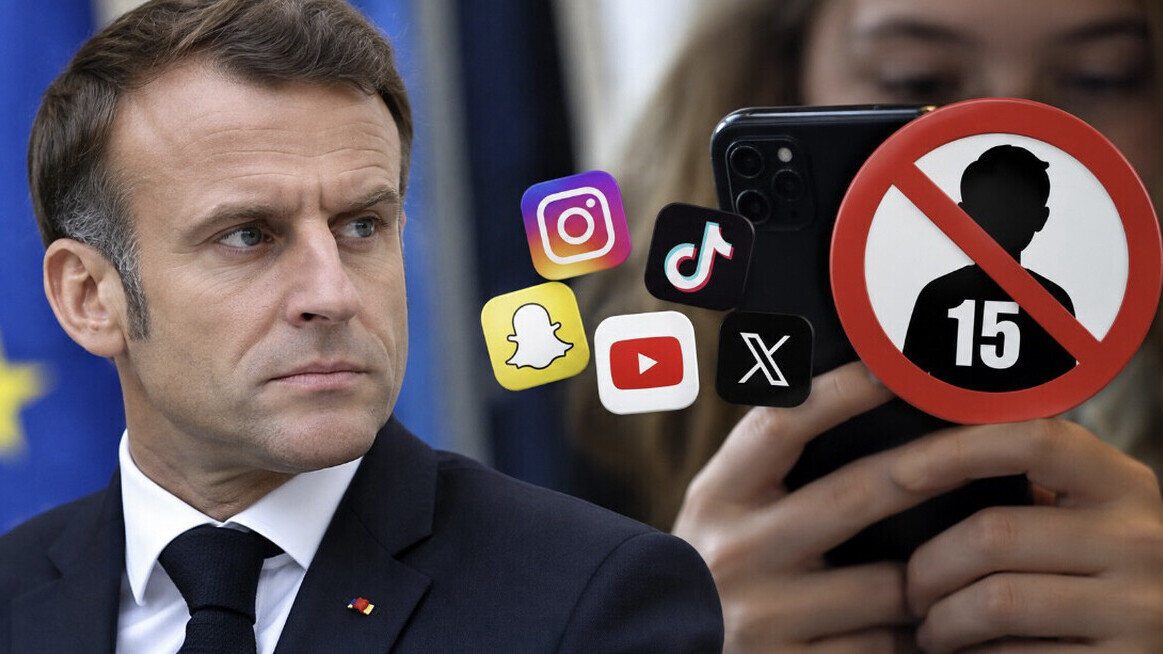
The French government is not abandoning its plan to ban social media for those under 15. A month after Parliament rejected the measure , a new version was submitted to the European Commission on Monday . Emmanuel Macron still intends to implement the measure in France before leaving the Élysée Palace in the spring of 2027.
This new attempt comes a few weeks after the French president asked the European Union to also make progress on the issue. At the end of August, Emmanuel Macron wrote to Ursula von der Leyen to request a joint response from member states. The French president specifically wants a harmonized ban on social media for those under 15 at the European level.
Macron: "We will go all the way"
Emmanuel Macron confirms his intention to revisit the issue despite the constitutional censure. "From day one, I made a commitment: to protect our children online. We will see this through to the end ," affirms the President of the Republic.
The objective therefore remains the same, but the wording must change. The government is now seeking a formula capable of respecting both French constitutional requirements and the European legal framework.
France has been working for several months on a European solution. In April, Emmanuel Macron had already brought together several European leaders and the President of the European Commission to discuss the creation of a minimum age for access to social networks and harmonized age verification solutions.
The Constitutional Council had struck down the heart of the law
The government was forced to revise its bill following the Constitutional Council 's decision on August 14. The Council struck down Article 1 of the law, which would have banned social media access for those under 15. The law was ultimately enacted on August 24 without this key provision.
The Constitutional Council notably deemed the blanket ban disproportionate . The measure failed to sufficiently differentiate between the various platforms, their functionalities, or the actual risks they pose to minors. Furthermore, it did not allow parents to tailor the ban to their child's specific situation.
The judges did not, however, reject the principle of increased protection for minors on the internet. It was the scope and modalities of the ban that were sanctioned, particularly with regard to freedom of expression and communication and the protection of privacy.
Automatic videos, nighttime notifications, unknown contacts: a new method
To avoid further censorship, the government is therefore changing its approach. Rather than targeting all social networks indiscriminately, the new version must take into account the characteristics and functionalities of the different platforms.
Around ten features considered particularly problematic for minors are under scrutiny. Automatic video playback, notifications sent during the night, and the ability for a child to contact unknown accounts are among the mechanisms concerned.
The legal issue is important: it is a matter of no longer building the prohibition around an overly general definition of "social network", but of taking into account the risks actually associated with the services offered to minors.
Parental permission is required between the ages of 13 and 15.
Another important change: a possibility of parental exemption is being considered for teenagers aged 13 to 15. Legal guardians could thus authorize their child to access certain services.
This change directly addresses one of the problems identified during the rejection of the initial text. The ban adopted by Parliament did not sufficiently allow those with parental authority to adapt the restrictions.
The issue is not new. The 2023 French law on digital majority already stipulated that platforms should refuse registration to those under 15, unless authorized by a parent or legal guardian. However, its implementation has clashed with the European legal framework.
Age verification remains at the heart of the system
One considerable difficulty remains: how to verify that a user is actually over 15 years old without imposing disproportionate control on all internet users?
The previous system raised precisely this question. To prevent a child from circumventing the ban by simply declaring a false date of birth, platforms must have a reliable age verification mechanism. But this mechanism must also protect personal data and privacy.
The issue is also being addressed at the European level. Technical solutions for age verification are being tested, and France has been pushing for several months for them to be used within a harmonized framework across the European Union.
France is now awaiting Brussels' response
The submission of this new version to the European Commission does not mean that those under 15 will immediately lose access to Instagram , TikTok , Snapchat, or other social media platforms. The text still needs to go through several legal hurdles before a ban can actually come into effect.
The government now wants to secure its system before returning to the legislature and avoid a new scenario similar to that of this summer: a ban adopted by Parliament, then removed before even its application.
Emmanuel Macron also wants to accelerate progress at the European level so that member states have a common framework. His political timetable is now tight: the president wants the ban to be operational before the end of his second term in the spring of 2027.