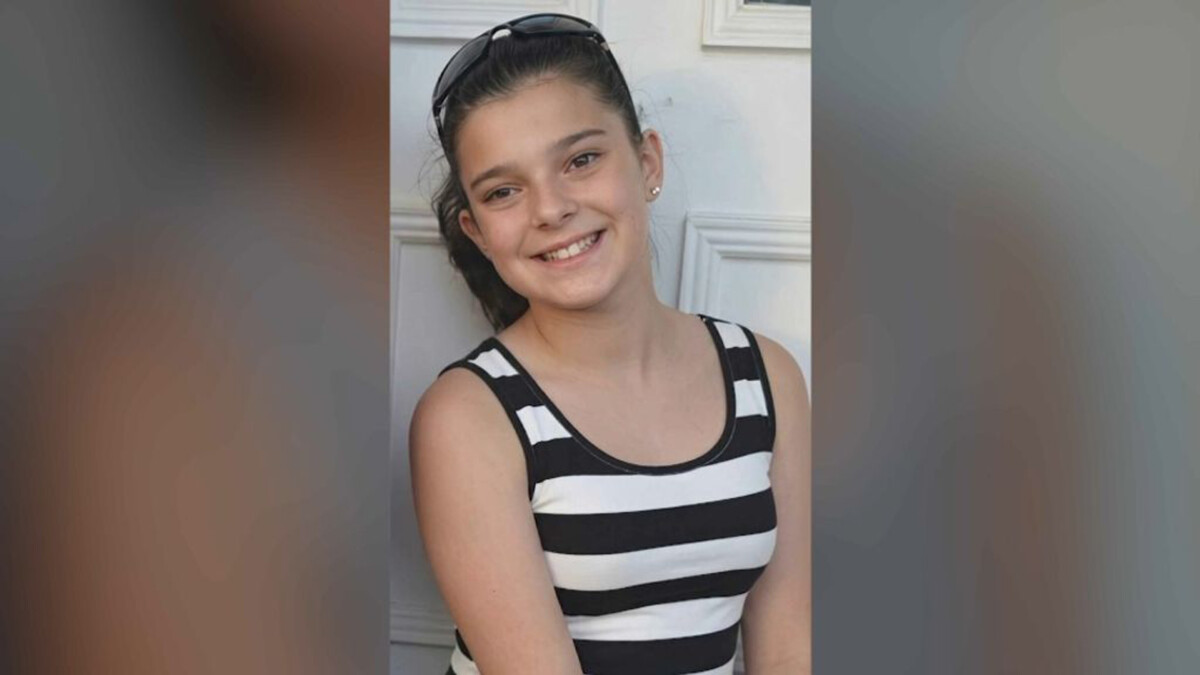
More than three months after the death of 11-year-old Lyhanna, forensic examinations are finally shedding light on what caused her death. According to information revealed this Tuesday, September 8, by RMC , further tests have identified "a syndrome of mechanical asphyxia," caused by acute respiratory failure and consistent with an obstruction of the upper airways.
Jérôme Barella , the main suspect in this case, is in custody and charged with the rape and murder of the schoolgirl . The investigation must now establish precisely how this asphyxiation occurred and under what circumstances Lyhanna was deprived of oxygen.
Mechanical asphyxiation was revealed by the new expert analyses.
The autopsy performed after the body was discovered failed to definitively establish the cause of death. Further analyses ordered by the court have now provided a crucial piece of evidence.
The expert reports indicate "acute respiratory failure ," consistent with "mechanical asphyxia due to obstruction of the upper airways ." In practical terms, this mechanism corresponds to oxygen deprivation caused by an obstruction of the airways that allow the victim to breathe.
These findings thus explain the physiological mechanism that led to Lyhanna's death. However, they do not, on their own, allow us to determine exactly how this obstruction was caused. This is now one of the central points of the investigation.
Traces of restraint had been discovered on Lyhanna's body
The initial forensic examinations had already revealed several particularly worrying elements. Bruises had been observed on the girl's arms, forearms, wrists, and ankles. The forensic pathologists described them as "highly suggestive of restraint injuries caused by bondage . "
Lyhanna was therefore likely restrained before her death, even though no restraints were found on her body when it was discovered. Bruises were also observed at the corners of her lips and on the inside of her mouth. These were consistent with trauma or friction that occurred before her death. These findings were detailed even though the initial autopsy results still did not allow for a definitive determination of Lyhanna's exact cause of death.
No injuries to his neck could explain his death.
One factor had long complicated the work of the forensic pathologists: no visible cervical trauma was found. Nor were there any internal injuries that could directly explain the death. The marks of restraint observed on the limbs were considered superficial and were not identified as the cause of death.
Faced with this lack of immediate explanation, much more in-depth analyses were ordered, including anatomopathological and toxicological examinations. It is these additional expert assessments that have now revealed the mechanical asphyxia syndrome.
The parents' lawyer knew that the cause of death had been identified.
In early September, the lawyer for Lyhanna's parents had already revealed that the cause of death was now known. However, he refused to give details publicly in order to respect the confidentiality of the investigation and avoid disrupting the proceedings. RMC's revelation now provides an answer to the main question left unanswered since the autopsy: Lyhanna apparently died of asphyxiation. One crucial question remains: how were her airways obstructed?
Lyhanna had disappeared after leaving her school
Lyhanna disappeared on May 29, 2026, after leaving her school in Fleurance, Gers. The girl had been seen getting into a vehicle belonging to Jérôme Barella, the father of one of her classmates. Her body was finally discovered six days later, on June 4, in an abandoned agricultural silo in Puycasquier, about fifteen kilometers from Fleurance. The discovery of her body brought an end to several days of searching.
Biological and forensic investigations subsequently led investigators to also consider the hypothesis of sexual violence. Jérôme Barella's DNA was found on the girl's body.
Jérôme Barella charged with rape and murder
Initially prosecuted for the abduction and confinement of a minor under 15 years of age, Jérôme Barella was subsequently charged with the murder of a minor under 15 years of age preceded or accompanied by rape , as well as with the rape of a minor under 15 years of age by violence, coercion, threat or surprise.
The case also revealed the existence of numerous prior proceedings, complaints and reports concerning Jérôme Barella , raising serious questions about the judicial handling of the warnings that preceded Lyhanna's disappearance.
With these new forensic findings, investigators now have a crucial piece of evidence: Lyhanna appears to have died of mechanical asphyxiation caused by an obstruction of her airways . The investigation must now determine precisely how this obstruction occurred and reconstruct the girl's final moments.