

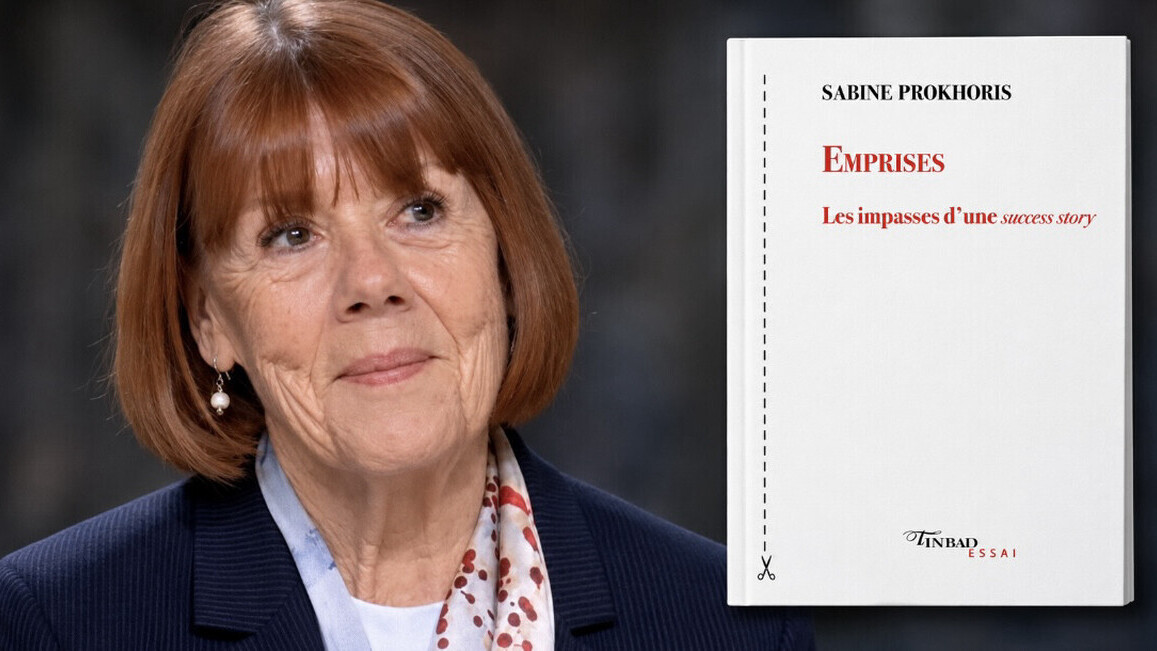
A new controversy has erupted in the Mazan rape case. The publishing house Tinbad has provided several media outlets with pornographic photographs and videos of Gisèle Pelicot, recorded by her ex-husband Dominique Pelicot, to promote a book about coercive control. Even more troubling, the publisher admits to not having obtained the victim's consent, while the book's author portrays her as an "exhibitionist." Gisèle Pelicot's lawyer is now considering legal action.
Intimate images sent to journalists to promote a book
The publishing house Tinbad, run by Christelle Mercier, has chosen a particularly controversial method to promote its upcoming book. Pornographic photographs and videos of Gisèle Pelicot were emailed to several news outlets. These materials had been recorded by Dominique Pelicot, who drugged his wife for years in order to rape her and then have her with other men.
The aim of these mailings was to generate interest in Emprises, les impasses d'une success story (Captures, the Dead Ends of a Success Story ), an essay by psychoanalyst Sabine Prokhoris, scheduled for publication on November 26. The book includes, in particular, a chapter devoted to the Mazan violence case.
The images in question reportedly came from the court file. They were used to promote a book that challenges the portrayal of Gisèle Pelicot as a victim and defends a radically different interpretation of the power dynamics involved.
"We do not have Ms. Pelicot's agreement": the publisher's admission
When questioned about this distribution, Christelle Mercier, head of Tinbad publishing, explicitly acknowledged the lack of consent from Gisèle Pelicot.
"Of course we do not have Ms. Pelicot's agreement ," she said, before clarifying that the images had been sent "for private and informational purposes . "
This justification directly raises the question of the legality of their transmission. Sharing sexual images with journalists does not exempt the sender from respecting the privacy and consent of the person depicted.
The publisher nevertheless believes that these documents can help publicize the book's content. The transmission was carried out without Gisèle Pelicot's authorization, who had never consented to the recording of the sexual assaults she suffered.
The author of the book presents Gisèle Pelicot as an "exhibitionist".
The content of the book is also at the heart of the controversy. Sabine Prokhoris, psychoanalyst and author of the essay, challenges certain interpretations of psychological control and domination, particularly in the context of the #MeToo movement.
Regarding Gisèle Pelicot, she develops an interpretation according to which the victim's behavior and decisions could reflect a form of participation in the situation of control. The author notably presents her refusal of a closed trial as a manifestation of "exhibitionism . "
This interpretation contradicts the facts established in court. The investigations have shown that Dominique Pelicot administered substances to his wife intended to render her unconscious, before allowing other men to sexually assault her.
Gisèle Pelicot chose to make the trial public so that the violence she had suffered would be known and to raise awareness of the dangers of chemical submission. Her struggle became associated with the now-famous phrase: "Let the shame change sides."
Two years in prison for distributing sexual images without consent
Sending these documents also raises a criminal issue. Article 226-2-1 of the Penal Code provides for penalties of up to two years' imprisonment and a fine of €60,000 for certain breaches of privacy involving sexually explicit images.
Transmitting such documents to a third party, even without online publication, may constitute a criminal offense. The precise legal classification of the offense depends in particular on the circumstances under which the images were recorded and disseminated. For a legal entity, the fine can reach €300,000 when the corresponding offense is established.
Gisèle Pelicot's lawyer indicated that he was considering legal action against those responsible for the leak. No formal proceedings have been announced at this stage.
Dominique Pelicot sentenced to 20 years in criminal prison
This case concerns a woman whose ordeal was documented after several months of trial. In December 2024, Dominique Pelicot was sentenced to 20 years in prison for drugging and raping his wife and organizing sexual assaults committed by dozens of men between 2011 and 2020.
In total, 51 men were convicted at the Avignon trial for rape, attempted rape, or sexual assault. In October 2025, the only defendant who maintained his appeal, Husamettin Dogan, saw his sentence increased from nine to ten years' imprisonment.
The recordings made by Dominique Pelicot played a crucial role in the investigation and the identification of the attackers. These same documents are now at the heart of the promotional campaign for a book published by Tinbad.
Sabine Prokhoris's book is due to be published next Thursday, November 26, while Gisèle Pelicot's lawyer examines the possible legal consequences of the transmission of these images.







Respond to the article
Be the first to comment on this article.