
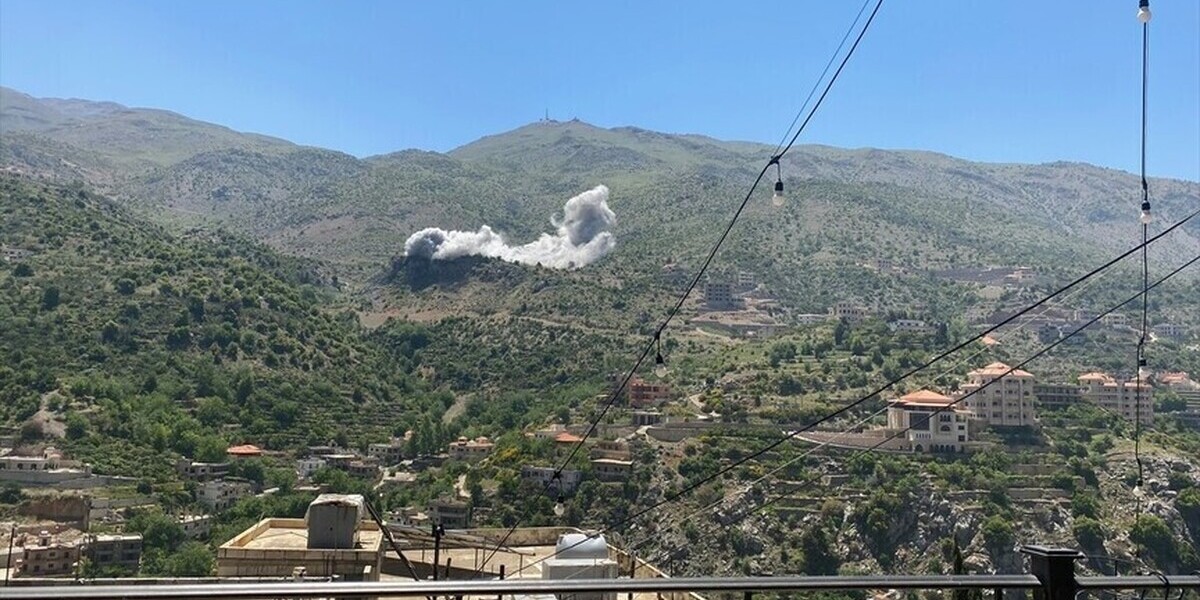
The Lebanese government announced on Monday the implementation of a partial ceasefire between Israel and Hezbollah, in an attempt to reduce the intensity of a conflict that has already claimed thousands of lives and contributed to the escalation of regional tensions also involving Iran and the United States.
According to the Lebanese embassy in Washington, this agreement does not constitute an end to hostilities. However, it does stipulate a halt to Israeli strikes on Beirut and its southern suburbs, a Hezbollah stronghold, while the Iranian-backed Shiite movement pledges to cease its attacks against Israeli territory.
This limited de-escalation aims to protect Lebanon's most densely populated urban areas, which have been heavily impacted by bombing in recent weeks. Hezbollah-controlled neighborhoods in the capital, in particular, have suffered significant material damage and triggered further population displacements.
Despite this diplomatic breakthrough, fighting continues in southern Lebanon. Clashes between Israeli forces and Hezbollah fighters persist in several areas near the border, highlighting the limited scope of the announced agreement.
This situation arises at a time when regional tensions remain particularly high. Iran has threatened to suspend ongoing negotiations with the United States, arguing that military developments in Lebanon are jeopardizing diplomatic efforts undertaken in recent months.
The announcement of the partial ceasefire is nonetheless seen as an attempt to contain the spread of the conflict and prevent a worsening of the humanitarian crisis in Lebanon. It remains to be seen whether this limited truce will pave the way for a broader agreement capable of ending the violence that has plagued the region for several months.


Community
Comments
Comments are open, but protected against spam. Initial posts and comments containing links undergo manual review.
Be the first to comment on this article.