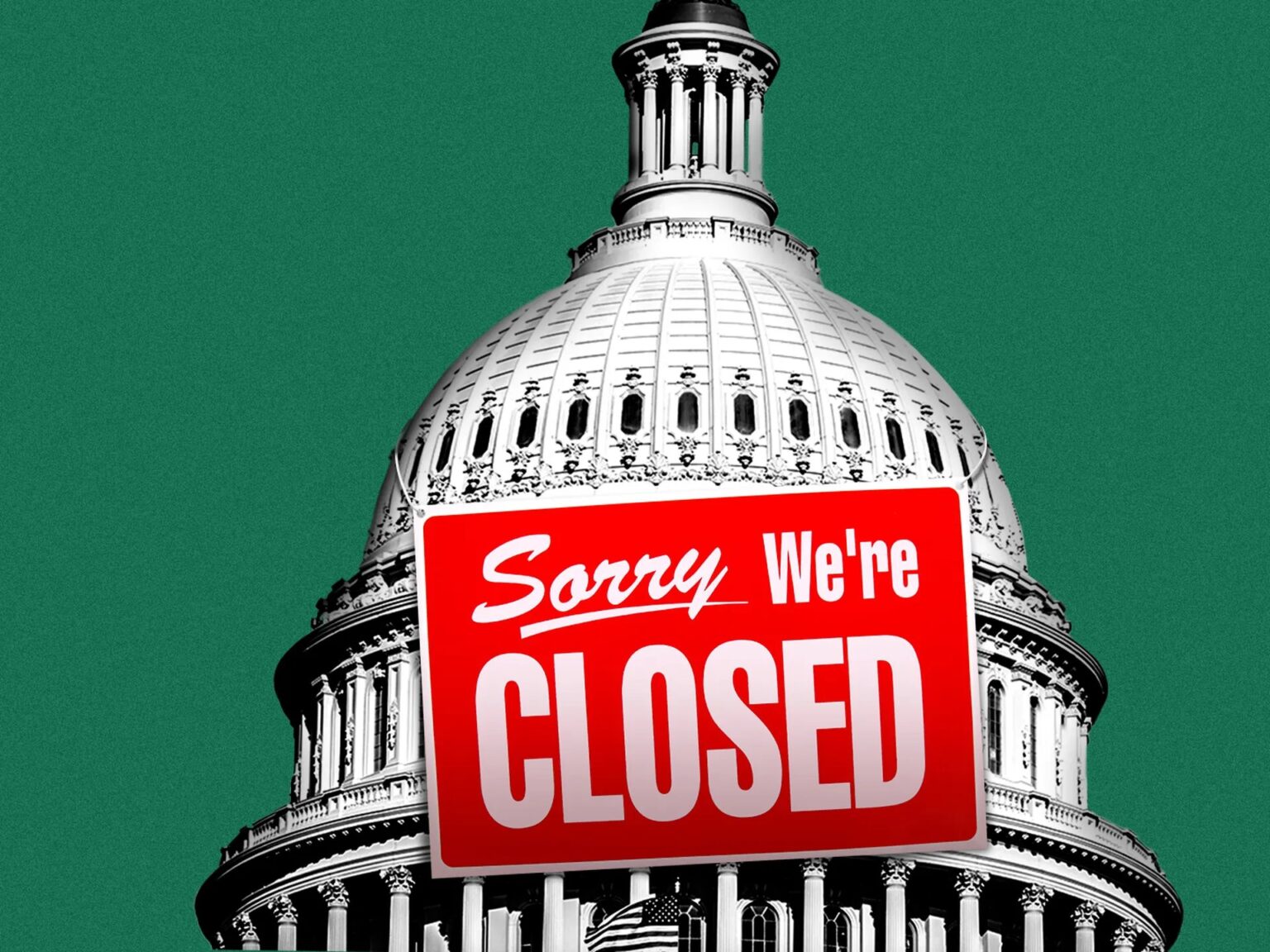
The United States entered another government shutdown on Wednesday, October 1st, forcing a portion of the federal administration to shut down. Several hundred thousand federal employees have been furloughed, social welfare programs have been suspended, national parks have closed, and the economy could lose up to 0,2 percentage points of growth for each week of the shutdown. But beyond the technical consequences, this budget crisis highlights the institutional deadlock in which the country finds itself and the opposition's inability to accept the change of course initiated by Donald Trump.
Congress failed to pass a budget bill by the deadline. Yet Republicans, now in the majority, had proposed a provisional bill extending the current budget through the end of November. Faced with this outstretched hand, Democrats refused to cooperate, demanding the reinstatement of massive social spending cut by the Trump administration, particularly that related to health coverage for low-income households. In short, they are demanding the Obama-era status quo as if the election had never taken place.
A deliberate strategy of budgetary refocusing
Donald Trump, buoyed by his return to the White House, has clearly signaled his desire to reduce the size of the federal government. The president intends to take advantage of the impasse to accelerate the dismantling of certain agencies that, in his view, have become ineffective or ideologically biased. This rationale for cleaning up administrative structures, initiated during his first term, aims to make public action more coherent, less costly, and refocused on sovereign missions. The current shutdown is therefore not only a political accident; it is also a tactical lever.
Democratic ranks denounce a brutal strategy and a refusal to engage in dialogue. But their position seems increasingly untenable because public opinion, tired of recurring deadlocks, overwhelmingly supports a return to a balanced budget. And the Democratic camp struggles to explain why it prefers paralysis to even a minimal provisional agreement. Some observers also believe that the deadlock is now being exploited by a left-wing party hoping to turn public opinion against the president, even if it means penalizing public services in the process.
Surprisingly calm markets
Significantly, financial markets have not given in to panic. The Dow Jones even closed at a record high Tuesday evening, proving that investors anticipate a short-term compromise or at least the absence of any immediate major consequences. This resilience is also explained by the clarity of the administration's economic policy. Tariff increases, cuts in non-priority spending, and the reduction of the government's scope are seen as signals of fiscal austerity and predictability. In times of global instability, this is an asset.
The impasse could last. But unlike in previous episodes, the executive branch seems ready to embrace this crisis as a moment of political clarification. Rather than backing down, Donald Trump is banking on the erosion of the opposing camp. If the Democrats persist in refusing any compromise, they could well appear in the eyes of Americans as the true culprits of this paralysis. This would be a major strategic shift and perhaps a prelude to a new, lasting balance of power in Washington.
What should we quickly remember?
The United States entered a new shutdown this Wednesday, October 1st, plunging part of the federal administration into forced shutdown.