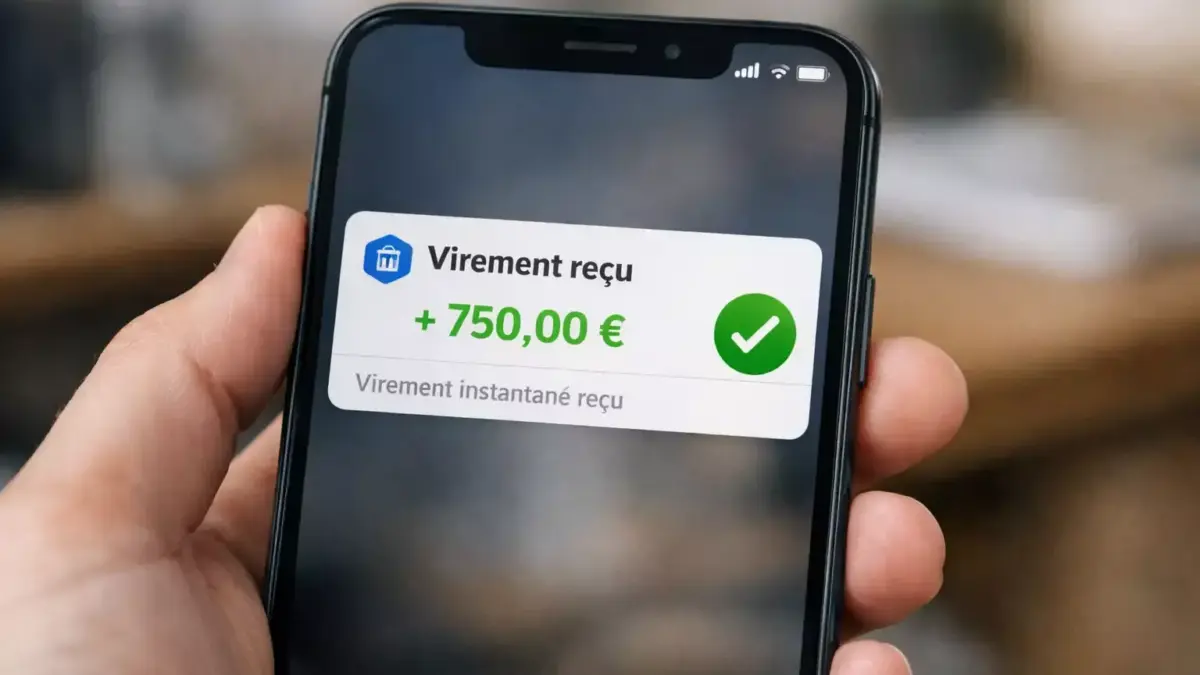
Sending hundreds, even thousands of euros in seconds is now within reach of millions of French people. Since the widespread adoption of instant transfers in Europe , money transfers have become faster, simpler, and generally free. But this banking revolution also comes with risks. Fake advisors, classified ad scams, identity theft, and wrong recipients: fraudsters take advantage of the immediacy of transactions to trap their victims. Once the transfer has been completed, getting your money back can become particularly complicated.
Instant SEPA transfers allow you to transfer money between two bank accounts in ten seconds or less, at any time of day or night, including weekends and holidays. Since January 2025, banks have been prohibited from charging more for this service than for a standard transfer. In France , it is therefore generally free when made through your bank's app or website. Since October 2025, banks offering standard transfers have also been required to allow their customers to make instant transfers. This is a convenient way to reimburse a loved one, pay for a purchase, or quickly transfer funds, but it significantly reduces the time available to detect an error or fraud.
Scammers who exploit the urgency and speed of payments
Among the most widespread scams is that of the fake bank advisor. The scenario is often the same: a person receives a call supposedly from their bank's security department. The caller claims that a suspicious transaction is underway and that savings must be immediately transferred to an account presented as secure. The scammer may know the victim's name, some banking information, and sometimes even spoof a bank's phone number. Under pressure, the customer approves an instant transfer, believing they are protecting their money. In reality, they have just sent it directly to an account controlled by the fraudsters. Authorities remind the public that no bank ever asks its customers to transfer their funds to "secure" them.
Peer-to-peer sales platforms are another breeding ground for scams. A seller might receive a fake payment confirmation, while a buyer might be tricked into paying immediately for an item that will never be delivered. Fraudsters also use fake bank account details to divert payments intended for tradespeople, businesses, or homeowners. The risk is particularly high when the recipient's details are transmitted via email or messaging and have not been independently verified. In these situations, instant transfers don't necessarily create fraud, but they significantly speed up the money transfer and can complicate recovery attempts.
Once the money has been sent, is it still possible to recover the transfer?
This is one of the main limitations of this payment method. Contrary to popular belief, an instant transfer cannot be freely canceled after it has been executed. Its irrevocable nature means that the bank cannot simply withdraw the funds from the recipient's account at the sender's request. In case of error or fraud, you must immediately contact your bank to request a recovery attempt, sometimes called a "recall." This process can be successful if the money is still available and the necessary conditions are met, but its success is never guaranteed. Victims can also file a complaint to allow investigators to identify the beneficiaries and trace the misappropriated funds.
However, reimbursement depends on the circumstances. When a transfer has been made without the account holder's authorization, regulations provide special protection, subject to legal exceptions. The situation becomes more complex when the victim has personally authorized the transaction after being tricked. This does not automatically mean they lose all rights to reimbursement: the bank's security obligations, the conditions under which the transaction was authorized, and any potential gross negligence must be examined. In case of disagreement, the customer can file a complaint with their bank and then contact the banking ombudsman. Disputes can also be brought before the courts.
A new mandatory check to limit errors
Faced with these risks, the European Union has strengthened the security of bank transfers. Since October 9, 2025, banks in the Eurozone have been required to offer a free verification service to ensure that the beneficiary's name matches their IBAN before executing a transfer. In practice, when a customer enters bank details, their bank informs them whether the name provided matches that of the recipient's account holder. If there is a discrepancy, a warning appears before confirmation. This measure aims to combat fraudulent bank account details and data entry errors, but it does not eliminate all risks. A fraudster can use an account opened under an identity consistent with the one provided, or convince their victim to proceed despite a warning.
Statistics from the Bank of France show that fraud remains a concern, even though instant bank transfers are still largely secure. In the first half of 2025, the fraud rate stood at 0,0434% of the transaction value, compared to 0,0465% for the whole of 2024. This level remained lower than that observed for card payments. However, bank transfer fraud increasingly relies on manipulating victims rather than solely on technical hacking. For consumers, the best protection is to directly verify the bank details of a new beneficiary, never share their PIN codes, and refuse any transfer request presented as urgent by an unknown party. Instant bank transfers represent undeniable progress, but their speed necessitates a simple rule: take the time to verify the information before sending money.
Sources cited in the article: Statistics from the Bank of France