

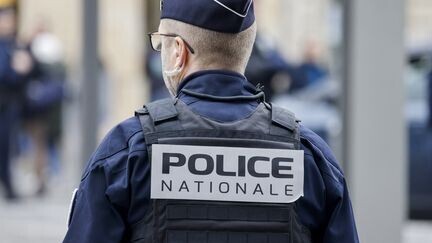
Racist caricatures, anti-Semitic and Islamophobic messages, references to Nazism, and alleged harassment: serious accusations are rocking the National Police Academy (ENSP) in Cannes-Écluse, Seine-et-Marne . Following revelations published on Sunday, November 22, by Le Parisien, the Director General of the National Police, Louis Laugier, has filed a complaint with the courts. Several officer cadets are implicated in exchanges shared on private groups while they are preparing to assume command positions within the French police force.
The case concerns the 31st graduating class of the National Police Academy, comprised of approximately 450 students, the majority of whom are already serving in the institution. Having begun their training in September 2025, these future officers are expected to graduate, for the most part, in early 2027. They are preparing to become lieutenants, captains, or commanders, with the responsibility of leading teams and participating in police operations.
According to an investigation by Le Parisien, several members of this graduating class have allegedly shared racist, anti-Semitic, and Islamophobic content on WhatsApp and Instagram chats in recent months . Testimonies gathered from students and screenshots reveal particularly disturbing behavior. The offending posts appear to have been primarily made by a small, identified group of students, and these actions cannot be attributed to the entire graduating class.
References to Nazism and caricatures targeting Muslims
Among the items revealed is a photograph taken in March 2026 showing a mannequin dressed in a German officer's uniform, its arm outstretched in a pose reminiscent of a Nazi salute. The image was reportedly shared in a conversation between students. Other exchanges allegedly contained references to Nazi ideology, while several students reportedly received a digital copy of Adolf Hitler 's book, Mein Kampf.
The investigation also mentions caricatures of Muslims, accompanied by derogatory comments. Racist and xenophobic messages were reportedly posted in the same conversations. This content, presented by some as jokes, provoked outrage among other students, who were particularly concerned about the behavior of future leaders of the national police force.
The accusations are not limited to discriminatory remarks. Several students have also allegedly been victims of harassment and humiliating photomontages. One student was reportedly targeted with a sexually explicit image, while another student was mocked for her physical appearance. Hostile messages were also allegedly directed at a student of North African origin and his family.
These revelations directly call into question the respect for ethical principles taught in police academies. Future officers are expected to exercise public authority, guarantee equal treatment of citizens, and supervise civil servants. The behaviors denounced therefore appear particularly sensitive given the responsibilities to which the students involved are preparing for their roles.
The hierarchy has been alerted since the summer, and the justice system is now involved.
One of the most important aspects of this case concerns the institution's response time. According to Le Parisien , several reports were allegedly sent to the school's administration as early as the summer of 2026. Screenshots and witness statements reportedly helped identify the alleged authors of some of the posts.
However, no disciplinary action had been taken at the time of the revelations, according to information published on Sunday. This situation raises questions about the handling of internal alerts and the procedures initiated by the institution's management.
The national police directorate maintains, however, that an administrative inquiry was conducted and that proposed sanctions were formulated. This indicates that the case had already been the subject of internal investigations, even if disciplinary action had not yet been taken.
Given the seriousness of the reported facts, Louis Laugier, Director General of the National Police, decided to refer the matter to the courts. A report was sent to the Fontainebleau public prosecutor's office based on Article 40 of the Code of Criminal Procedure, which requires certain public authorities to report crimes or offenses that come to their attention in the course of their duties.
This approach opens the possibility of judicial investigations separate from administrative procedures. It will now be up to the judicial authorities to determine whether the reported acts constitute criminal offenses and to establish any individual liability. The students involved benefit, at this stage, from the presumption of innocence.
This case raises questions about the training of future police officers.
The National Police Academy plays a central role in training the institution's officers. Its curriculum combines theoretical instruction, operational placements, and preparation for command responsibilities. Students are trained there in particular in ethics, adherence to professional standards, and team management.
The revelations concerning certain members of the 31st class therefore raise an essential question: how to prevent and punish discriminatory behavior among civil servants called upon to exercise authority over their colleagues and over citizens?
This case does not allow for general conclusions to be drawn about all the students at the school. Several of them specifically contributed to reporting the incidents and passing the information on to their superiors. Their actions show that the offending behaviors also provoked opposition within their own year group.
The published accounts nevertheless raise concerns about the normalization of certain remarks presented as mere jokes. In a professional environment where police officers are held to a duty of exemplary conduct, the repetition of discriminatory messages can have consequences for relationships between colleagues, as well as for trust in the institution.
Sanctions are expected, and a judicial investigation is to follow.
The report filed with the Fontainebleau public prosecutor's office marks a new stage in the handling of this case. The authorities will have to determine the responsibilities of those involved, while disciplinary proceedings could lead to administrative sanctions.
The question of the administration's response should also remain central to the investigation. Since the incidents were reported several months before they became public, the processing times and measures taken to protect the students involved could be subject to close scrutiny.
For the national police, the issue goes beyond mere exchanges published in private groups. It concerns the institution's ability to enforce its ethical principles from the very beginning of its future officers' training. Racist, anti-Semitic behavior, or references glorifying Nazism, cannot be considered mere inconsequential lapses when they are likely to involve officers entrusted with public service missions.
Just months before the graduation of the 31st class, this affair places the National Police Academy in a delicate situation. The investigation must precisely establish the facts, guarantee the rights of those implicated, and determine the appropriate course of action. This rigorous approach is essential to preserving trust in an institution tasked with upholding the law.








Respond to the article
Be the first to comment on this article.