

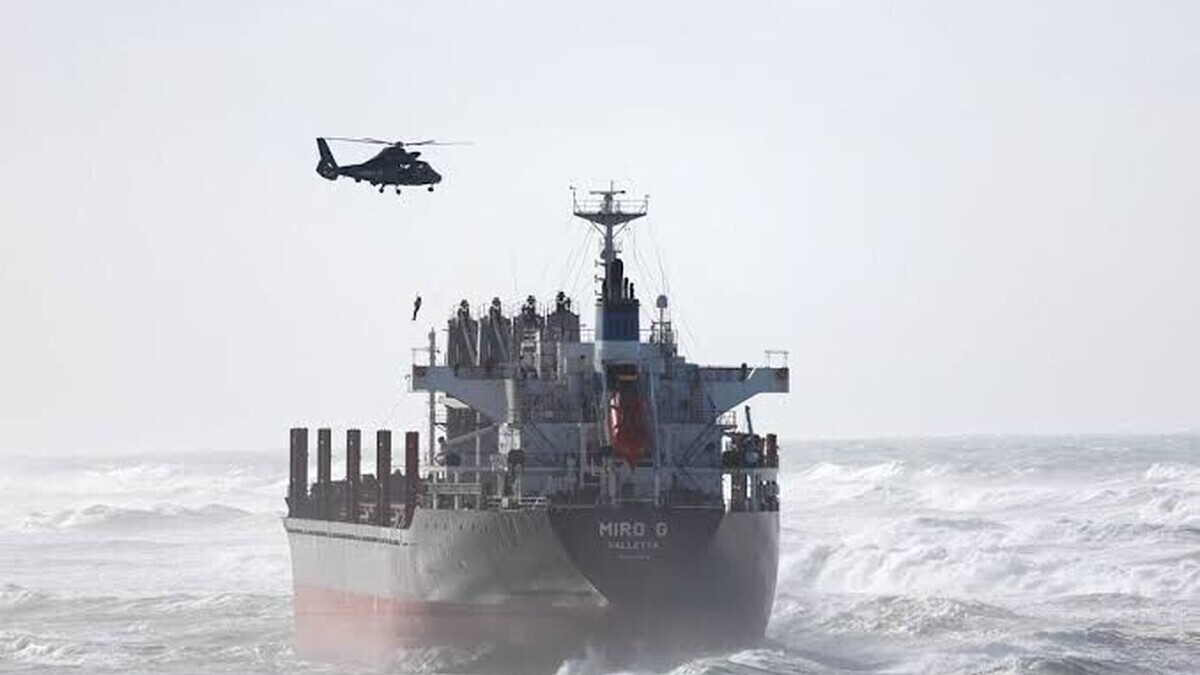
Operations continue around the cargo ship MIRO G, stranded off Lit-et-Mixe, in Landes. Due to deteriorating weather conditions, maritime authorities decided to evacuate by helicopter the eleven people still on board on Saturday, November 21. The refloating of the vessel remains dependent on weather developments and technical assessments.
The cargo ship MIRO G, flying the Maltese flag, remains immobilized on a sandbank off the Landes coast. The vessel, en route to Rouen, ran aground during the night of Thursday, November 19 to Friday, November 20, while strong gusts of wind and rough seas made navigation particularly difficult.
Weather conditions played a decisive role in the incident. Winds approaching 90 kilometers per hour were reported at the time of grounding. Authorities quickly mobilized aerial and maritime resources to secure the vessel and protect its crew.
Eleven people evacuated ahead of further weather deterioration
On Saturday, the Atlantic maritime prefect decided to proceed with the evacuation of the eleven people on board. This measure was taken in anticipation of another episode of strong winds forecast for Sunday, November 22.
A search and rescue helicopter from the Air and Space Force carried out their hoist evacuation. The evacuated individuals included three crew members, including the ship’s captain, four experts from the assessment and intervention team, three representatives from the company Les Abeilles International, and one representative of the shipowner’s insurer.
Military and civilian resources mobilized
From the first hours following the grounding, authorities deployed a Caracal helicopter from the Cazaux air base to participate in rescue operations. The French Navy also dispatched a specialized team to assess the cargo ship’s condition.
A Falcon 50 aircraft was mobilized to provide aerial surveillance. The intervention tug Abeille Bretagne had, for its part, set sail in anticipation of a possible refloating operation.
Why towing cannot be immediate
Refloating a stranded cargo ship requires several checks. Experts must notably examine the hull’s condition, the vessel’s stability, its position on the sandbank, and risks related to sea movements.
Weather conditions also play a crucial role. An operation undertaken with excessive swell or strong winds could worsen damage and endanger intervention teams.
Environmental monitoring remains a priority
Authorities are closely monitoring pollution risks. Initial reconnaissance operations did not detect pollution around the cargo ship.
The presence of a vessel immobilized near the coastline nevertheless requires continuous vigilance. Possible deterioration of its structure could have environmental consequences, especially in case of fuel leakage.
Next decisions will depend on the weather
The maritime prefecture must now wait for sufficiently favorable conditions to safely continue technical operations. Towing can only be considered after a precise risk assessment.
The preventive evacuation of people on board limits human risks during this weather episode. The current challenge is to stabilize the situation and organize the vessel’s removal without causing a new incident.





Respond to the article
Be the first to comment on this article.