

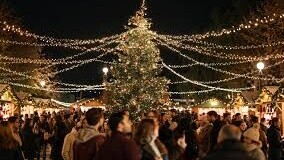
With the holiday season just weeks away, Christmas markets are preparing their return across France . Illuminated chalets, regional specialties, handcrafted decorations, and family-friendly activities will gradually transform city centers. Behind this popular tradition also lies a major economic event for retailers, artisans, and tourism professionals.
The first displays are starting to take shape in several French cities. As every year, Christmas markets will herald the arrival of winter and the start of the holiday season. From Strasbourg to Colmar, via Reims, Lille, Metz, and Paris, municipalities are preparing spaces that blend crafts, food, and entertainment. Visitors will find traditional wooden chalets, twinkling lights, decorated Christmas trees, and products emblematic of this time of year. The markets also offer an opportunity to discover local specialties, such as Alsatian biscuits, gingerbread, roasted chestnuts, and chocolate treats. While opening dates vary from town to town, most of these events take place between the second half of November and the end of December, with some extending into early January.
Among the most popular destinations is Strasbourg, whose Christmas market is one of the oldest in Europe . Its history dates back to the 16th century and it attracts numerous French and international visitors every year. In Colmar, the various markets set up in the historic center take advantage of the Alsatian architecture and illuminations to create an atmosphere particularly appreciated by tourists. Reims traditionally showcases its heritage and regional producers, while Metz stands out with its displays spread across several squares in the city center. In northern France, Lille also hosts a Christmas market accompanied by seasonal entertainment. In Paris, several districts offer their own events, ranging from craft markets to large festive spaces. Each city thus seeks to develop a unique identity while preserving the traditional elements that make these events so successful.
A major economic event for traders and artisans
Beyond their festive aspect, Christmas markets represent a strategic period for the local economy. They allow artisans, producers, and small businesses to showcase their creations to a large audience, sometimes far exceeding their usual clientele. Jewelry, wooden objects, candles, decorations, food products, and locally made gifts occupy a prominent place in the stalls. The benefits also extend to nearby hotels, restaurants, transportation, and shops. For some tourist destinations, the weeks leading up to Christmas constitute one of the most important periods of the year. Organizers must, however, contend with rising costs for setup, energy, security, and stall rentals, which can impact exhibitors' profitability.
Christmas markets are also evolving to meet new public expectations. Many municipalities are now prioritizing low-energy lighting, reusable products, and a wider selection of local vendors. Security remains a key concern, especially in large cities where gatherings attract thousands of people. Despite these constraints, the enthusiasm for these events remains strong. For families, they offer an accessible and enjoyable outing; for tourists, an opportunity to discover regional heritage and traditions; and for businesses, a significant commercial opportunity. As December 2026 approaches, Christmas markets are poised to reclaim their place in the French calendar, a blend of tradition, shopping, and the pleasure of coming together.








Respond to the article
Be the first to comment on this article.