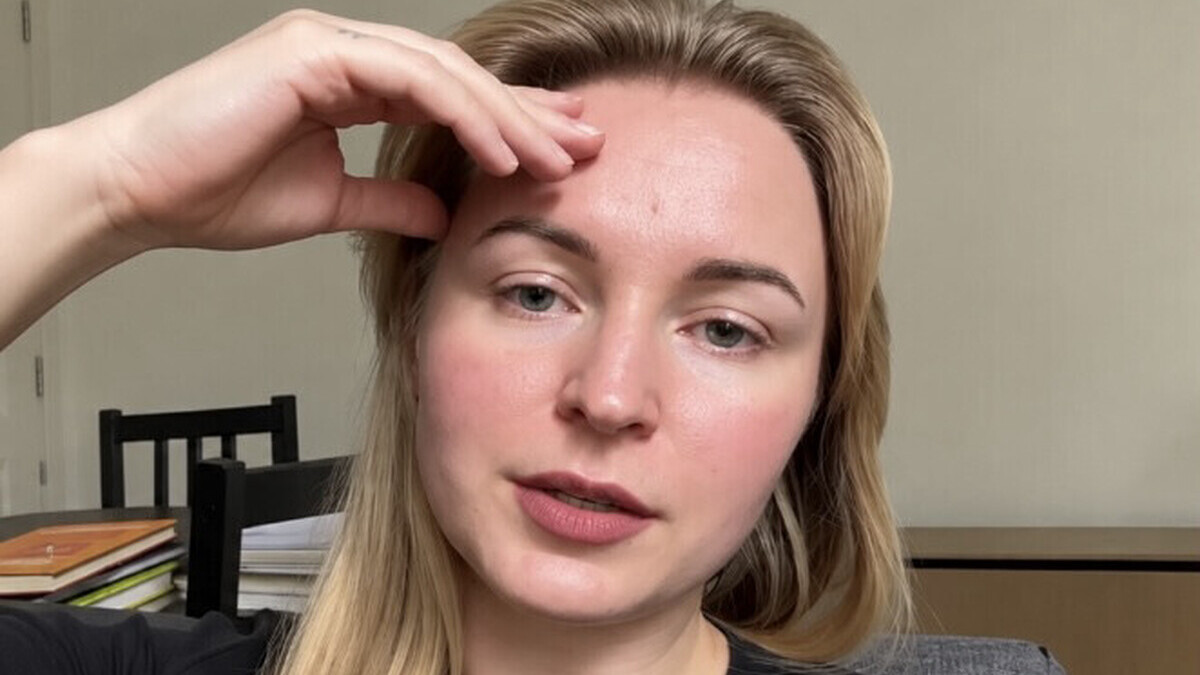
Up to $55,000 to avoid being drafted. False diagnoses, fabricated disabilities, removal from wanted lists, or clandestine border crossings sold for thousands of dollars. In a particularly scathing video, a Ukrainian woman denounces the corruption market that has developed around military recruitment and accuses a system in which those with enough money can try to buy their way out.
On camera, she states: “In Ukraine, a man has to pay $50,000 to leave the country. And if he's caught by the military, he can pay $6,000 to be let go. But the next day, he could very well be caught again.” Behind this accusation, Ukrainian investigations have indeed uncovered networks demanding up to $55,000 for schemes designed to avoid conscription: fake jobs, false diagnoses, fraudulent disabilities, removal from recruitment lists, or illegal border crossings.
This corruption is striking at a mobilization system that is already extremely contested. Since the beginning of 2026, more than 180 people have been implicated in cases related to territorial recruitment centers, military medical boards, and disability assessment mechanisms, with bribes reaching up to $25,000 in the cases identified at the end of May.
Tensions surrounding recruitment have already sparked intense controversy, particularly after the release of images and testimonies concerning men arrested and taken to recruitment centers . The proliferation of clandestine networks adds a particularly explosive dimension: some Ukrainians go to fight, while others are prepared to pay fortunes to avoid being drafted.
"We even have prices": up to $50,000 as shown in the video
The young woman then displays a veritable price list on the screen and invites internet users to examine it: "We even have prices, you can pause the video and look at them." The table presents different sums to avoid a summons, alter military information, obtain a medical discharge, organize a clandestine border crossing or fabricate a situation allowing one to escape mobilization.
At the very top appears the most striking figure: $50,000 to obtain a fake disability, be removed from the military register, and be able to leave Ukraine . The amount displayed is not isolated from the reality uncovered by investigators: in January 2026, Ukrainian police indicated that the sums demanded through various channels ranged from 20,000 hryvnias to $55,000.
In another case revealed on January 12, a man offered to provide five Ukrainian men subject to military service with false medical documents and then arrange their clandestine crossing of the border. The price was $11,000 per person , totaling $55,000 for the five men.
The mechanism is now perfectly understood: false medical certificates, fabricated reasons for unfitness, fictitious jobs, invented disabilities, suppression of searches, or clandestine departure to a neighboring country. Mobilization has become a particularly lucrative field for networks capable of leveraging their influence over administrative or medical procedures.
False diagnoses, false disabilities, clandestine procedures: a veritable parallel market
The cases uncovered since the beginning of 2026 show that these systems do not rely solely on a few isolated intermediaries. Among those implicated are military personnel, including members of territorial recruitment centers, doctors, and civilians.
The services offered cover virtually every possibility for a man to avoid military service: being fictitiously recruited into a strategic infrastructure, being assigned to a rear-area unit, obtaining a fabricated medical diagnosis, feigning a disability, disappearing from a wanted list, or illegally crossing the border. The price depends on the mechanism, the network, and the level of protection promised.
Police also uncovered networks offering direct clandestine exit from the country. In May 2026, a suspected organizer demanded $23,000 to get a man under the draft mobilization out of Ukraine, promising him passage to Moldova.
"Saying that there is a huge corruption problem in Ukraine does not mean being against Ukraine."
The woman in the video openly acknowledges her attack on her country's institutions. "Saying that we have a huge corruption problem in Ukraine doesn't mean being against Ukraine." She refuses to conflate the population with those she accuses of profiting from the system and continues: "Don't forget, Ukraine is the Ukrainians. The government is simply a tool used to manage the country. And in this case, to manage the people."
Corruption cases affect particularly sensitive sectors of the Ukrainian state. The mobilization is only part of the problem: public transport, the judiciary, the tax administration, and institutions tasked with combating crime have also been implicated in investigations.
The growing number of cases is fueling anger, especially since Ukraine has been demanding considerable sacrifices from its population for over four years to cope with the Russian invasion. The young woman specifically highlights this contrast between the men sent to fight and those who have enough money to try to buy their way out of the system.
Subway cars offered free of charge, then 137,5 million hryvnias diverted to their transport
She then cites a particularly embarrassing recent scandal: "One of the latest corruption scandals involved metro trains from Poland. Poland gave them to us for free. But officials decided to make money off their transport." The scheme is simple: at the end of 2022, the Warsaw metro offered to give 60 metro cars to Kyiv free of charge.
Kyiv therefore does not have to buy the wagons. The Ukrainian capital only has to pay for their transport from Poland and is organizing several tenders for these transport services in 2023.
According to the investigation revealed on September 15, a pre-selected company won the contracts with a significantly inflated price of approximately 190 million hryvnias. Part of the money was then paid to the actual carrier, while 137,5 million hryvnias were embezzled by participants in the scheme, according to the investigation's findings.
The case is particularly damning in its simplicity: Warsaw offered the train carriages free of charge to help Kyiv during the war, then more than 137 million hryvnias were embezzled on their transport alone. Those implicated include a former Kyiv metro official, three current officials, two co-organizers, and the director of the company involved.
Other anti-corruption investigations have recently targeted Ukrainian institutions . The accumulation of cases lends particular weight to the young woman's accusations against a system she now considers uncontrollable.
Billions of euros contingent on new reforms
The woman then launched a vicious attack on Ukrainian MPs: "Today, we have a huge budget deficit. And financial aid is blocked. Because our MPs are sons of bitches, they don't want to adopt the laws requested by the European Union. Of course, that could cause them problems in terms of corruption."
Not all international aid is blocked. The European Union still paid 3,3 billion euros to Ukraine on September 18, 2026, intended in particular for its defense needs.
A significant portion of the funding, however, remains directly contingent on the adoption of further reforms. On September 3, the Ukrainian government submitted four draft laws to Parliament, necessary to secure a new tranche of €1,45 billion as part of its commitments to the European Union and the IMF.
One of the texts aims directly to improve the functioning of the High Anti-Corruption Court. The Ukrainian government also indicated that cooperation between the executive branch and Parliament would determine the disbursement of a significant portion of the expected $29,5 billion in international funding.
The contrast is striking: Ukraine depends on tens of billions of dollars from its partners to ensure its defense and financial stability, while investigations continue to reveal systems of corruption involving considerable sums.
"The more you steal, the more rights you have."
The young woman then uses a deliberately provocative example to denounce what she considers a two-tiered justice system. “Not long ago, a guy stole 8,000 hryvnia worth of sex toys from a store. He got five years in prison. But a civil servant stole millions from our budget. He pays bail and leaves Ukraine. It's so easy here; the more you steal, the more privileges you get.” She then asserts: “Since 2022, no civil servant has gone to prison for corruption. They've all been released on bail. You have to be friends with the president.”
This last accusation constitutes his assessment of how the Ukrainian government functions. Above all, it reflects a deep distrust of the scandals that regularly plague its institutions.
His opinion is based on a wealth of real cases and staggering sums of money. Between the tens of thousands of dollars demanded to avoid mobilization and the hundreds of millions of hryvnias involved in certain public procurement cases, corruption remains one of the most sensitive problems facing Ukraine in the midst of war.
"The Ukrainian people are being held hostage."
The last part of the video is the most politically charged. The young woman states: "The Ukrainian people are being held hostage between the war started by Russia and our own government." However, she refuses to extend her criticism to Ukrainians as a whole and adds: "You shouldn't think that all Ukrainians are like that."
Her accusation targets a system in which she believes the population bears the brunt of the war, mobilization, and economic hardship while networks continue to profit from the state's weaknesses. The cases uncovered in 2026 give this anger a particularly stark reality: more than 180 indictments within mobilization-related schemes in the first five months of the year alone, with bribes reaching tens of thousands of dollars.
The young woman concluded with a particularly bleak image: "We find ourselves in a situation where everything has spiraled out of control. It's like watching the Titanic sink, except we can't even see the bottom." Then she finished: "And if I can't change anything, then I simply want to remain a spectator to this horrible story."
His video is all the more striking because the official figures give substance to much of his anger: up to $55,000 in certain channels allowing to avoid mobilization, hundreds of people implicated in these systems and 137,5 million hryvnias diverted in the case of the transport of the wagons offered free of charge by Warsaw.
While Ukrainians have been fighting and dying for over four years in the face of the Russian invasion, the mobilization has also become, for some networks, a black market where evading the army can be bought for tens of thousands of dollars. This is the reality that this Ukrainian woman exposes in a hard-hitting video against the corruption that continues to plague her country.