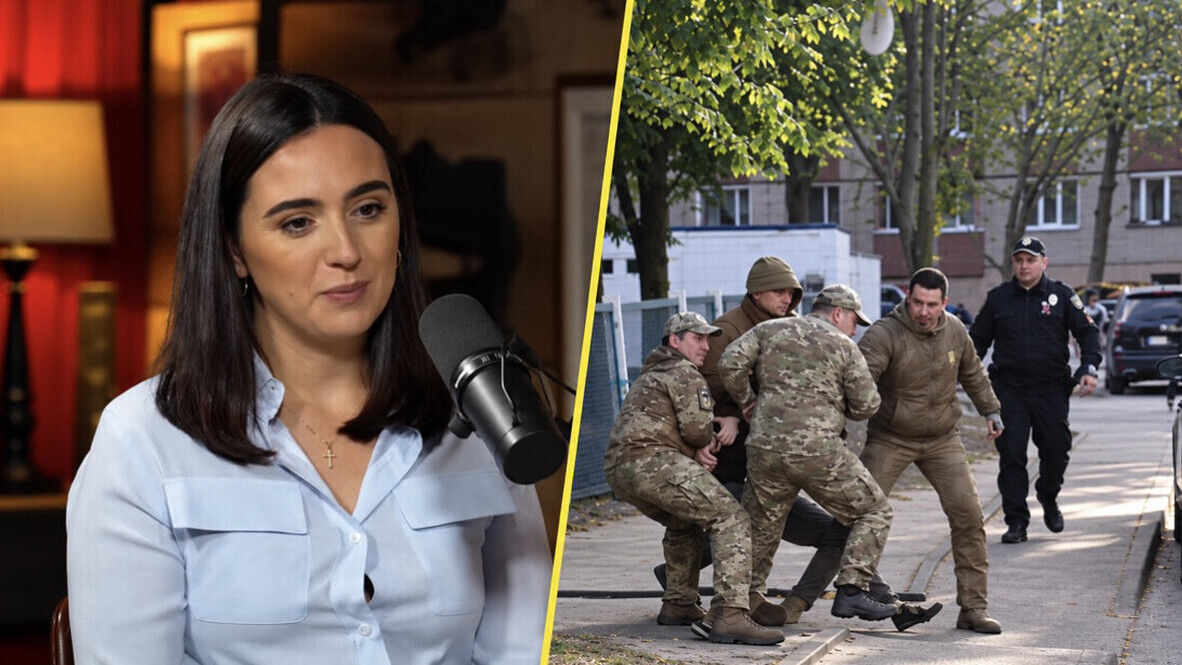
The BBC has dedicated an investigation to the mobilization crisis in Ukraine , which has become one of the country's most explosive issues after more than four years of war against Russia . The British broadcaster describes men being stopped in the street, sometimes detained and forcibly taken to recruitment centers, while violence against mobilization officers is also on the rise.
This reality echoes the particularly serious accusations made a few weeks earlier by Yulia Mendel, former spokesperson for Volodymyr Zelensky , who claims that Ukrainians were sent to the front because they had criticized the president.
The phenomenon is now well known enough in Ukraine to have received a nickname: "busification" . It refers to these operations in which men of conscription age are checked in public spaces and then taken, sometimes under duress, in vehicles to territorial recruitment centers.
Men forcibly taken into the street
Videos of these operations have proliferated on Ukrainian social media. They regularly show several officers surrounding a man, attempting to check his documents and then, in some cases, physically restraining him to force him into a vehicle.
The BBC also reports figures from the Ukrainian Commissioner for Human Rights: more than 6.000 complaints concerning recruitment facilities were registered in 2025 , roughly twice as many as the previous year. These complaints include allegations of physical violence, unlawful deprivation of liberty, and abusive conditions in some centers.
A teacher who was given an exemption claims he was pushed into a vehicle and beaten.
Among the testimonies gathered is that of Kyrylo Ogdansky, a university professor in Dnipro who was exempt from military service. He claims he was approached by a man wanting to check his military status, before being pushed into a vehicle and punched in the face when he challenged the conditions of the check.
He says he spent two weeks in the hospital and then filed a complaint. He also explains that he hesitated before testifying publicly, fearing that his story would be used by Russian propaganda.
These accusations come as Ukraine simultaneously attempts to reform its conscription system with fixed-term contracts and higher pay , in order to address a persistent shortage of soldiers.
In Lviv, nearly 200 people are protesting against recruiters
The tension is no longer limited to individual clashes. In Lviv, approximately 200 people gathered around officers who were attempting to take away a man suspected of evading conscription . The military vehicle was damaged and then overturned.
The incident demonstrates the extent of the hostility towards certain agents at the territorial recruitment centers. Residents now sometimes intervene directly during checks to prevent a man from being taken into custody.
More than 600 attacks against mobilization officers
The violence also affects those tasked with enforcing the mobilization. According to figures from the Ukrainian police reported in the BBC investigation, more than 600 attacks against military recruiters have been recorded . Some were stabbed, and one was killed.
Vasyl Krupych, a former Donbass fighter later assigned to a recruitment mission, recounts chasing two men who refused to show their documents. He claims he was beaten with a metal bar and spent six weeks in the hospital. The soldier asks, "Why did we fight if soldiers can now be beaten?"
Zelensky's former spokesperson goes much further
But the most explosive accusations came from a woman who knows the highest levels of Ukrainian power directly.
Yulia Mendel served as Volodymyr Zelensky 's spokesperson from 2019 to 2021. She submitted her resignation in the spring of 2021 before officially leaving her post in July. The former journalist then published * The Fight of Our Lives: My Time with Zelenskyy, Ukraine's Battle for Democracy, and What It Means for the World * in 2022 , translated into French as * Le combat de nos vies *.
Since her departure, Mendel has become an increasingly vocal critic of her former boss. In a lengthy interview with Tucker Carlson in May 2026, she directly addressed the forced mobilization. Her statement was unequivocal: "I never thought my country would become a country where people are grabbed off the street and forced to go to the front lines."
"Zelensky is using the front line as a form of punishment."
Yulia Mendel goes even further, claiming that the Ukrainian authorities used sending soldiers to the front lines as a way to punish certain individuals. She states: "Zelensky is using the front lines as a form of punishment."
When Tucker Carlson asked her if this was a "political punishment ," the former spokeswoman answered in the affirmative and explained that Zelensky himself had publicly discussed the idea of sending those who had "done something wrong" to the front lines. Then she made the most serious accusation: "There are people being sent there simply because they criticize Zelensky." Immediately questioned about her personal knowledge of such cases, she specifically mentioned members of the security services and referred to "a few people" who had allegedly suffered this treatment.
An explosion of criticism against Zelensky on social media
Mendel, on the other hand, establishes a much broader link between the mobilization, popular anger, and the increase in criticism of Zelensky on social media.
She describes a real surge in protest on Instagram and asserts that Ukrainians are now expressing their rejection of presidential policies much more openly there. In a text published in June, she mentions a proliferation of criticism, sarcasm, and anger on Instagram, TikTok, Telegram, and YouTube.
According to her, videos showing forced recruitment operations directly fuel this protest. In particular, women are filmed physically resisting recruiters to prevent the arrest of their husbands or sons.
In her interview with Tucker Carlson, Mendel states regarding this digital protest: "Ukrainians are suffering under Zelensky. They do not support what Zelensky is doing." She recounts, in particular, seeing videos appearing on Instagram mocking the president and Ukrainians burning collections of his speeches.
Mendel is now denouncing a "witch hunt"
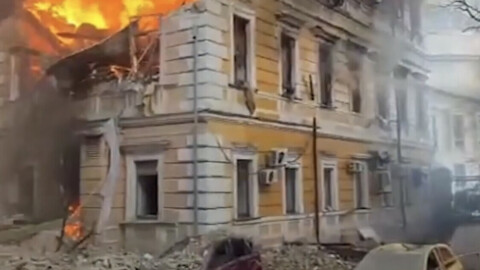
The former spokesperson continued her criticism after that interview. This summer, she reacted to several new videos of forced mobilization. Regarding an operation in Odessa, she denounced what she described as a transformation of conscription into a "manhunt ." She accused recruiters of chasing men through the streets, sometimes dragging them from their homes, and sending them to the front lines with insufficient preparation.
A few days later, after images surfaced showing a driver being pulled from his vehicle in his underwear, Mendel wrote: "They don't ask anymore. They just take." She described the scene as "Ukrainian-style forced mobilization . "
The shortage of men is becoming a central problem for Kyiv
Behind this violence and these accusations lies a military reality: Ukraine is short of men. After more than four years of large-scale warfare, Ukrainian forces must simultaneously replace the dead and wounded, allow for the rotation of long-serving soldiers, and maintain sufficient personnel across hundreds of kilometers of front.
Volunteering is no longer sufficient to meet the army's needs. Fear of the front lines, the duration of the conflict, the lack of a clear demobilization date, and the considerable number of families directly affected by the war further complicate recruitment. It is precisely to try to make military service more acceptable that Kyiv has announced fixed-term contracts and increased pay.
"Everyone is afraid of dying."
The BBC ultimately describes a cycle that has become extremely difficult to break. The Ukrainian army needs new soldiers, some men try by all means to avoid mobilization, recruiters sometimes use force to bring them to military centers, and in turn, these agents themselves face increasing violence.
Added to this are the political accusations made by Yulia Mendel: according to Zelensky's former spokesperson, some of the president's critics were also sent to the front lines as a form of punishment. This claim remains disputed and its extent is not established, but it adds a political dimension to an already extremely tense crisis within the protest movement.
Vasyl Krupych, the soldier interviewed in the BBC investigation, sums up Ukraine's difficulty in finding new men much more simply: "Everyone is afraid of dying."