

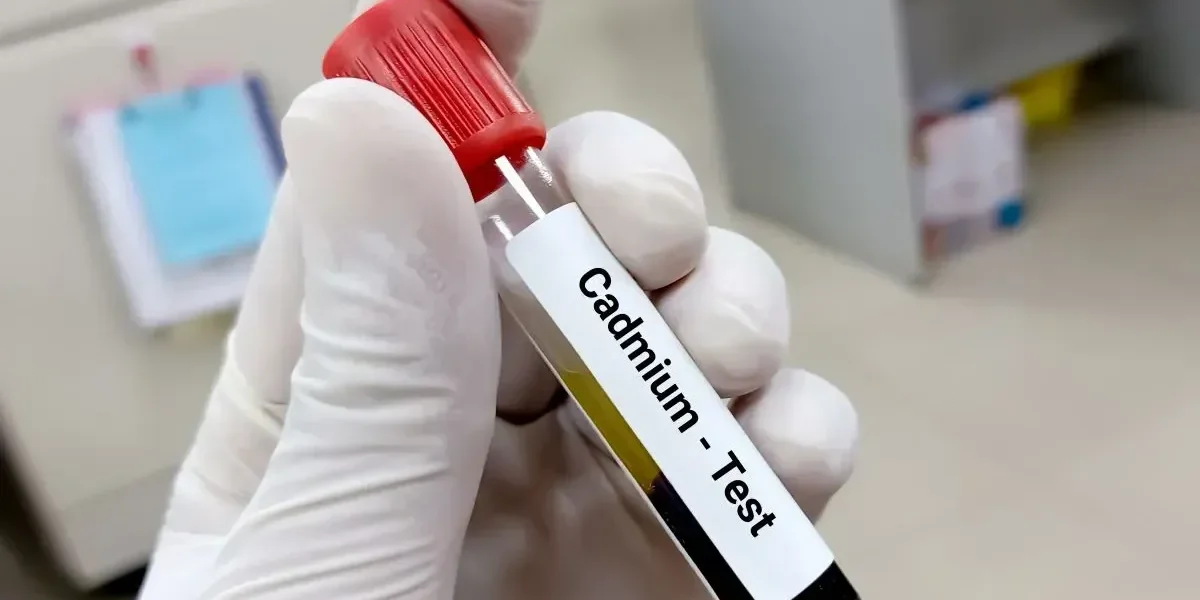
Starting this summer, French citizens deemed overexposed to cadmium will be able to access reimbursed cadmium testing at private laboratories. The Ministry of Health will follow the recommendations of the High Authority for Health (HAS), with a decree expected in the coming weeks. The principle is simple on paper: with a prescription, cadmium levels will be measured in urine, or even blood, to assess the exposure to this metal, which accumulates slowly, especially in the kidneys. However, the underlying situation is less reassuring: according to ANSES (the French Agency for Food, Environmental and Occupational Health & Safety), nearly one in two French people will have exposure levels exceeding health reference values by 2025. This statistic serves as a stark warning, though it hasn't yet triggered a widespread campaign.
A surgical approach, far removed from mass screening
The government, however, refuses to open the floodgates. There will be no systematic screening, but rather a targeted strategy designed for those living on soils naturally rich in cadmium, in certain areas of Champagne, Charente, the Jura Mountains, or the Massif Central, or near sites contaminated by past or present industrial facilities. The French National Authority for Health (HAS) speaks of approximately 7,000 polluted sites, where exposure can occur through inhaled dust or locally grown food—food sometimes perceived as more authentic, closer to home, and safer. Outside these areas, a doctor can also prescribe the test if they suspect chronic exposure, particularly in cases of compatible kidney or bone damage.
On the financial side, the situation is changing dramatically. The standard price is €27,50, with reimbursement planned at 60% by Social Security and 40% by supplemental insurance, according to the agreement reached in early April between pharmaceutical companies and the national health insurance system. Until now, without a prescription, the bill could be around €45, enough to discourage many patients. At the same time, a bill on limiting the risks associated with cadmium is scheduled to be examined in early June by the National Assembly, a sign that the issue is moving from the pharmaceutical sector into the political arena, where decisions are rarely made without friction… and where the question of our daily exposure will not disappear with a simple decree.








Community
Comments
Write a comment
Be the first to comment on this article.