

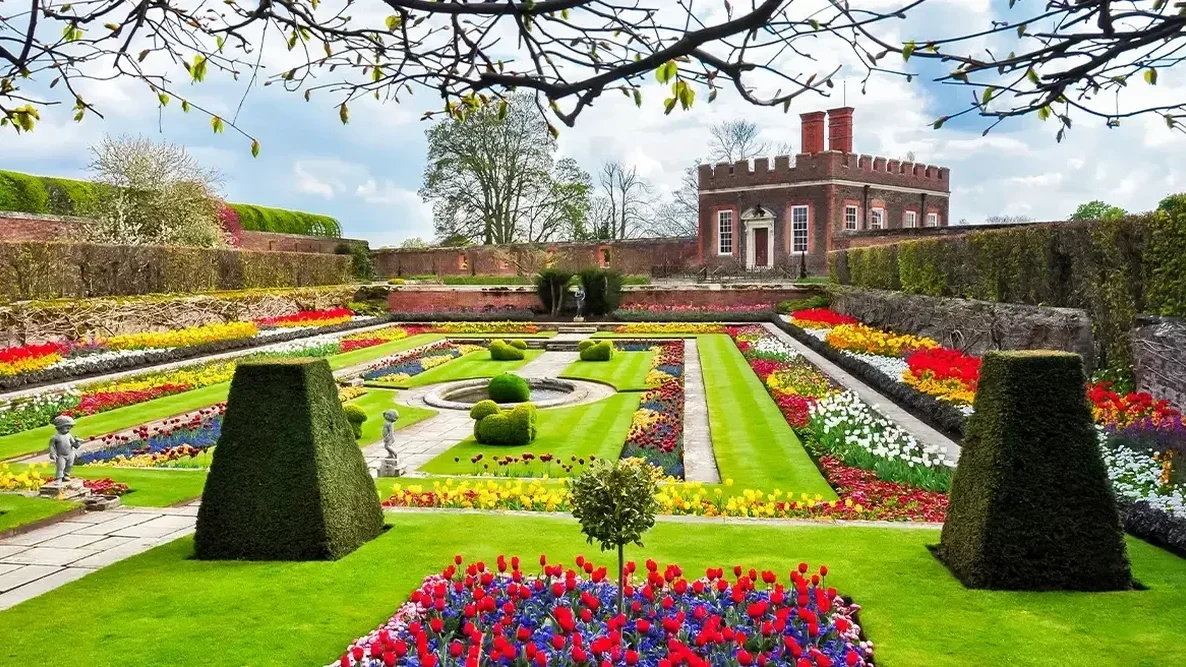
The famous English gardens are suffering from an unprecedented drought, following several heatwaves and months with almost no rain. At Hampton Court, Henry VIII's former favorite residence in southwest London, the once verdant lawns have given way to a beige carpet. Staff are particularly concerned about the recurrence of such summers, which could permanently alter these historic landscapes designed by figures like Lancelot "Capability" Brown and William Kent.
The phenomenon is not limited to lawns. Mature oaks, birches, sycamores, and lime trees are dying on several historic estates, notably Kensington Palace and Chiswick House. Their disappearance represents a heritage loss that is difficult to repair, as it would take decades to find trees of comparable size. Some sites studied by the National Lottery Heritage Fund have already lost up to 80% of their vegetation cover.
Mediterranean species to save these landscapes
Faced with dwindling rainwater reserves, watering all the trees has become impossible. Gardeners must therefore choose new species capable of withstanding drought and high temperatures. At Hampton Court, experimental plots include plants native to the southern United States, which remain vigorous without automatic irrigation. Other estates are introducing more grasses, perennials, and Mediterranean species while being more tolerant of wildflowers.
This adaptation, however, raises a major heritage question: how far can a historic garden be altered without losing its identity? Managers must preserve the atmosphere of the place while preparing their green spaces for the climate of tomorrow. According to researchers at the Royal Botanic Gardens, Kew, half of their trees could die by 2090. Summer droughts, storms, and winter rains that encourage pests now necessitate urgent decisions to prevent the gradual disappearance of this British heritage.




Community
Comments
Write a comment
Be the first to comment on this article.