

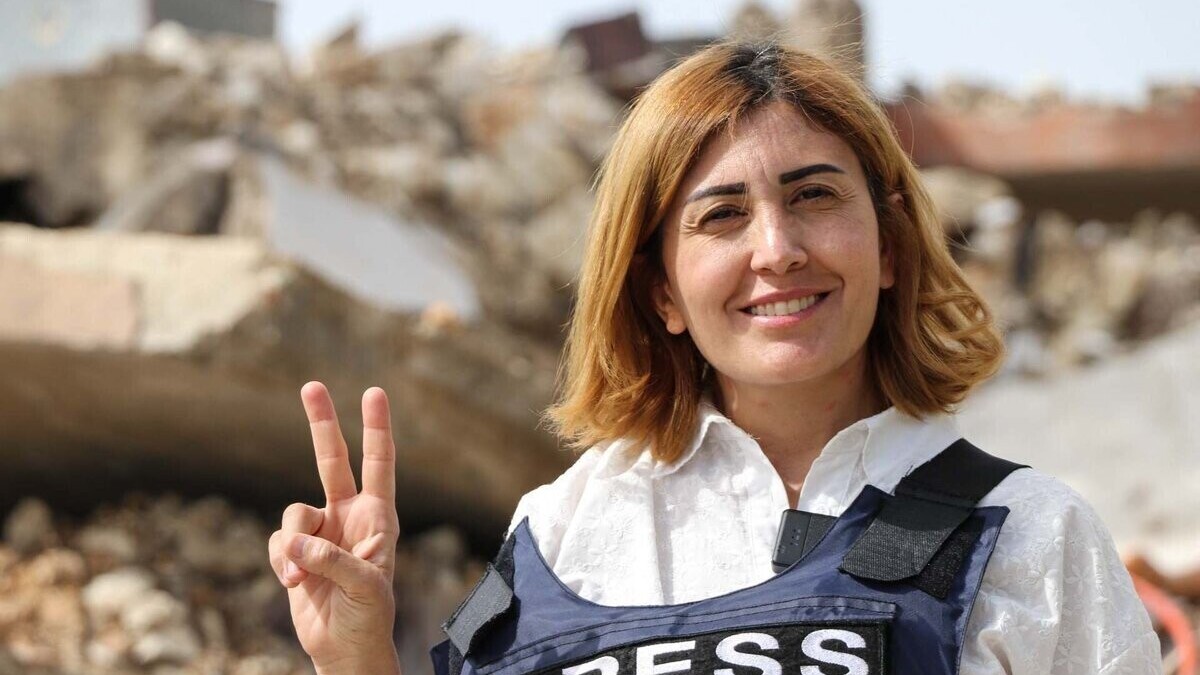
Human Rights Watch and Amnesty International concluded that the Israeli attack on April 22 in southern Lebanon, which killed journalist Amal Khalil and seriously injured camerawoman Zeinab Faraj, constituted an apparent war crime. The Israeli army denies deliberately targeting journalists.
The two organizations published separate reports on the events that unfolded in the town of al-Tiri, where the two women were covering the news for the newspaper al-Akhbar and working as freelance camerawomen. According to Human Rights Watch's reconstruction, based on photos, videos, testimonies from Faraj and first responders, as well as a message from the Lebanese Red Cross to the Israeli army, the events took place over several hours.
At approximately 14:30 p.m. local time, the first airstrike hit a vehicle traveling in front of the two journalists, killing two men they knew, Ali Bazzi and Mohammed al-Hourani. Khalil and Faraj then abandoned their car and sought refuge near a nearby building. They contacted the Lebanese Red Cross, and at 15:00 p.m., the UN peacekeeping force in Lebanon (UNIFIL) sent a request to the Israeli army for access to the site to rescue them.
A second strike, occurring between 15:21 p.m. and 15:42 p.m., hit the journalists' parked vehicle, wounding Khalil. The two women then took refuge inside the building, which was destroyed by a third strike around 16:25 p.m. Israeli quadcopter drones appeared to be monitoring the two women throughout the attack.
“The drones came extremely close, passing through the gaping hole in the roof. Less than a meter away. I covered my face, thinking about a video I had seen where a drone killed someone in this way. I thought it was going to explode in my face. The drones were not carrying any visible explosives, but they hovered and caused constant fear,” Faraj told Amnesty International.
A Lebanese Red Cross team was able to enter the city after 17:00 p.m., but rescuers were hit by a stun grenade dropped from a drone and had to withdraw without being able to recover Khalil. Photographs reviewed by HRW show damage to the Lebanese Red Cross ambulance, which the organization says is consistent with small arms fire. A report from the government hospital in Tebnin indicates that Khalil was likely still alive when rescuers were forced to leave the scene around 17:53 p.m. She died around 19:00 p.m. of cardiac arrest, after suffering a head injury that caused severe bleeding. Her body was not recovered until around 23:00 p.m.
The Israeli military told the BBC that the three strikes targeted two Hezbollah members and that the incident was undergoing an internal review. It did not answer further questions about the target of the second and third strikes and stated that it "regretted any harm caused to journalists."
HRW and Amnesty International believe that Israeli forces “knew or should have known” that the two women were civilians. Deliberate attacks against civilians are prohibited under international humanitarian law. “There can be no justification for targeting civilians who were seeking refuge for their safety,” said Heba Morayef, Amnesty International’s Middle East Director. Ramzi Kaiss, Lebanon researcher for HRW, added: “The repeated killings of journalists by Israeli forces demonstrate a brazen willingness to commit atrocities without fear of any consequences.”
The two organizations are calling for an independent investigation and urging Lebanon to accept the jurisdiction of the International Criminal Court. According to the Committee to Protect Journalists, 27 journalists and media professionals have been killed since the beginning of the year, including nine in Lebanon and seven in Israel, the occupied West Bank, and Gaza.




Community
Comments
Write a comment
Be the first to comment on this article.