
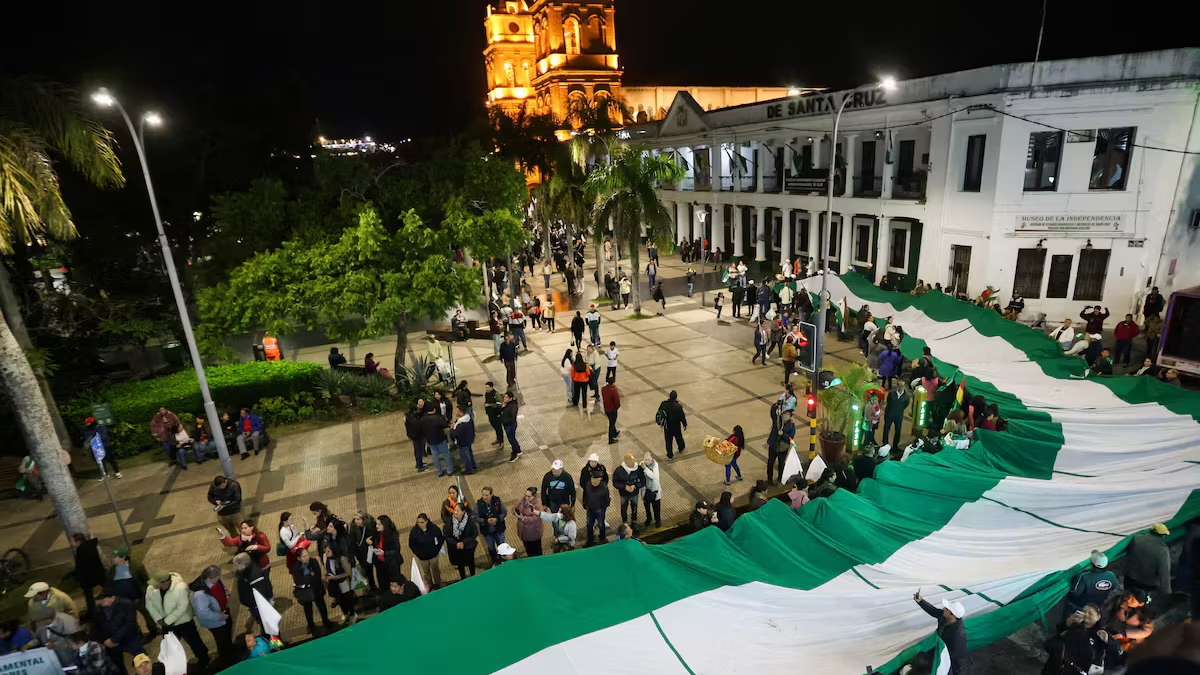
The Bolivian government announced that the police and armed forces would open "humanitarian corridors" on Saturday in the department of La Paz to allow the passage of essential goods through the roadblocks that have paralyzed part of the country for several weeks.
This measure comes as Bolivia is experiencing a serious social and political crisis. The protests, initially triggered by strikes in early May, have gradually transformed into a vast national movement involving unions, miners, transport workers, and rural groups.
The protesters are denouncing the austerity measures implemented by the centrist government of President Rodrigo Paz, as well as the rising cost of living. Some are now openly calling for the president's resignation.
At a press conference, Interior Minister Marco Antonio Oviedo stated that the operation would be peaceful. Authorities plan to secure, in particular, the road linking the city of Oruro to La Paz to allow for the delivery of food, medicine, oxygen, and other essential supplies.
The government also indicated that the Red Cross and the Catholic Church should participate in the humanitarian operation in order to ensure the smooth running of the convoys and to limit the risks of confrontation.
The blockades have caused growing shortages in several parts of the country, fueling concerns about a possible worsening of the economic and humanitarian crisis. The situation is also attracting increasing international attention, including in Washington, where US officials are monitoring the evolving tensions.
As the country sinks deeper into a political crisis, the opening of these humanitarian corridors appears to be an attempt by the government to regain control of the situation without provoking a direct escalation with the protesters.

Community
Comments
Comments are open, but protected against spam. Initial posts and comments containing links undergo manual review.
Be the first to comment on this article.