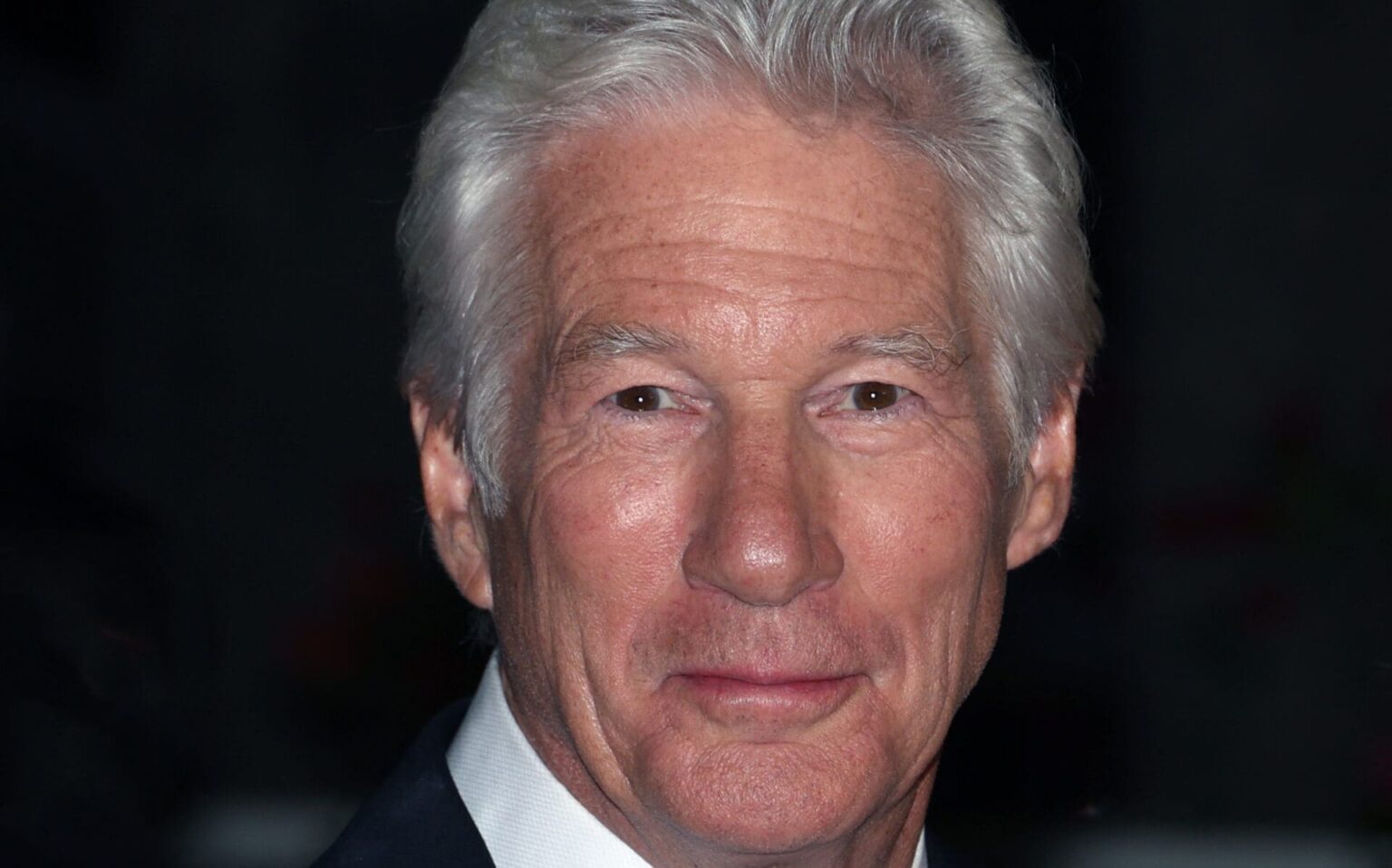
Richard Gere, who rose to fame in 1980 with Paul Schrader's American Gigolo , reunites with the same director 44 years later in the film Oh, Canada , which opens in theaters this Wednesday. The film tells the story of a writer who, at the end of his life, recounts his decision to move to Canada to avoid fighting in the Vietnam War. In this interview, Gere discusses his new role and the influence he believes the film industry can have on current conflicts, as well as the impact war can have on filmmaking. At the end of the interview, the Pretty Woman star also dashed any hopes of seeing him on screen again with Julia Roberts…
Hello Richard. How does it feel to be directed again by Paul Schrader, who was your director for American Gigolo, one of your first films, in 1980?
Richard GERE: Well, I haven't changed at all in 44 years! (Laughs) I remember when we were working together in the early 1980s, we watched a lot of movies and he would show me the ones with Alain Delon. It was by watching Alain Delon's movies that I learned how to play seducers on screen. Alain Delon really inspired me to play those kinds of characters.
How was your collaboration with Jacob Alordi, who plays your younger character?
It was the first time I met Jacob. And he reminded me a lot of my son, which was great. He was supposed to play me but younger. He told me he had watched some of my early films, when I was about the same age as him. I felt that he had an incredible warmth and humility…
In American Gigolo you played a super sexy character. In Oh, Canada, 45 years later, you play a person at the end of their life. In the years between these two films, what has changed in your life, your career, and do you often think about the passage of time?
What has changed in my whole life? Is that what you're asking me? (Laughs) It's a long discussion! To answer about the passage of time, you know, I wasn't thinking about myself at all when I played this character at the end of his life. But, as I said in some interviews, my father died two months before Paul offered me the project, and this film made me think of him. My father was almost 101 years old. He was just a few weeks away from reaching 101. He lived with me, my children and my wife. He was in a wheelchair and he was clearly in his last days, he was rambling at times. It's a bit like time disappearing, and I wanted to transcribe that in the film. The notion of time tends to disappear as we move forward in life...
In the film, your character considers fleeing to Canada rather than fighting in Vietnam. War is unfortunately a hot topic. Do you think that cinema and Hollywood stars can help people reconcile?
I would say that we are all just passing through this Earth. We are all equal human beings on this planet, and we are all in the same boat. I guess in your question you are referring to the world we live in right now. I think that problems arise when we cannot communicate with each other as human beings. If human beings knew how to communicate better with each other, problems and wars would literally disappear. And I think that yes, thanks to cinema, we, the actors or directors, have a role to play, even if it is less easy in some countries.
Precisely, what would be your advice to filmmakers in war-torn countries, where practicing one's profession is not necessarily easy?
That’s a very good question. I’ll be as short as possible, because it’s a big topic, but wars are not necessarily an obstacle for cinema: for example, the Soviet years were the best years for Russian cinema. And part of the reason is that because of the repression and oppression, artists had to find more subtle ways of communicating. And some really amazing films were made about very difficult subjects in the former Soviet Union. And then when the situation improved, when the country became much more corporate and capitalist, the films were not as good, they were just imitating stupid Western films. It proves that you don’t need big budgets to make good films, and that cinema is not just about money, it’s also about having something to say. So my advice to filmmakers who live in war-torn countries: purify your heart and open your mind as much as you can and be brave. When generosity of spirit shines through art, it gives it great value. We see it with some very great films that are made in the Middle East, although unfortunately, the filmmakers are not given enough credit.
To return to your film, your character chooses not to go to Vietnam. And you, what would you do if you were asked to fight for your country?
It's a difficult question. Are we willing to go to war, are we willing to pick up a gun? Are we willing to die? And that's always going to be a difficult question. And then there's another question if I had to go to war: am I willing to kill someone? How far am I willing to go to defend my family? That's a difficult question to answer. And even more so when it's an unjust war. In the movie, it's about the Vietnam War. Looking back, it was an unjust war, we didn't even know these people. It was, in my opinion, a stupid war that Henry Kissinger involved us in through lies. It was crazy.
If your country was invaded, do you think you would ask fewer questions?
I think that when you live in a country that has been invaded, bombed and pillaged, you may ask yourself fewer questions. And even then, are you still capable of killing someone else? We all ask ourselves that question and there is no answer…
In the film, we see your character die, and the scene is very moving. We have the impression that your emotion is not acted, but really experienced…
I thought about my father during that scene. You know, like I said, my father passed away a few months before we started shooting. It was hard. When he passed away, I wanted to embrace him as much as I could. I happen to look like my father, and it was a little weird because with the de-aging process that was used in the film, I was seeing both my father and what I was going to look like in a few years, assuming I lived as long as my father. That's probably why the emotion comes across on screen.
Does seeing the years go by make you think?
The strange thing about being an actor is that you see your life and the passage of time flashing through the camera. I was 26 when I started making films. When I get an award at a film festival or something, and they show a compilation of my films, it's a really strange experience. You see your whole life flashing through your eyes in two minutes. I see my characters, who haven't changed, but I see myself, who am no longer the same man... Cinema makes your characters eternal, but you, unlike the roles you play, are not...
To end on a lighter note, during your career, one duo has left its mark, the one with Julia Roberts and you in Pretty Woman. Is there a chance that we'll see you both in a film again?
You won't believe me, Julia Roberts just called me, it's unbelievable! No, I'm kidding! (Laughs) Garry Marshall (director of Pretty Woman, died in 2016 Editor’s note.) was the glue that held this duo together. And the reunion between Julia and me on screen couldn't happen without Garry. This film, Pretty Woman, and this duo, it was a moment of magic, a moment out of time, but it's the kind of moment that only happens once. Julia and I have evolved, each of us has traced our path, each of us has evolved, and we could never reproduce the same magic, the same spontaneity. And on top of that, we no longer have Garry Marshall to maintain this duo: his lightness, his sense of humor, his romanticism. So I know that many are waiting for it, but a reunion on screen between Julia Roberts and me, it's not going to happen...