
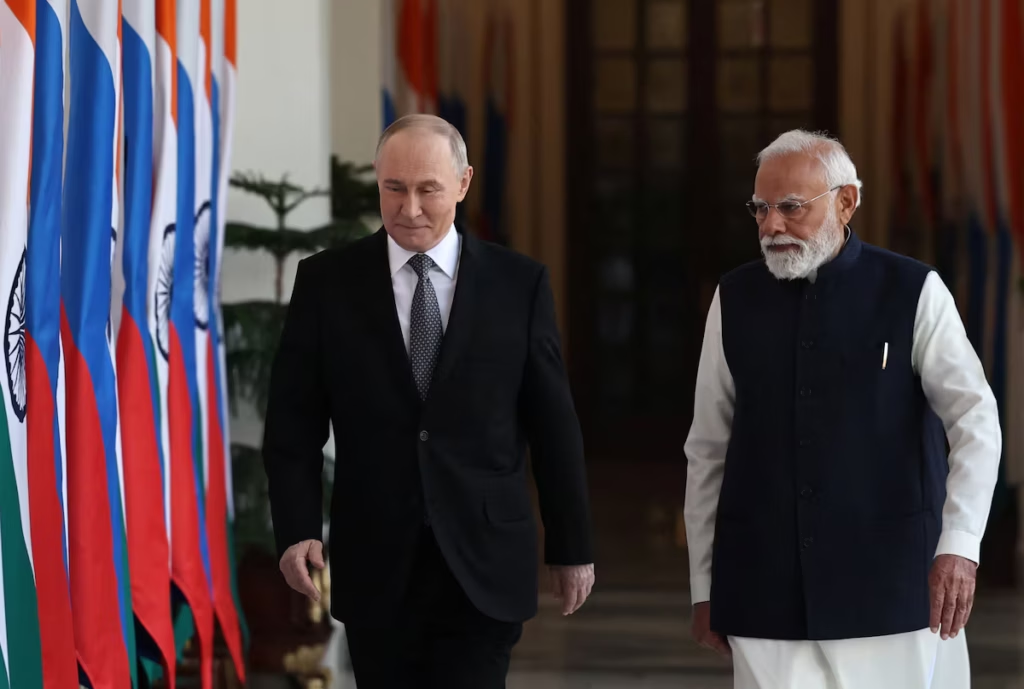
Russian President Vladimir Putin was welcomed with honors in New Delhi on Friday, where he began a strategic summit with Indian Prime Minister Narendra Modi. This trip, Putin's first to India in four years, aims to strengthen a bilateral relationship strained by Western sanctions and to reaffirm the political, military, and economic ties between the two countries.
Modi assured his host that India supported peace efforts in Ukraine, an important diplomatic message as New Delhi tries to preserve its relations with all the powers involved in the conflict. India, which does not openly condemn Moscow while regularly calling for dialogue, is positioning itself as a balanced actor seeking to maintain its strategic room for maneuver.
At the heart of the discussions are defense, oil, and nuclear energy—three historical pillars of Indo-Russian cooperation. Moscow remains India's main arms supplier, while New Delhi has become one of the leading buyers of Russian oil shipped by sea since the start of the war in Ukraine. Both leaders now wish to diversify their trade to reduce the current imbalance, characterized by massive energy imports to Russia.
Putin indicated he wants to significantly increase imports of Indian products in order to raise the volume of trade to $100 billion by 2030. Several agreements and contracts are expected to be announced at the end of the summit, demonstrating the common desire to expand cooperation in sectors such as agriculture, technology and machine tools.
This visit comes as India is simultaneously conducting negotiations with the United States to reduce the punitive tariffs imposed by the Trump administration due to its purchases of Russian oil. New Delhi is thus attempting to appease its Western partners while strengthening its relationship with Russia, a delicate diplomatic balance but essential to its strategy of geopolitical autonomy.