

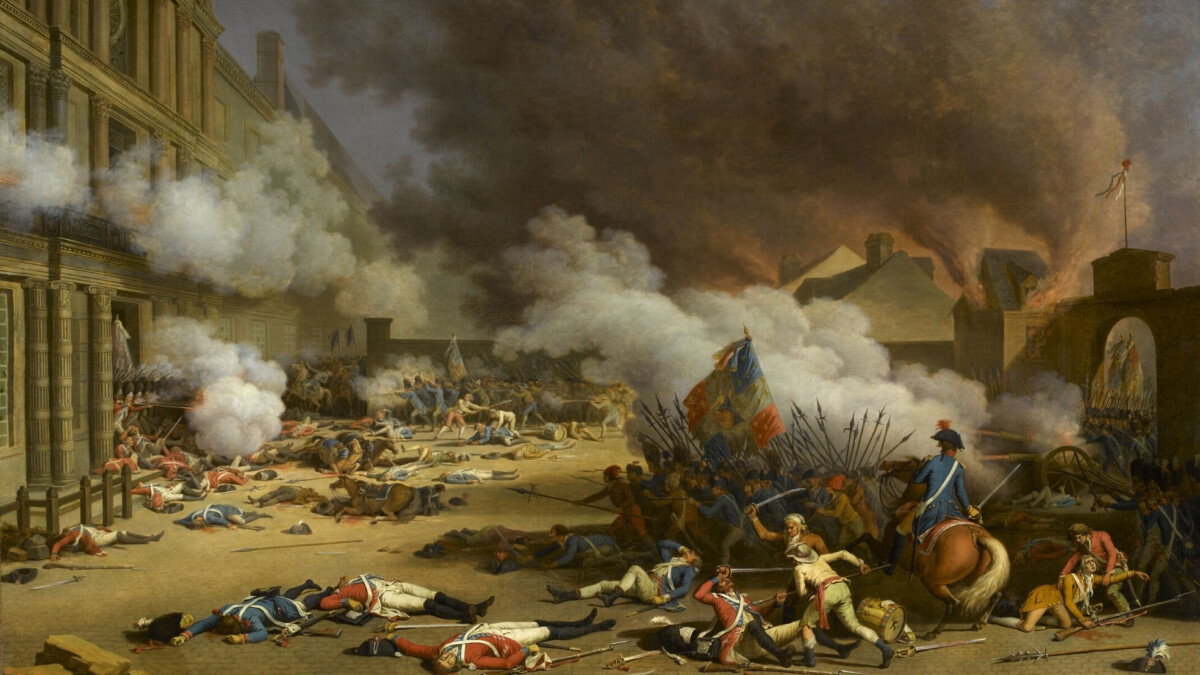
On August 10, 1792, Parisian sans-culottes seized the Tuileries Palace at the end of a day of extreme violence, ending nearly a millennium of French monarchy and paving the way for a republican regime that did not yet call itself by that name.
A king besieged in his own residence
Since his attempted escape to Varennes in 1791, Louis XVI and his family had been living under house arrest in the Tuileries Palace, under the watchful eyes of the people, in an atmosphere of suspicion fueled by fears of a foreign invasion and of the king's collusion with the Emperor of Austria, nephew of Queen Marie Antoinette. On the night of August 9-10, the tocsin sounded throughout Paris, and in the morning, a crowd led by Generals Santerre and Westermann gathered near the palace, which was defended by approximately 900 Swiss Guards.
When Louis XVI reviewed his troops, the Swiss Guards traditionally shouted "Long live the king!" while the artillerymen and the Red Cross battalion responded "Long live the Nation!" Frightened by the insults of the crowd, the king, queen, and dauphin then crossed the Tuileries Garden to seek refuge with the Legislative Assembly.
A massacre that sealed the fall of the monarchy
Left without clear orders after the king's departure, the Swiss Guards were stormed by the insurgents: approximately 600 of them perished, along with 200 aristocrats, courtiers, and servants present in the palace. Napoleon Bonaparte, a young artilleryman on leave at the time, witnessed the fighting from a shop in the Carrousel, an episode he would later describe as pivotal in his understanding of the Revolution.
This day, described by many historians as the second Revolution, immediately led to the suspension of Louis XVI from his title of King of the French and his imprisonment with his family in the Temple tower, paving the way for the meeting of the National Convention on September 21, which would definitively abolish the monarchy.






Community
Comments
Write a comment
Be the first to comment on this article.