

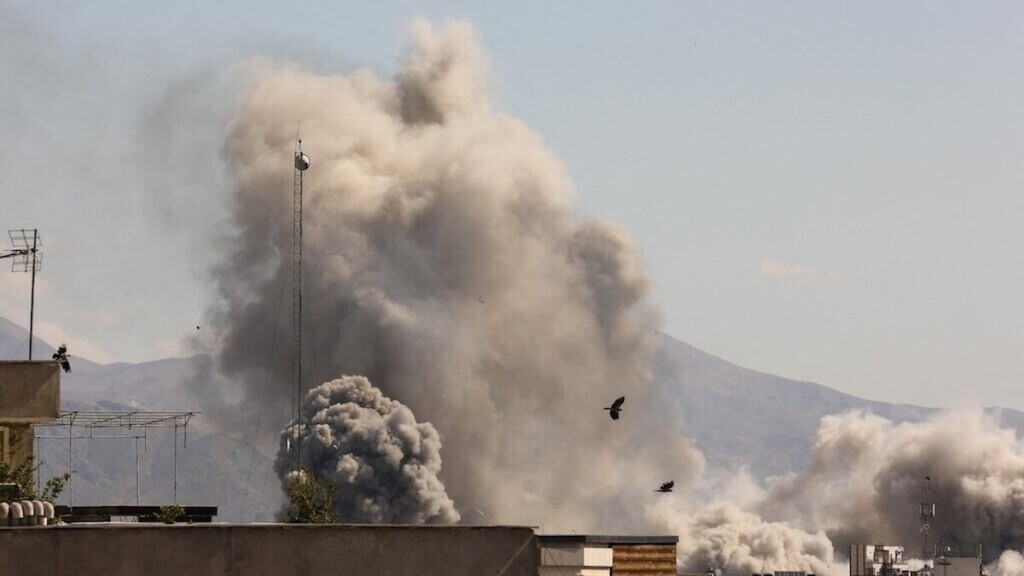
The US military announced Thursday that it had conducted an intensive series of strikes against Iran over a two-hour period, targeting facilities belonging to the Islamic Revolutionary Guard Corps. These operations are part of a rapid escalation following Iranian attacks on a US base in Jordan.
The U.S. Central Command confirmed early Thursday that it had struck "dozens" of targets belonging to Iran's Revolutionary Guard: military command centers, missile and drone facilities, and coastal surveillance and defense sites. The strikes were carried out over a period of two hours.
These operations follow an Iranian attack on a base in Jordan where American soldiers are stationed. Donald Trump had promised to retaliate "very hard." "In the meantime, we're going to hit them very hard, because it's our turn to hit them," he declared from the Oval Office.
A few hours before this salvo, the United States had joined forces with Saudi Arabia to strike pro-Iranian militias in Iraq, killing at least 20 Iranian fighters and six advisors.
Iranian state media reported two people injured in attacks on Qeshm Island in the Strait of Hormuz, and explosions in Khuzestan province in the west of the country, bordering Iraq and Kuwait.
In the Egyptian port of Damietta, drone strikes caused fires on two natural gas ships, according to the British maritime security firm Ambrey. A US-owned floating storage unit and a Greek-owned oil tanker were hit, but no injuries were reported. Responsibility for the strikes was not immediately established. When asked about possible Iranian involvement, Trump replied, "It's more of the same."
Egypt, a Washington ally and regional mediator, has so far remained aloof from direct military action since the beginning of the conflict. A confirmed strike against its port facilities would constitute a significant expansion of the theater of operations.
Saudi Arabia, for its part, accused Iraqi militias of launching drones against its oil facilities over the past two days. Houthi rebels in Yemen claimed responsibility for attacks on Saudi energy infrastructure in a separate but related conflict.
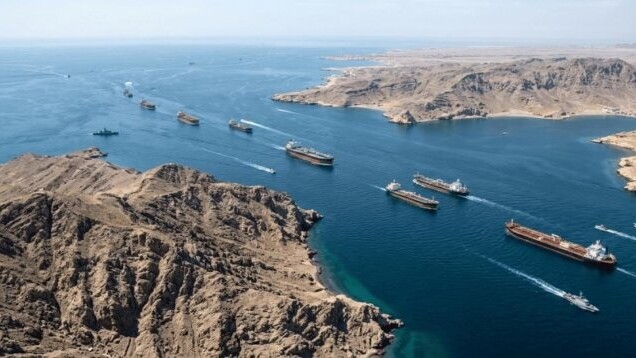
This new flare-up comes after a few days of relative calm and jeopardizes ongoing diplomatic efforts. An interim agreement signed in June collapsed with the resumption of fighting in the Strait of Hormuz, a crucial maritime waterway for global energy supplies that Iranian attacks have once again virtually closed. A regional official indicated that mediators are "still trying with both sides" to restore calm, without specifying the progress of these negotiations.





Community
Comments
Write a comment
Be the first to comment on this article.