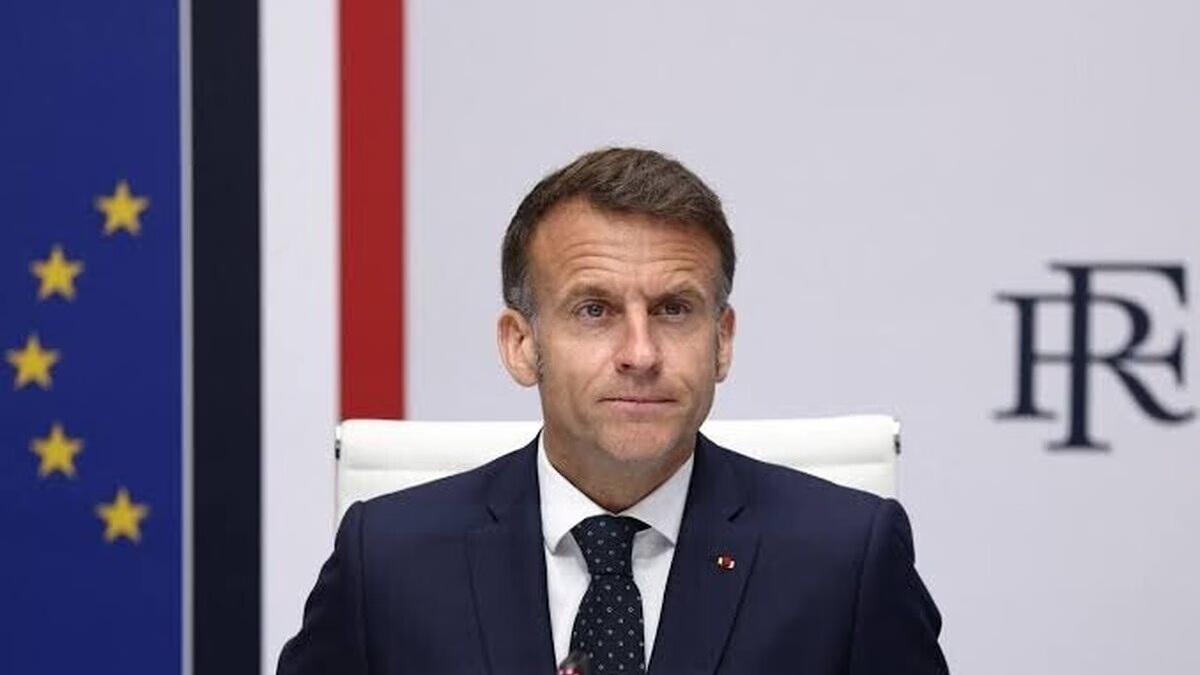
Emmanuel Macron inaugurates the Paris Motor Show on Monday for the last time as head of state, aiming to secure a strong European preference for vehicles produced within the Union, including batteries and components.
This is an event he has never missed since taking office at the Élysée. Emmanuel Macron is attending the Paris Motor Show this Monday, a biennial exhibition held at the Parc des Expositions at Porte de Versailles, marking his final visit as president of the Republic. It is an opportunity to review a sector that the Élysée describes as « at the heart » of French industry, with 400,000 direct jobs in the country.
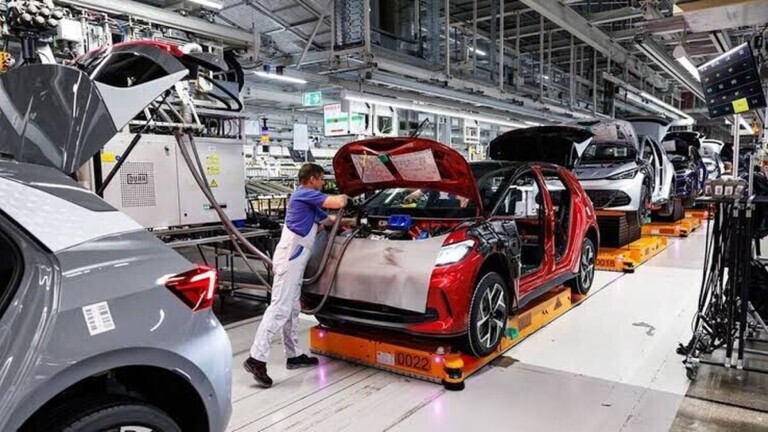
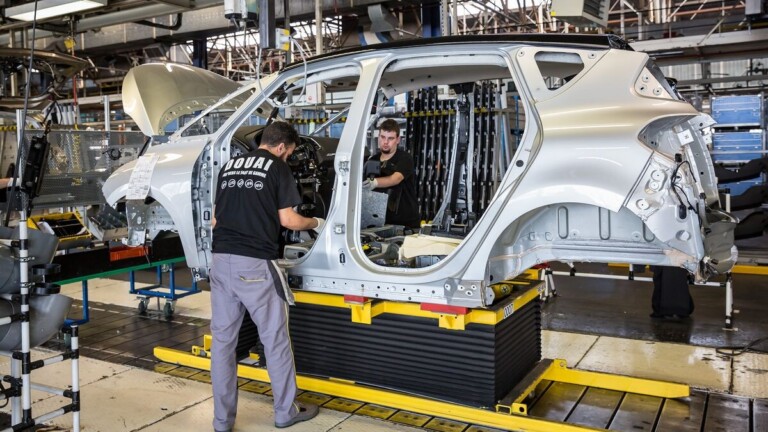
The presidency highlights progress made since 2017 in electrification. Before that date, French electric car production relied almost exclusively on the Renault Zoé, and the country had « no battery factories. » Since then, four gigafactories have been established in northern France, and electric vehicle production has significantly increased. However, it remains insufficient: in 2025, 331,000 new electric cars were registered in France, but only 216,000 units were produced domestically. Moreover, six out of ten of these vehicles made in France are exported, notably to the United Kingdom. Ultimately, only 26% of electric vehicles purchased in France are of French origin. The government’s target of two million electric vehicles produced annually by 2030 is therefore still far from being reached.
The presidential visit will be preceded on Sunday evening by a dinner at the Élysée bringing together around sixty industry stakeholders: manufacturers, equipment suppliers, battery producers, and companies specializing in rare earths, both French and European. The presidency specified that no Chinese brand executives or exhibitors will be invited to this table, even though the show will host many manufacturers from China. The following day, Macron will notably visit the stands of Stellantis, Renault, and the equipment supplier Valeo, before concluding his visit with a roundtable dedicated to autonomous vehicles.
Substantively, the issue of Chinese competition shapes the political message of this edition. China has an automotive export capacity of 55 million vehicles across all categories, compared to 12 million for Europe. Facing this imbalance, Paris advocates that European public aid be conditioned on « real » production within the twenty-seven member states, covering the entire value chain from batteries to spare parts. The goal is to avoid what the Élysée calls « screwdriver factories, » where « the last bolt is assembled in Europe » while all components come from elsewhere. Paris states it is open to Chinese investments in Europe, provided they come with technology transfers.
Aligning this position with Berlin proves complex. Germany, whose manufacturers are heavily exposed to the Chinese market, fears trade retaliation if Beijing’s access to the European market were restricted. A source at the presidency acknowledges that the interests of the two countries « are not entirely the same, » with Germany exporting far more vehicles than France. The German economic daily Handelsblatt mentioned this week a draft agreement: Paris would agree to lower the European target for reducing CO2 emissions from new cars by 2035, from 90% to 80% compared to 2021 levels, in exchange for Berlin’s support for stricter « Made in Europe » rules. The Élysée denied any concluded agreement while confirming that discussions are indeed ongoing on these two points.
The Paris Motor Show will open to the public from October 13 to 18, following a press day this Monday.