

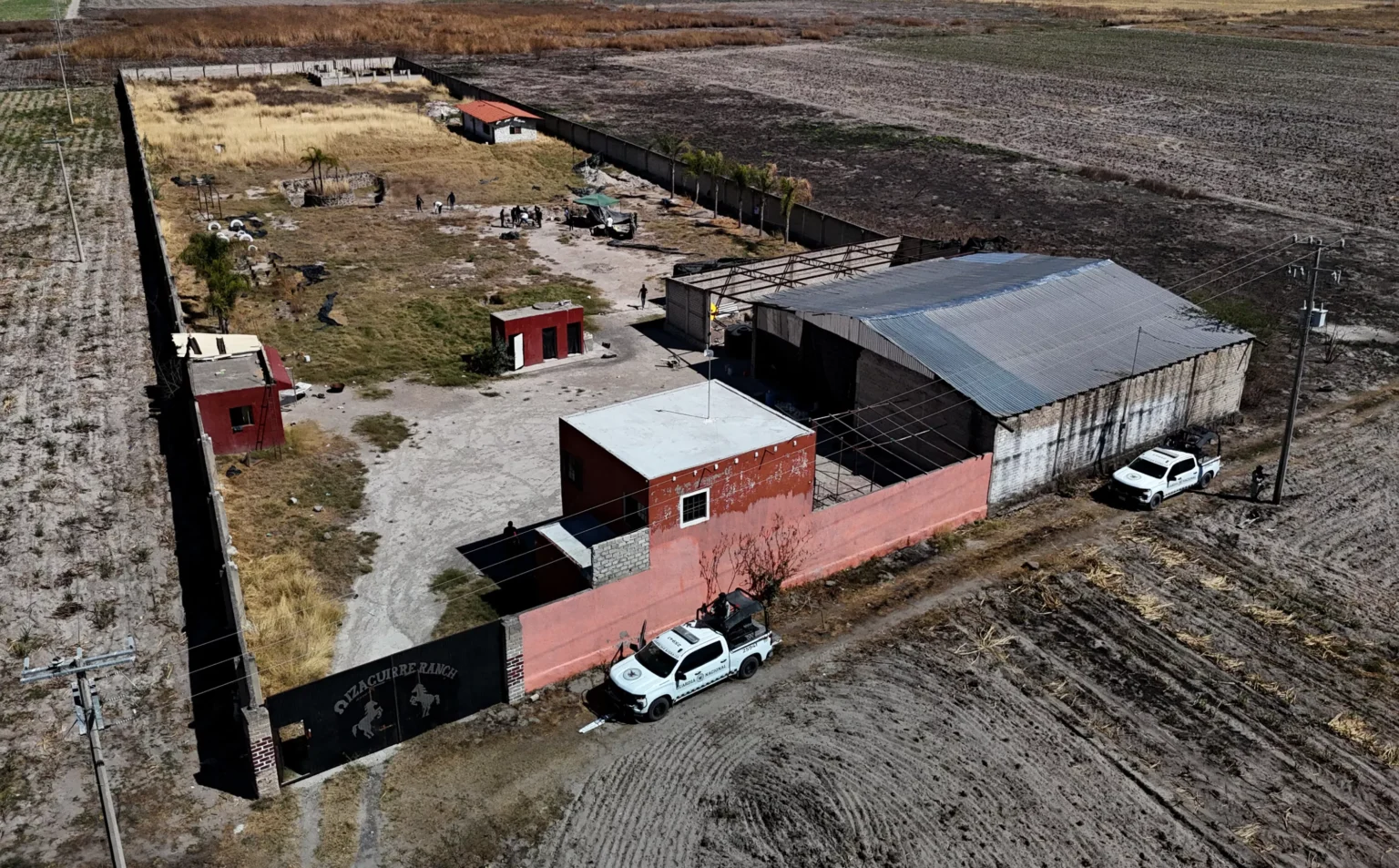
Near the peaceful village of La Estanzuela, a few kilometers from Guadalajara, a hell has been unearthed from the silence. There, in the heart of the state of Jalisco, an abandoned ranch has revealed the chilling traces of a veritable extermination camp, attributed to the local cartel, one of the most violent in the country. Charred homemade ovens, hundreds of shoes, personal items discarded like trash, and, above all, charred human remains scattered among the stones and ashes.
The locals suspected this nightmarish place, some knew it. But it took stubborn volunteers to bring light to the matter, mothers, sisters, citizens mobilized by the tenuous hope of finding a missing brother, son, or partner. In March, these citizen searches confirmed the worst suspicions: the ranch was used for training, torture, and elimination.
The silence of the authorities, organized impunity
Mexico lives under a reign of chronic violence. More than 121 people are currently missing, and 000 mass graves have been recorded in just five years. Yet the word "extermination," now used by local media to describe what happened in La Estanzuela, evokes another scale, another degree of inhumanity. An industrial system of disappearance.
According to preliminary findings, the site was operated by the Jalisco New Generation Cartel, the armed wing of an increasingly violent drug trafficking network with increasingly militarized methods. But beyond the identity of the perpetrators, another question arises, just as damning: why did the authorities wait so long to act?
It's been six months since the National Guard first identified the scene. Yet, no perimeter was secured, no items were recorded, and fingerprints were left untouched. Evidence likely gone, lost forever. It was only under public pressure that the country's attorney general resumed the investigation, on the instructions of President Claudia Sheinbaum.
Families left to their own devices
Since then, a catalog of more than 1 recovered objects has been published, a macabre gallery of memories. Backpacks, watches, jewelry. Lives summed up in fragments of personal belongings, which loved ones scrutinize with the anguish of recognition. For some, these images are the first clues in three, five, sometimes ten years.
An entire country is watching, frozen. For this ranch is not an exception. It is a symptom of entrenched impunity, of a land where the state too often cedes the field to cartels, where the disappearance of a loved one becomes a private matter, leaving the families to investigate, search, and excavate the land themselves. Mexico is waking up, once again, to an unspeakable horror. But this time, perhaps, the awakening will be different. For at La Estanzuela, it is the forgotten who dug, and it is their voices that we hear now, carried by the ashes of a place where the unspeakable took place.